
How They Work: The Core Operational Difference
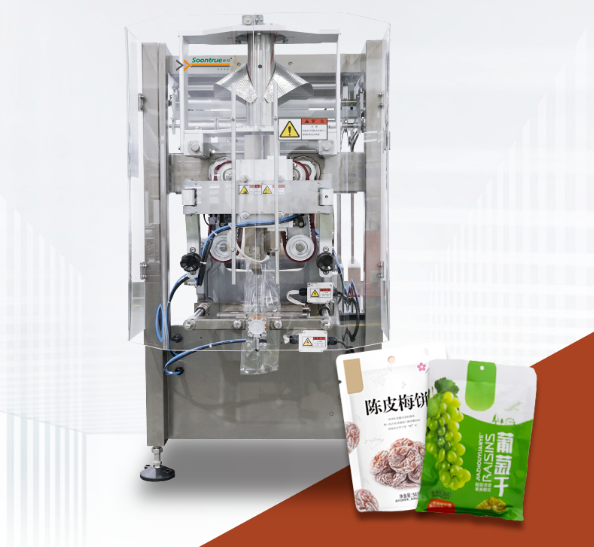
The names "horizontal" and "vertical" directly describe how each machine moves a product through the packaging process. One uses a conveyor belt system, while the other relies on gravity. Understanding this fundamental mechanical distinction is key to selecting the correct equipment.
Horizontal Packers: Pushing Products on a Conveyor
A horizontal flow packing machine packages items that can stand on their own and move along a flat surface. The process is linear and efficient, making it ideal for solid, uniform products. Operators place items onto an infeed conveyor, which then guides them through a precise sequence.
Typical Horizontal Process Flow:
1.Products are manually or automatically placed onto the infeed conveyor with consistent spacing.
2.The conveyor pushes the products one by one into a tube of packaging film.
3.Heated wheels or jaws seal the film along the bottom (longitudinal fin seal).
4.A rotating cutting head creates the front and back seals (end seals) and separates each finished package.
Vertical Packers: Dropping Products with Gravity
A vertical form fill seal (VFFS) machine works by forming a bag, filling it from above, and then sealing it. This method is essential for products that cannot be easily handled on a conveyor, such as loose items, powders, or liquids. The entire operation uses gravity to its advantage.`
·A roll of film is fed over a special tube called a forming collar. This action shapes the flat film into a vertical bag shape.
·The machine creates the vertical seal and the bottom seal of the bag.
·A multi-head weigher or auger filler dispenses the product, dropping it directly into the open bag.
·Finally, the top seal is created, and the machine cuts the completed bag free, which then drops onto a collection conveyor or into a carton.
Key Decision Factors: A Head-to-Head Comparison
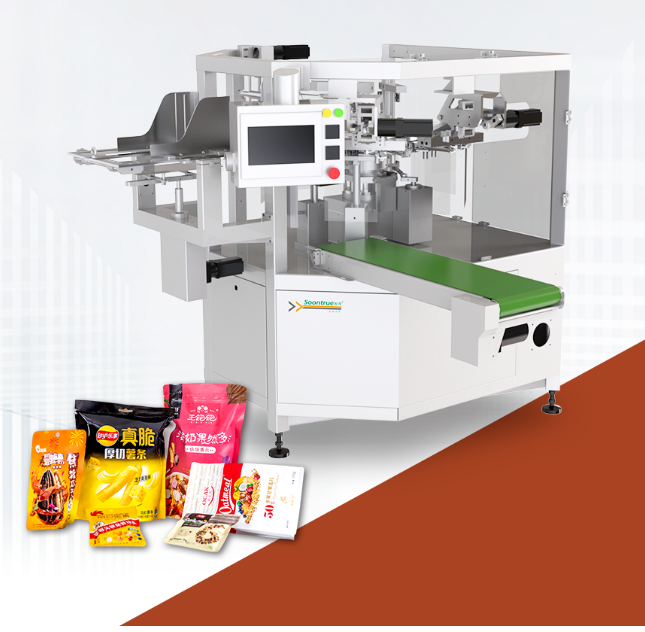
Beyond the basic mechanics, several key factors influence the decision between a horizontal and a vertical packer. A business must analyze its product, production goals, and facility constraints. This head-to-head comparison clarifies which machine aligns best with specific operational needs.
Product Type and Handling
The single most important factor is the product itself. Its shape, consistency, and fragility dictate the appropriate handling method. A horizontal flow packing machine excels with items that are solid and uniform, while vertical systems are built for products that are loose or difficult to handle.
| Feature | Horizontal Packer | Vertical Packer |
|---|---|---|
| Best For | Solid, self-supporting items | Loose, granular, liquid, or sticky items |
| Examples | Cookies, soap bars, hardware kits, popsicles | Potato chips, coffee beans, salad, shampoo |
| Handling | Gentle push via conveyor | Gravity-fed drop into a bag |
| Fragility | Good for moderately fragile items | Ideal for durable, loose items (e.g., nuts) but can be harsh on very delicate products (e.g., thin crackers) |
Pro Tip: Consider how a product behaves. If it can be placed on a conveyor and pushed without falling apart or losing its shape, a horizontal packer is likely the correct choice. If it must be weighed and dropped, a vertical packer is necessary.
Production Speed and Output
Production speed, measured in packages per minute (PPM), is a critical metric for scaling operations. Horizontal packers generally offer higher throughput for the right type of product.
·Horizontal Packers: These machines are built for speed and efficiency. Their continuous motion allows for very high output, often ranging from 100 to 300 PPM. Some high-end models can even exceed 1,000 PPM for small, simple items. The primary limiting factor is how quickly operators or automation can feed products onto the conveyor.
·Vertical Packers: The speed of a vertical packer is typically determined by the filling system (the weigher or auger) and the product itself. The process of forming, filling, and sealing in sequence is inherently slower than a continuous horizontal motion. Typical speeds range from 30 to 100 PPM. While slower, this rate is consistent and reliable for difficult-to-handle products.
Required Factory Footprint
The physical space available in a facility often becomes a deciding factor. The orientation of each machine creates a very different footprint.
Horizontal PackersThese machines are, by nature, long and linear. They require a significant amount of horizontal floor space to accommodate the infeed conveyor, the wrapping section, and the exit conveyor. A company needs a long, unobstructed area for installation.
Vertical PackersThese machines leverage vertical space. They are tall but have a much smaller, more compact square footprint. This design is perfect for facilities with limited floor area but high ceilings. The vertical orientation allows a complete packaging station—including the filler, machine, and exit conveyor—to fit into a tight space.
Packaging Film and Bag Styles
The choice of packaging film and the final bag style directly impacts product presentation, shelf life, and consumer appeal. Horizontal and vertical packers handle film differently and offer distinct capabilities in bag formation. This distinction is crucial for branding and marketing goals.
A horizontal packer generally produces a single, highly efficient bag style. A vertical packer, however, provides a much wider range of options, making it a versatile choice for retail-focused products.
Horizontal Packer Films and Styles
Horizontal machines are designed for speed, which influences their bag-making process. They excel at creating simple, consistent packages at a very high rate.
·Film Used: These machines run a continuous roll of film, often heat-sealable materials like Biaxially-Oriented Polypropylene (BOPP) or laminates. For heat-sensitive products like chocolate bars, businesses use a cold-seal film that adheres with pressure instead of heat.
·Primary Bag Style: The most common style is the pillow bag. It features a longitudinal seal along the bottom (the "fin seal") and two end seals. This three-sided seal design is simple, cost-effective, and perfect for individual items.
·Style Limitations: While some horizontal machines can create gusseted bags to add a bit of depth, their capabilities are generally limited to flat, pillow-style packages. The linear product flow does not easily accommodate complex bag shapes.
Vertical Packer Films and Styles
Vertical packers offer superior flexibility in bag creation. The form-fill-seal process allows for the creation of many popular and shelf-ready bag formats.
·Film Used: Like horizontal packers, VFFS machines use heat-sealable roll stock film. The film must have excellent tensile strength and sealing properties to support the weight of the product as it drops.
·Bag Style Variety: This is a major advantage of vertical systems. A single machine can often be configured to produce multiple bag styles.
Common Vertical Bag Styles:
1.Pillow Bag: The standard, economical choice for chips, nuts, and candy.
2.Gusseted Bag: Features side gussets that expand, giving the bag a more rectangular shape. It is common for coffee and snacks.
3.Block Bottom Bag: A flat-bottomed bag that can stand upright on its own. This style offers excellent shelf presence and is used for premium products like coffee or pet food.
4.Quad Seal Bag: Has seals on all four corners, creating a very sharp, structured appearance. It also stands upright and is popular for high-end snacks.
The table below summarizes the key differences in packaging capabilities.
| Feature | Horizontal Packer | Vertical Packer |
|---|---|---|
| Primary Bag Style | Pillow Bag (Fin Seal) | Pillow Bag, Gusseted Bag |
| Bag Style Variety | Very limited | Excellent (Block Bottom, Quad Seal, etc.) |
| Best for Shelf Appeal | Good for hanging displays | Superior for stand-up shelf presentation |
| Common Film | Heat-Seal, Cold-Seal | Heat-Seal Laminates |
Note: The desired final look of the package is a major consideration. If a business needs a stand-up pouch or a block-bottom bag to compete on a retail shelf, a vertical packer is the only viable option.
Choosing the Right Flow Packing Machine for Your Business
A business must evaluate more than just product type when selecting a packaging machine. The financial investment, ongoing operational expenses, and production flexibility are equally important. These factors directly impact a company's profitability and ability to adapt to market demands.
Cost of Initial Machine Investment
The initial purchase price of a flow packing machine varies significantly based on its type, features, and level of automation.
·Horizontal Packers: These machines often have a higher upfront cost. Their complex conveyor systems and high-speed components contribute to the price. Fully automated systems that include auto-feeding mechanisms will increase the initial investment further.
·Vertical Packers: A standard vertical packer is generally less expensive than its horizontal counterpart. However, the total cost rises quickly when adding necessary ancillary equipment. A multi-head weigher or auger filler, which is essential for operation, can sometimes cost as much as the packer itself.
Long-Term Operational and Maintenance Costs
Long-term costs can surpass the initial investment over the machine's lifespan. A business should consider film, energy, and maintenance expenses.
| Cost Factor | Horizontal Packer | Vertical Packer |
|---|---|---|
| Film Usage | Highly efficient; minimal waste due to continuous motion. | Can have slightly more film waste during setup and changeovers. |
| Energy Use | Continuous operation is energy-efficient at high volumes. | The start-stop motion of the filling and sealing process can use more energy per package. |
| Maintenance | Requires regular maintenance of conveyor belts, bearings, and cutting heads. | Key maintenance points include the forming collar, sealing jaws, and the filler system. |
Changeover Time and Flexibility
Production flexibility depends on how quickly a machine can switch between different products or bag sizes. This is known as changeover time.
What is Changeover? ⏱️
Changeover is the process of reconfiguring a machine to run a new product. This includes changing the film roll, adjusting the sealing jaws, and modifying settings for a different package size.
Horizontal packers often require more mechanical adjustments for different product lengths and widths, leading to longer changeover times. Vertical packers typically offer faster changeovers. Operators can often switch bag sizes by changing the forming tube and adjusting settings on the digital interface, making them more flexible for businesses with diverse product portfolios.
Making Your Final Decision: A Simple Checklist
Choosing the correct packaging equipment requires a clear evaluation of a company's product, production goals, and facility limitations. This final checklist simplifies the decision-making process. A business can use these points to confirm which machine type aligns with its specific operational needs.
When to Choose a Horizontal Packer
A horizontal flow packing machine is the ideal solution when speed and efficiency for solid products are the top priorities. A company should select this option if its operation matches the following criteria.
· Product Type: The products are solid, uniform in shape, and can support their own weight. They can be pushed along a conveyor without damage.
·Examples: Chocolate bars, granola bars, single-serve brownies, soap bars, hardware kits, or medical test kits.
·Production Goals: The primary goal is high-speed, high-volume output. The business needs to package hundreds of items per minute to meet demand.
· Facility Space: The factory has significant linear floor space. A long, unobstructed area is available to accommodate the machine's infeed and exit conveyors.
· Packaging Style: The required package is a simple pillow bag with a fin seal. The business does not need stand-up pouches or complex bag shapes for retail presentation.
When to Choose a Vertical Packer
A vertical packer offers unmatched versatility for products that cannot be handled on a flat conveyor. This machine is the right choice for businesses dealing with loose, granular, or liquid items.
· Product Type: The products are loose, granular, powdered, sticky, or liquid. They must be weighed or measured and dropped into a bag.
·Examples: Potato chips, coffee grounds, sugar, flour, salad mixes, shredded cheese, or sauces.
· Production Goals: The priority is flexibility and handling difficult products reliably. The business has a diverse product line requiring frequent changeovers between different items or bag sizes.
· Facility Space: The factory has limited floor space but available vertical height. The compact, square footprint of a vertical machine fits well into tight production areas.
·Packaging Style: The business requires advanced bag styles for a strong retail presence. It needs options like gusseted bags, block-bottom bags, or quad-seal bags that can stand upright on a shelf.
A Simple Rule of Thumb:First, analyze the product. If it can be placed on a table and pushed, a horizontal packer is the answer. If it must be held in a scoop and poured, a vertical packer is the necessary choice. This single test often points directly to the correct flow packing machine.
A business should select a Horizontal Packer for solid, uniform products when high-speed, high-volume output is the main goal. Conversely, a Vertical Packer suits operations with loose, granular, or liquid items. It also provides superior bag style variety for businesses with limited floor space.
The Deciding Factor: The most critical step is to analyze the product's characteristics. This single action will point a company directly toward the correct machine for its needs.
Post time: Oct-24-2025