
Top 5 Siomai Making Machine Reviews
ANKO HLT-700U: Best Overall for Versatility
The ANKO HLT-700U Multipurpose Filling & Forming Machine stands out as the top choice for businesses prioritizing flexibility. This machine is not limited to a single product. It empowers kitchens to produce a wide array of filled foods. Its core strength lies in its adaptability. Operators can easily change molds to create dumplings, samosas, empanadas, and of course, siomai.
This versatility makes it an intelligent investment for small to medium-sized enterprises. A business can start with siomai production. It can later expand its menu without purchasing new equipment. The machine's design focuses on maintaining the texture and quality of both the dough and the filling.
Key Features:
·Wide Product Range: Forms dozens of products with simple mold changes.
·Advanced Filling System: Handles various ingredients, including diced shrimp and chunky meat, without damaging their texture.
·IoT System (Optional): Enables real-time production monitoring and remote maintenance access.
·Stable Operation: Delivers consistent product weight and shape, reducing waste.
The HLT-700U is more than a siomai making machine; it is a complete production platform. It provides the foundation for future menu diversification and business growth.
ANKO HSM-600: Best for High-Volume Production
For businesses facing high demand, the ANKO HSM-600 Automatic Shumai Machine is the definitive solution. This specialized machine dedicates its entire design to one purpose: producing perfect siomai at incredible speeds. It automates the entire process from wrapper pressing to filling, forming, and arranging. This level of automation significantly reduces labor costs and increases output.
The HSM-600 is a production powerhouse built for commissaries, food factories, and large restaurant chains. Its robust construction ensures it can handle continuous, round-the-clock operation. The machine produces siomai with a delicate, thin wrapper and a satisfyingly full appearance, mimicking the quality of handmade products.
| Specification | Detail |
|---|---|
| Production Capacity | Up to 6,000 pieces/hour |
| Product Weight | 14 - 35 grams per piece |
| Machine Dimensions | 1100mm (L) x 570mm (W) x 1800mm (H) |
| Power | 220/380/415V, 50/60Hz, 3-Phase |
This machine is the clear choice for any operation where production volume is the primary metric for success.
SFT-80 Automatic Shumai Machine: Best Mid-Tier Performer
The SFT-80 Automatic Shumai Machine strikes an excellent balance between cost, size, and performance. It serves as a powerful upgrade for businesses that have surpassed the capacity of semi-automatic or manual methods. This model offers full automation in a more compact and affordable package compared to high-end industrial units.
It efficiently handles the forming and filling process, delivering a consistent and professional-looking product. The SFT-80 is ideal for mid-sized restaurants, catering businesses, and growing food stalls that need to increase production without committing to a massive capital investment. Its user-friendly interface simplifies operation, allowing staff to learn its functions quickly.
Note: The SFT-80 is a dedicated shumai/siomai machine. Businesses should confirm their primary production need is siomai before investing, as it lacks the multi-product versatility of models like the HLT-700U. It excels at its designated task, offering reliability and efficiency for focused production goals.
Tabletop Semi-Automatic Former: Best Budget-Friendly Option
The Tabletop Semi-Automatic Former offers a significant upgrade for growing businesses. It bridges the gap between manual labor and full automation. This machine provides a cost-effective solution for increasing production speed. Operators typically place a siomai wrapper into the mold. The machine then deposits a set amount of filling and forms the product. The user then removes the finished siomai. This process eliminates the bottleneck of manual forming and ensures consistent size and weight.
This type of siomai making machine is perfect for businesses experiencing increased demand. Its compact size fits easily into smaller kitchens. The lower capital outlay makes it an accessible investment for businesses not yet ready for a large, fully automatic unit. It boosts operational efficiency without requiring major facility changes.
·Pros:
·Affordable entry into automated production.
·Small footprint saves valuable kitchen space.
·Ensures consistent product size and weight.
·Significantly faster than purely manual methods.
·Cons:
·Requires constant operator involvement.
·Production capacity is limited compared to fully automatic models.
Manual Siomai Crimper: Best for Startups and Testing
A Manual Siomai Crimper is the ultimate entry-level tool for siomai production. It is not a machine but a simple, handheld or tabletop device. It assists an operator in creating the classic pleated siomai shape. The user places a filled wrapper into the device and uses a lever or pressing mechanism to crimp the sides uniformly. This tool provides a step up from forming entirely by hand. It helps achieve a more professional and consistent appearance.
This option is ideal for several specific scenarios. Home-based businesses can use it to produce small, high-quality batches. Restaurants can use it to test siomai as a new menu item without any significant financial risk. The tool requires no electricity and has virtually no maintenance costs. It is an excellent way to practice and perfect a recipe before scaling up.
Key Insight: The Manual Siomai Crimper is an invaluable tool for market validation. It allows a business to gauge customer interest and refine its product with minimal upfront investment. Success at this stage provides the confidence needed to invest in a semi-automatic or automatic machine.
Key Factors in Choosing Your Siomai Making Machine
Selecting the right equipment is a critical decision for any food business. Business owners must evaluate several key factors to ensure their investment aligns with their operational goals. A thoughtful analysis of capacity, space, and budget will lead to the best choice of siomai making machine.
Assess Your Production Capacity Needs
A business must first quantify its production requirements. The ideal machine matches current demand while allowing for future growth. Owners should calculate their target output in pieces per hour or per day.
·Startups (Under 1,000 pieces/day): Manual or semi-automatic machines offer a low-risk entry point.
·Growing Businesses (1,000 - 5,000 pieces/hour): A mid-tier automatic machine like the SFT-80 provides necessary efficiency.
·Large-Scale Operations (Over 5,000 pieces/hour): High-volume models like the ANKO HSM-600 are essential for meeting factory-level demand.
Choosing a machine with slightly more capacity than currently needed is a smart strategy. It prevents the need for a premature upgrade as the business expands.
Evaluate Your Kitchen Space and Machine Footprint
Commercial kitchens often have limited space. Machine dimensions are a crucial, practical consideration. A large, industrial unit will not fit in a small ghost kitchen.
Before making a purchase, operators should measure their available area carefully. They must account for not only the machine's footprint but also the necessary clearance for operation, cleaning, and maintenance access.
Tabletop models offer excellent functionality for tight spaces. Larger, freestanding machines require a dedicated production area with proper access to power and utilities.
Balance Upfront Cost with Long-Term Value
The initial purchase price is only one part of the total cost. Business owners should analyze the long-term return on investment (ROI). A cheaper machine may seem attractive but could lead to higher labor costs and more product waste.
An expensive, fully automatic machine can pay for itself through major efficiency gains. It reduces the need for skilled labor, produces highly consistent products, and operates at speeds manual methods cannot match. The long-term value of a durable, efficient machine often outweighs a lower upfront cost.
Prioritize Ease of Use, Cleaning, and Maintenance
A machine's daily performance depends heavily on its usability. Complex equipment can create production bottlenecks and increase staff training time. Business owners should prioritize machines with simple, intuitive controls. This ensures operators can learn quickly and run the machine efficiently with minimal errors.
Proper sanitation is non-negotiable in food production. The ease of cleaning a siomai machine directly impacts food safety and operational speed. Look for models designed for simple disassembly.
·Tool-Free Breakdown: Parts that can be removed by hand speed up the cleaning process.
·Food-Grade Materials: Stainless steel and other non-porous surfaces prevent bacteria growth.
·Smooth Surfaces: Machines without complex crevices are easier to wipe down and sanitize thoroughly.
Pro Tip: A machine that is easy to clean is a machine that gets cleaned properly. This simple fact protects your customers and your brand's reputation.
Regular maintenance is crucial for protecting your investment. It prevents unexpected breakdowns and extends the machine's lifespan. A good machine comes with a clear maintenance schedule and easily accessible parts. Operators should be able to perform daily checks and minor adjustments without needing a specialized technician.
Consider these typical maintenance tasks:
| Frequency | Task Example |
|---|---|
| Daily | Wipe down exterior surfaces; clean all food-contact parts. |
| Weekly | Inspect belts and moving parts for wear. |
| Monthly | Lubricate designated components per manufacturer guide. |
Ultimately, a machine that is simple to use, clean, and maintain saves significant time and labor costs. These practical factors are just as important as production capacity when calculating a machine's true value.
Understanding Siomai Machine Features
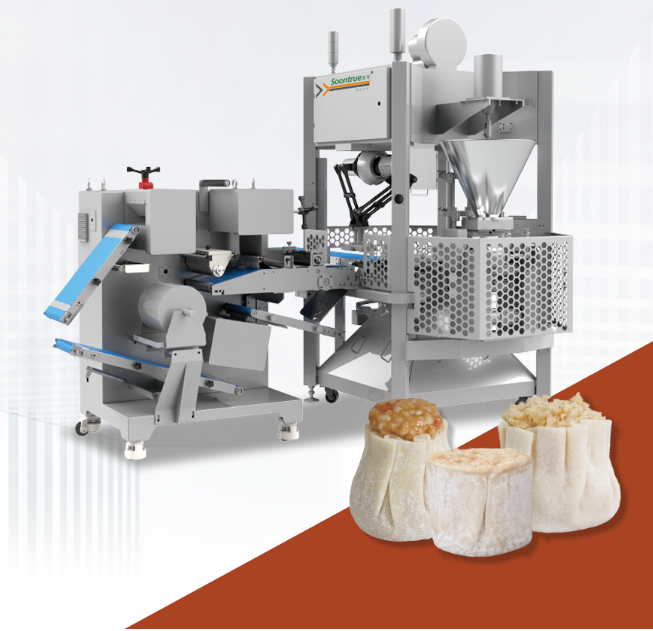
Diving deeper into technical specifications helps businesses make an informed decision. Key features determine a machine's daily performance, longevity, and overall value. Business owners should examine these details closely before purchase.
Material and Build Quality
The construction of a siomai making machine directly impacts its durability and food safety. High-quality machines use food-grade materials for all parts that contact ingredients.
·Stainless Steel: Look for models built with SUS304 stainless steel. This material resists corrosion, is easy to sanitize, and withstands the demands of a commercial kitchen.
·Welds and Joints: A well-built machine has smooth, polished welds. This prevents food particles from getting trapped and simplifies the cleaning process.
·Frame Stability: A robust frame minimizes vibration during operation. This leads to more consistent product forming and a longer lifespan for the equipment.
A solid build quality is a primary indicator of a reliable, long-term investment.
Power Consumption and Efficiency
A machine's power requirements are a critical logistical factor. Business owners must ensure their kitchen's electrical system can support the equipment.
An energy-efficient machine reduces daily operating expenses. Over time, these savings contribute significantly to the business's profitability. Lower power consumption is not just good for the budget; it is also better for the environment.
Operators should check the machine's voltage, phase (single-phase or three-phase), and wattage. Mismatched power specifications can lead to performance issues or require costly electrical upgrades.
Customization and Mold Options
The ability to customize output is a valuable feature. Many machines offer interchangeable molds to adjust the final product. This versatility allows a business to adapt to market trends or expand its menu.
Customization options often include:
- Product Weight: Adjusting the amount of filling per piece.
- Product Size: Changing the diameter and height of the siomai.
- Wrapper Thickness: Some advanced models can modify the thickness of the dough wrapper.
- Decorative Patterns: Molds can create unique patterns on top of the siomai for brand differentiation.
This flexibility transforms a standard machine into a dynamic production tool.
Manufacturer Support and Warranty
A machine's value extends beyond its technical specifications. The manufacturer's post-purchase support and warranty are critical components of the investment. A reliable partner ensures the machine operates smoothly for years, protecting the business from costly downtime. Business owners should investigate these factors thoroughly before making a final decision.
A comprehensive warranty provides a safety net for the equipment. It shows the manufacturer's confidence in its product quality. Buyers should look for specific terms in the warranty agreement.
- Duration: A minimum one-year warranty is standard for commercial equipment.
- Coverage: The warranty should clearly state what it covers, such as parts, labor, or both.
- Service Process: The procedure for making a claim should be simple and straightforward.
Key Consideration: A great machine with poor support can become a major liability. Buyers should ask about the availability of spare parts. Quick access to replacement components is essential for minimizing operational interruptions.
Responsive technical support is equally important. When an issue arises, businesses need fast and effective help. Top-tier manufacturers offer multiple support channels, including phone, email, and video calls with technicians. Some even provide on-site service for major repairs. Clear documentation, including detailed user manuals and maintenance guides, also empowers operators to handle minor issues independently. A strong support system is a hallmark of a reputable manufacturer and a key indicator of a smart long-term investment.
The ANKO HLT-700U offers an ideal balance of versatility and long-term value for most growing small businesses. It provides a clear path for menu expansion and increased output.
Business owners should use the criteria in our buying guide. A careful evaluation of production goals, kitchen space, and budget ensures the perfect match.
Selecting the right equipment from this list will streamline operations. This strategic choice sets a business up for significant success and profitability in 2025.
FAQ
How often should a siomai machine be cleaned?
Operators must clean the machine daily. All food-contact parts require thorough washing and sanitizing after each production run. This practice ensures food safety and maintains equipment longevity. Regular cleaning prevents ingredient buildup and protects product quality.
Can a multipurpose machine make siomai as well as a dedicated one?
A multipurpose machine like the ANKO HLT-700U produces excellent siomai. However, a dedicated machine like the HSM-600 offers superior speed and form consistency for that single product. Businesses should choose based on their need for variety versus specialized high-volume output.
What is the main benefit of upgrading from manual to semi-automatic?
The primary benefit is consistency. A semi-automatic machine ensures every siomai has the same weight and shape. It also significantly increases production speed compared to purely manual methods. This upgrade reduces labor fatigue and improves overall efficiency.
Why is manufacturer support so important?
Reliable support minimizes costly downtime. Good manufacturers provide quick access to spare parts and technical assistance. This service protects your investment and keeps production running smoothly. A strong warranty and responsive support are crucial for long-term operational success.
Post time: Oct-24-2025