
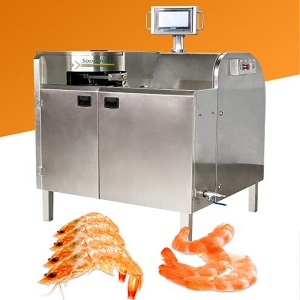
High-volume seafood processors view a PRAWN PEELING MACHINE as a strategic asset. Automation can slash labor costs by up to 70% and dramatically increase production speed. This investment aligns with a growing market for seafood processing equipment.
| Metric | Value |
|---|---|
| Market Size in 2024 | USD 2.06 Billion |
| Market Size in 2034 | USD 3.25 Billion |
| CAGR (2025-2034) | 4.5% |
However, small-scale operations face a different reality. The high initial cost and ongoing maintenance can make this technology an impractical and financially risky choice.
The Good: Key Advantages of Automation
Drastic Increase in Production Efficiency
Automation dramatically accelerates the peeling process. A single machine can outperform a large team of manual peelers, operating continuously without breaks or fatigue. For instance, some models can process approximately 450 kg of shrimp per hour, a volume that would require a significant manual workforce to match. This consistent, high-speed output allows businesses to meet growing market demands and scale their operations effectively. A PRAWN PEELING MACHINE transforms a labor-intensive bottleneck into a streamlined, efficient production stage.
Significant Reduction in Labor Costs
Labor is one of the largest operational expenses in seafood processing. Automation directly addresses this by reducing the need for a large manual peeling staff. While machines require skilled operators, the overall reduction in headcount leads to substantial savings in wages, benefits, and training costs. Large-scale processors who adopt automation report numerous business improvements.
Key Operational Gains from Automation:
- Optimized productivity and efficient order filling
- Increased data accuracy for both raw and finished goods
- Overall business growth and operational efficiencies
These benefits show that the investment pays dividends across the entire business, not just on the production line.
Improved Hygiene and Product Safety
Maintaining sanitary conditions is critical in food processing. Automated systems offer a significant advantage in this area. Modern machines are often constructed from food-grade materials like SUS304 stainless steel, which is easy to clean and sanitize. This minimizes direct human contact with the product, reducing the risk of microbial contamination. Studies comparing industrial machine peeling to manual methods have analyzed microbial shifts, confirming that a controlled, automated environment can lead to a more hygienic final product. This focus on safety helps processors meet stringent food safety standards and build consumer trust.
Consistency in Peeling Quality
Manual peeling introduces variability; automation delivers uniformity. Human peelers have varying skill levels and can become fatigued during long shifts, leading to inconsistent results like shell fragments, broken tails, or damaged meat. A machine, however, executes the same precise motion every time. This mechanical consistency is a cornerstone of quality control in high-volume processing.
A modern PRAWN PEELING MACHINE can be adjusted with precision, allowing operators to set parameters for different prawn sizes and species. Once calibrated, it produces a uniform product that meets exact specifications hour after hour. This consistency translates directly into measurable business improvements and a higher-value final product.
Real-World Impact of Consistent Peeling:
- A North American processor reduced peel-related defects by 25% after adopting an automated system, significantly improving the final product's appearance.
- An Asian exporter improved its compliance with strict international standards, resulting in fewer shipment rejections and smoother customs clearance.
Furthermore, automation ensures uniform peeling that minimizes damage to the shrimp and reduces product waste. The precision of these systems helps maintain high quality standards, a critical factor for premium products intended for export. The ability to produce consistently peeled shrimp enhances a processor's brand reputation in the competitive global market. This reliability allows businesses to confidently guarantee a specific grade and quality, building trust with buyers and commanding better prices. Ultimately, consistent quality is not just an operational benefit; it is a powerful market differentiator.
The Bad: Practical Downsides of a Prawn Peeling Machine
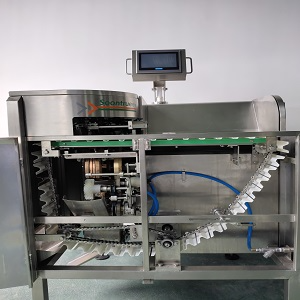
While automation offers clear advantages, businesses must also consider the significant practical downsides. The path to automated peeling involves substantial financial commitments, ongoing operational demands, and the need for specialized expertise. These factors can present major hurdles, especially for small to medium-sized enterprises.
High Initial Capital Investment
The most immediate barrier to entry is the high initial capital investment. A commercial-grade prawn peeling machine represents a major financial outlay that can be prohibitive for many processors. The cost extends beyond the machine itself to include installation, facility modifications, and initial setup.
Some government programs may offer financial assistance. The EPA and USDA provide grants for projects that improve food system efficiency and innovation. The Small Business Administration (SBA) also offers loan programs. However, securing this funding is a competitive and complex process with no guarantee of success.
Ongoing Maintenance and Operational Costs
The expenses do not stop after the initial purchase. These machines require rigorous and consistent maintenance to prevent costly downtime and ensure a long operational life. Failure to adhere to a strict schedule can lead to unexpected breakdowns and production halts.
Key Maintenance Activities:
- Daily: Oiling contact points, cleaning all components, and performing visual inspections.
- Preventative: Regularly greasing fittings, checking for loose bolts, and inspecting wear on parts like jaws and hooks.
- Annual: Replacing key working parts with a tune-up kit to maintain peak performance.
These tasks add to the total cost of ownership through parts, lubricants, and labor hours.
Requirement for Skilled Operators
Operating and maintaining automated machinery is not a job for an unskilled worker. These complex systems demand trained technicians who can manage their computerized controls, perform diagnostics, and conduct repairs. The technical complexity is a significant challenge for processors without access to a skilled labor pool. Hiring a qualified Automation Technician adds a substantial and recurring expense, with average salaries often ranging from $77,000 to over $79,000 annually. This specialized labor cost must be factored into any cost-benefit analysis.
The Ugly: Harsh Realities and Potential Deal-Breakers
Beyond the practical costs, processors must confront harsh realities that can undermine the entire value proposition of automation. These issues represent potential deal-breakers that can turn a promising investment into a significant liability.
Potential for Lower Yield and Product Damage
Mechanical peeling, while fast, can be less delicate than skilled human hands. The aggressive action of rollers and brushes can break prawns, tear meat, and leave shell fragments behind. This damage directly reduces the marketable yield. Even high-quality machines experience some level of product loss, a factor that directly impacts profitability. Processors must accept a certain percentage of waste as an inherent cost of automation.
| Equipment Type | Meat Yield | Implied Meat Loss |
|---|---|---|
| Quality Automated Peeler | >90% | <10% |
| Premium Automated Peeler | 93-95% | 5-7% |
| Industry Standard (Meat Damage) | N/A | <5% |
This trade-off between speed and yield is a critical calculation for any business considering this technology.
Limited Versatility and Flexibility
A PRAWN PEELING MACHINE often excels at one task for one type of product. This lack of versatility can be a major constraint for processors handling diverse inventories. A machine calibrated for small whiteleg shrimp may crush larger tiger prawns, and vice versa. This inflexibility creates several operational challenges.
·Size and Species Specificity: Machines are typically optimized for a narrow range of prawn sizes and species, limiting a processor's ability to adapt to market availability.
·Condition Requirements: Many systems require prawns to be in a specific state, such as fully thawed or pre-sorted by size, adding extra steps to the workflow.
·Limited Adjustability: While high-end models offer adjustable settings, many standard machines are fixed, locking a business into processing a single product type.
Significant Production Halts During Downtime
An automated line introduces a critical single point of failure. When a manual peeler is absent, the team can absorb the workload. When the main peeling machine breaks down, the entire production line can grind to a halt. A mechanical failure during peak season can be catastrophic, leading to massive order backlogs and spoiled inventory. This risk of complete operational paralysis makes dependency on a single machine a high-stakes gamble. The efficiency gains of automation disappear the moment the machine stops working.
A PRAWN PEELING MACHINE presents a clear trade-off. High-volume processors gain efficiency that justifies the investment, while smaller operations face significant financial hurdles. Before deciding, a business must conduct a detailed cost-benefit analysis to weigh the pros and cons. This process clarifies direct costs, like the equipment purchase.
Cost-Benefit Analysis Tools:
·Google Sheets & Microsoft Excel: Offer simple, customizable templates.
·Smartsheet & ClickUp: Provide solutions for more complex project analysis.
This essential evaluation helps determine if automation is a practical choice for a specific operation.
FAQ
How does a machine handle different prawn sizes?
Modern machines offer excellent flexibility. Operators can adjust settings for various prawn sizes using a touch screen. Advanced systems allow users to switch specifications in seconds by selecting a pre-set recipe, ensuring optimal peeling for different batches without lengthy mechanical changes.
What is the cleaning process for these machines?
Cleaning is a streamlined daily task. Most machines feature a cantilevered structure and are built from SUS304 stainless steel, providing easy access for sanitation. This design minimizes dirt traps and ensures the equipment meets strict food safety and hygiene standards with minimal effort.
How difficult is it to switch between product types?
Switching between different prawn specifications is simple and fast with modern technology.
An operator can change the production formula directly on the PLC touch screen. This digital adjustment eliminates complex mechanical work, allowing for a near-instant changeover to a new product type.
What kind of technical support is available?
Many advanced machines include remote control functionality. This feature allows technicians to diagnose issues and provide support from a distance, helping to minimize downtime. However, having an on-site technician trained to operate and maintain the PLC touch screen controls remains essential for daily operations.
Post time: Dec-12-2025