
Core Differences: A Head-to-Head Comparison
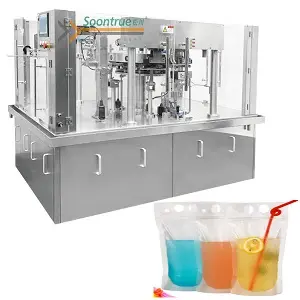
Choosing the right juice pouch packing machine requires a clear understanding of how each type performs in key areas. Automatic and semi-automatic machines present significant trade-offs in speed, labor, and precision. Businesses must evaluate these differences against their operational needs and financial realities.
Production Speed and Volume
Production speed is often the most critical factor for growing businesses. Automatic machines operate at a much higher velocity. They handle pouch feeding, filling, and sealing in a continuous, uninterrupted flow. This capability makes them ideal for large-scale production demands. Different models offer a range of speeds to match specific output targets.
| Production Volume | Model | Max Speed (pouches/min) |
|---|---|---|
| Low | MS-1 | 12 |
| Medium | RS-2 | 40 |
| High | RS-4 | 80 |
Semi-automatic machines, in contrast, depend on an operator's pace. The operator must manually place each pouch, initiate the fill cycle, and move the pouch to the sealer. This human element inherently limits the total output. These machines are better suited for small batches or businesses that do not require high-speed production.
Labor Requirements and Costs
Labor is a major operational expense that these machines impact directly.
·Semi-Automatic Machines: These require at least one dedicated operator to manage the packaging process. The operator's wages, training, and benefits contribute directly to the cost per unit. Production stops when the operator takes a break or is unavailable.
·Automatic Machines: These systems run with minimal human supervision. A single technician can often oversee multiple machines. This significantly reduces direct labor costs and frees up employees for other value-added tasks like quality control or logistics.
Note: While automatic machines reduce labor costs, they require staff with technical skills for operation, maintenance, and troubleshooting. Businesses should factor this training or hiring need into their decision.
Accuracy and Consistency
Product consistency builds brand trust. Automatic machines excel in this area. They use precise, programmable logic controllers (PLCs) to dispense the exact same volume of juice into every pouch, every time. This minimizes product waste and ensures a uniform customer experience.
Semi-automatic machines offer good accuracy, but consistency can vary. The precision often depends on the type of filling mechanism used. While many achieve a high degree of accuracy, slight variations can occur between cycles or operators.
| Machine Type | Accuracy Tolerance |
|---|---|
| Semi-automatic weigh fillers | Better than 1% |
| Semi-automatic tea packing | Better than +/-1% |
| Semi-automatic paste filling | Up to +/- 2% |
For products where exact fill volume is a top priority for cost control or regulatory compliance, the superior consistency of an automatic system provides a distinct advantage.
Initial Investment vs. Long-Term ROI
The financial commitment is a primary differentiator between these two machine types. Automatic systems demand a substantially higher initial investment. Semi-automatic machines, on the other hand, provide a more accessible entry point for businesses with limited capital. The price gap reflects the complexity, speed, and technology built into each system.
A company can acquire a basic semi-automatic machine for a modest sum, while high-capacity automated systems represent a significant capital expenditure. The cost escalates with increased speed, features, and automation levels.
| Machine Type | Cost Range (USD) |
|---|---|
| Basic Semi-Automatic | $5,000 to $20,000 |
| Mid-Range Automatic | $20,000 to $50,000 |
| High-Capacity Fully Automated | $50,000 to $200,000+ |
Even entry-level automatic models, such as a 'Fully Auto Pouch Packaging Machine [Auto Drop]' priced around ₹145,000 (approximately $1,740), show the cost jump from manual to automated processes. This visual comparison illustrates the investment tiers.
However, the initial price tag only tells part of the story. A thorough analysis of long-term Return on Investment (ROI) reveals a different picture. ROI measures the profitability of an investment over time.
An automatic juice pouch packing machine generates its ROI by fundamentally lowering the cost per unit produced. This is achieved through several key efficiencies:
·Reduced Labor Costs: It minimizes the need for manual operators, saving on wages, benefits, and training over the machine's lifespan.
·Increased Throughput: Higher production speeds mean more units are packed and ready for sale in less time.
·Lower Product Waste: Superior accuracy reduces overfills and product loss, directly protecting profit margins.
A semi-automatic machine's ROI is simpler. It enables production with low upfront cost, but its long-term value is capped by ongoing labor expenses and slower output. For businesses planning significant growth, an automatic system's higher initial cost is often justified by its ability to scale production efficiently, leading to a much stronger ROI over several years.
When to Choose a Semi-Automatic Juice Pouch Packing Machine
A semi-automatic juice pouch packing machine is not just a lower-cost alternative; it is a strategic tool for specific business models. Its value lies in flexibility, affordability, and operational simplicity, making it the perfect choice in several key scenarios. Companies should evaluate their current needs and short-term goals to see if this machine aligns with their strategy.
Ideal for Startups and Small Businesses
Startups and small-scale producers operate with tight budgets and uncertain initial demand. A semi-automatic machine offers a low-risk entry into the market. Its lower initial investment frees up capital for other critical areas like marketing, ingredient sourcing, and brand development. The hands-on nature of the machine also provides operators with a deep understanding of the packaging process, which is invaluable in the early stages of a business.
Best for High-Mix, Low-Volume Production
Businesses that offer a wide variety of juice flavors or seasonal specials benefit greatly from a semi-automatic machine's adaptability. These machines are designed for quick and simple changeovers between different products or pouch sizes. This versatility allows companies to produce small batches efficiently without the complex recalibration required by some fully automated systems. Their flexibility supports a diverse product portfolio.
·They can fill various liquids, from juice and milk to oils and broths.
·They handle a wide range of package sizes, including Stand up Pouches from 0.75L to 5L.
·An easy-to-adjust filling table simplifies the process of switching between different volumes.
“We gathered this intel and found common difficulties: changeover time from one pouch to another, difficulty of changeover, and maintaining quality operators/personnel. With that in mind, we designed a machine to eliminate the complexity of a changeover...”
This focus on simplifying changeovers highlights the industry's need for machines that can handle product variety without significant downtime.
Perfect for Market Testing Phases
Launching a new juice product involves uncertainty. A semi-automatic machine is an excellent tool for market testing. It allows a company to produce professional-quality pouches in small quantities to gauge consumer interest. This approach minimizes financial risk. If the product is successful, the business gains valuable production data. If it fails, the company avoids a major loss on high-capacity equipment.
When to Invest in an Automatic Machine
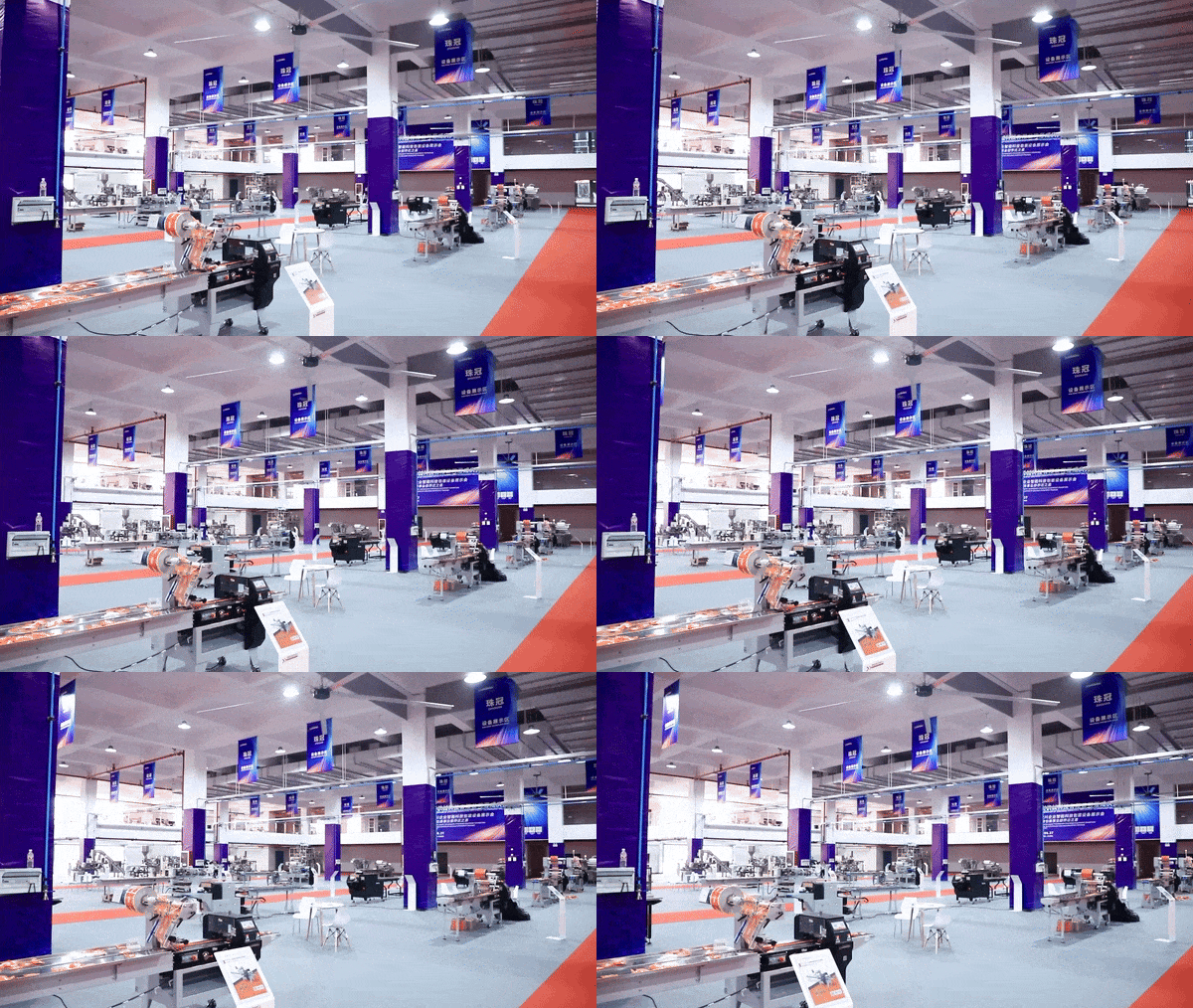
Transitioning to an automatic system is a significant step. It becomes a necessity when a business’s production needs outpace the capabilities of semi-automatic equipment. This investment is driven by the demand for speed, efficiency, and scalability.
Essential for Mass Production
An automatic machine is the cornerstone of any mass-production strategy. These systems operate continuously at high speeds, removing the bottlenecks inherent in manual processes. They enable a company to fulfill large orders much faster and respond with agility to sudden spikes in market demand. For businesses aiming to supply regional or national distributors, the consistent, high-volume output of an automatic juice pouch packing machine is not just an advantage—it is a requirement.
Maximizing Efficiency and Reducing Costs
Automatic machines deliver powerful efficiencies that directly impact the bottom line. They transform production by reducing operational costs while boosting output. Key gains include:
·Savings on labor: Automated systems drastically reduce the need for manual operators.
·Increased throughput: The machines process significantly more pouches in a given timeframe.
·Improved production efficiency: The entire packaging workflow becomes more streamlined and effective.
Furthermore, automated bagging machines are designed for accuracy. Advanced weighing and filling technologies ensure each packet contains the precise quantity of product. This capability substantially reduces product giveaway and material waste, a significant improvement over less precise semi-automatic processes where human error can lead to costly inconsistencies.
Key to Scaling Your Operations
Investing in automation is a strategic move for long-term growth. Automatic packing machines are built to help a business scale. They allow manufacturers to easily increase production by adjusting speeds or adding modules, avoiding the need for entirely new equipment. This flexibility supports a growing product line and ensures a strong return on investment. Modern systems also integrate smart technologies like IoT and real-time data analytics, making them essential components of a smart factory and positioning a company for future success.
Making the Final Decision: Key Factors to Evaluate
Selecting the right machine requires a careful, data-driven analysis of your business. A company must look beyond the initial price and consider production needs, total costs, and operational resources. This evaluation ensures the chosen equipment aligns with both current requirements and future ambitions.
Calculate Your Production Demand
A business must first quantify its production needs. This involves calculating the number of pouches required per hour, day, and week. Companies should also project future demand based on growth targets.
A clear production target is essential. Do you need to pack 500 pouches per day for a local market, or 5,000 per hour for regional distribution? This number will immediately guide you toward either a semi-automatic or automatic solution.
Analyze Your Budget and ROI
A comprehensive budget analysis goes beyond the initial purchase price. Businesses should calculate the Total Cost of Ownership (TCO) to understand the full financial impact. This includes all expenses over the machine's entire lifecycle. Key costs to evaluate are:
·Capital Costs: The initial purchase, including shipping, installation, and equipment validation.
·Operational Costs: Ongoing expenses for utilities, labor, staff training, and supplies like ink.
·Maintenance and Support Costs: The budget for spare parts, routine service, and technical support to resolve disruptions.
·Disposal Costs: The future expense of responsibly retiring the equipment at the end of its service life.
This detailed analysis provides a true picture of the long-term ROI for each machine type.
Assess Your Workforce and Space
The right machine must fit your physical plant and your team's capabilities. Automatic machines have a larger footprint and require skilled technicians. Operators need specific training to manage these advanced systems effectively. Key skill sets include:
·Understanding the Machinery: Comprehending how the automated system functions.
·Mastering Efficiency: Learning to optimize machine settings and troubleshoot common issues.
·Learning Safety Protocols: Handling equipment safely and knowing emergency procedures.
·Quality Control: Inspecting materials and ensuring final products meet quality standards.
A company must assess if its current workforce has these skills or if it needs to invest in training or new hires.
Plan for Future Growth
A company's equipment choice should align with its long-term ambitions. The right machine supports today's production and enables tomorrow's expansion. A business must look beyond its current state and consider its five-year growth plan. This forward-thinking approach prevents costly bottlenecks in the future.
A critical question to ask is: "Will this machine support our business when our production demand doubles or triples?" The answer reveals the most strategic path forward.
A semi-automatic machine is an excellent starting point. It allows a business to enter the market with minimal risk. However, companies must recognize its limitations. Its production capacity is capped by operator speed. As sales increase, a business will eventually outgrow this machine. The company must then invest in a new system, which involves additional capital and potential downtime during the transition.
Automatic machines, in contrast, are designed for scalability. They represent a direct investment in a company's growth potential. Many modern systems offer features that facilitate expansion:
·Modularity: Businesses can add components like extra filling heads or labeling units to increase speed and functionality as needed.
·Upgradeability: Software and mechanical parts can often be upgraded to improve efficiency or handle new packaging types.
·High Ceilings: These machines operate at speeds that can accommodate significant increases in production volume without requiring a complete replacement.
Choosing an automatic machine from the outset prepares a company for success. It builds a foundation for efficient scaling, ensuring the production line can keep pace with rising market demand. This strategic decision positions a business for sustained growth rather than short-term operation.
Choosing the right machine is a strategic business decision. A semi-automatic machine offers a practical solution for startups and small-scale producers who value flexibility and a lower initial investment. It supports diverse product lines and market testing effectively.
For businesses targeting high-volume output and long-term expansion, an automatic machine is a necessary investment. It drives efficiency, reduces operational costs, and provides the scalability needed for growth. A thorough assessment of your specific volume, budget, and goals will guide you to the perfect choice.
FAQ
What maintenance do these machines require?
Automatic machines require skilled technicians for their complex electronics and software. Semi-automatic models have simpler mechanical parts, making routine maintenance more straightforward. Both types need regular cleaning and inspection to ensure optimal performance and longevity.
Can one machine handle different pouch sizes?
Yes, most machines offer flexibility. Semi-automatic systems allow for quick, manual adjustments to accommodate various pouch dimensions. Automatic machines can also handle multiple sizes, though changeovers might involve more complex programming or part swaps.
How much training does an operator need?
An operator can learn to use a semi-automatic machine with minimal training. Automatic systems demand more comprehensive instruction. Operators need to master the machine's software, safety features, and troubleshooting procedures to manage production efficiently.
What is the typical lifespan of these machines?
A well-maintained machine can last 10 to 15 years or more. The lifespan depends on the build quality, production intensity, and adherence to the manufacturer's service schedule. Regular preventative maintenance is crucial for maximizing the equipment's operational life.
Post time: Oct-31-2025