
Manufacturers have rapidly adopted advanced features in dumpling making machine design. Key technologies include integrated smart sensors for quality control, predictive maintenance, and AI-driven defect detection. These innovations increase output, reduce downtime, and ensure product consistency. The table below highlights the most widely adopted technologies this year.
| Technology Type | Description |
|---|---|
| Integrated Smart Sensors | Used for quality control to ensure consistent product quality. |
| Predictive Maintenance Features | Helps in reducing downtime by anticipating maintenance needs. |
| Modular Designs | Allows for easy customization and quick changeovers between different dumpling types. |
| AI-driven Defect Detection Systems | Automatically identifies and removes imperfect dumplings, improving consistency and reducing waste. |
| Advanced Control Systems | Enhances precision in filling accuracy and versatility in handling various dough and filling types. |
Key Efficiency Trends in Dumpling Making Machines 2026
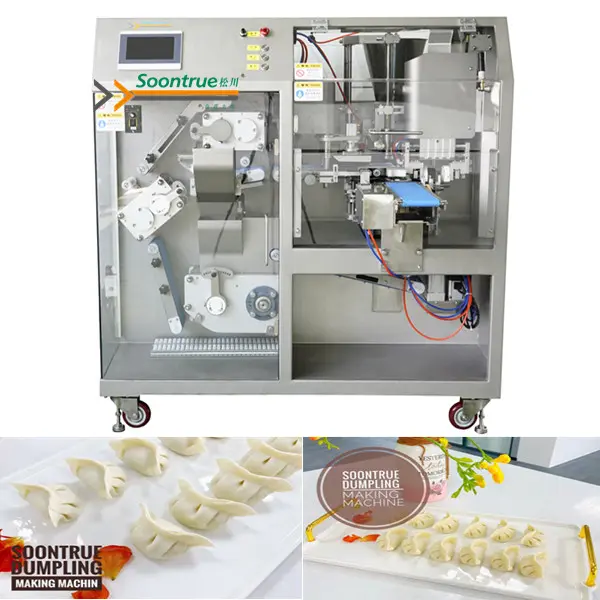
Full Automation in Dumpling Making Machines
Manufacturers continue to invest in full automation for dumpling making machines. This trend has accelerated over the past three years. Companies seek to address labor shortages and improve operational efficiency. The market shows a compound annual growth rate of 7% for automation adoption. The COVID-19 pandemic prompted many manufacturers to upgrade their equipment. They now rely on advanced machinery to maintain production levels and reduce reliance on manual labor.
- The adoption rate of full automation in dumpling making machines has significantly increased.
- The market demonstrates steady growth, with a CAGR of around 7% over five years.
- Manufacturers responded to labor shortages by investing in automated solutions during the pandemic.
Automated systems streamline production and minimize human error. Operators can oversee multiple lines with less effort. This shift allows companies to scale output and maintain consistent quality.
Smart Technology Integration
Smart technology integration transforms the dumpling making machine industry. Manufacturers deploy sensors, AI, and advanced control systems to optimize production. These technologies deliver measurable improvements in efficiency and quality. The table below illustrates the operational impact of smart technology on dumpling production.
| Benefit | Operational Impact | Soontrue Example |
|---|---|---|
| Labor Reduction | 50-70% savings | Multi-line supervision by one operator |
| Throughput Increase | Higher daily volumes | High-speed flow wrapping machines |
| Waste Reduction | Precise measurements | Integrated multihead weighers |
Smart systems enable precise measurement of ingredients. Operators monitor production remotely and adjust settings in real time. AI-powered quality monitoring detects defects and ensures uniformity. Predictive maintenance features reduce downtime and extend machine lifespan. These advancements help manufacturers achieve higher throughput and lower operational costs.
Energy-Saving Features
Energy-saving features play a crucial role in modern dumpling making machines. Manufacturers design equipment to consume less power and operate efficiently. New models incorporate advanced motors and optimized heating elements. These improvements lower electricity usage and reduce operational expenses.
Many machines now include waste reduction systems. These systems recycle unused dough and filling, minimizing material loss. Eco-friendly materials replace traditional components, supporting sustainability goals. Companies meet regulatory requirements and appeal to environmentally conscious consumers.
Energy-efficient dumpling making machines help manufacturers cut costs and reduce their environmental footprint. Operators benefit from lower utility bills and improved resource management.
Automation Upgrades in Dumpling Making Machines
Increased Production Speeds
Automation upgrades have transformed production speeds in dumpling facilities. Manufacturers deploy advanced machines that pleat and seal dumplings simultaneously. This innovation accelerates the assembly process and enables businesses to meet rising customer demand. Operators observe productivity increases of up to five times compared to traditional methods. Automatic systems streamline workflow and minimize bottlenecks. Companies expand their business scope by leveraging these enhanced production capabilities.
High-speed automation allows manufacturers to respond quickly to large orders and seasonal spikes. The dumpling making machine delivers consistent output, supporting scalability and growth.
Reduced Manual Labor
Modern dumpling making machines achieve 95% automation, eliminating nearly all manual handling. Production facilities report a reduction in manual labor by up to 95%. This shift leads to significant decreases in labor costs and relieves pressure on staff. Operators supervise multiple lines with minimal intervention. Businesses benefit from improved efficiency and reduced reliance on skilled labor.
- Automation eliminates manual handling in dumpling production.
- Labor costs decrease as machines take over repetitive tasks.
- Productivity rises while labor pressure drops.
Enhanced Consistency and Quality
Automation ensures that every dumpling meets strict quality standards. Machines standardize the pleating and sealing process, producing uniform dumplings across batches. Automatic systems reduce defects and improve overall product quality. Customers report significant improvements in processing efficiency and consistency. Standardization achieved through automation allows businesses to maintain high quality, even as production scales.
- Machines pleat and seal dumplings simultaneously, enhancing speed and uniformity.
- Standardized processes lead to consistent quality in every batch.
- Automation reduces defects and improves customer satisfaction.
Consistency and quality improvements help manufacturers build trust with clients and consumers. Automated systems enable businesses to deliver reliable products and expand their market presence.
Smart Technology in Dumpling Making Machines
AI-Powered Quality Monitoring
AI-powered systems now play a central role in maintaining high standards in dumpling production. Robotics equipped with advanced sensors handle tasks such as rolling dough, adding filling, and sealing. These machines achieve precision that rivals skilled human workers. Operators notice improved consistency and fewer defects in every batch. The integration of AI allows for real-time adjustments, ensuring each dumpling meets strict quality requirements.
| Evidence Description | Impact on Dumpling Making Machines |
|---|---|
| AI-powered robotics enhance food quality control in dumpling production. | Improved consistency and quality in dumpling making processes. |
| Automation of dumpling making includes rolling dough, adding filling, and sealing. | Increased efficiency and precision in production. |
- Robots autonomously perform complex tasks with fine motor control.
- AI systems deliver uniform results and reduce waste.
Predictive Maintenance
Predictive maintenance has become a game-changer for production facilities. Sensors and IoT systems monitor equipment health around the clock. These technologies detect anomalies early and alert technicians before breakdowns occur. As a result, companies experience less downtime and lower maintenance costs. Big data analytics help managers schedule repairs efficiently, keeping production lines running smoothly.
| Feature | Benefit |
|---|---|
| Integrated IoT System | Enables real-time production monitoring |
| Big Data Analytics | Facilitates maintenance scheduling |
| Predictive Maintenance Alerts | Reduces downtime by anticipating issues |
| Optimal Production Control | Lowers maintenance costs through efficiency |
Predictive maintenance ensures the dumpling making machine operates at peak performance and minimizes unexpected interruptions.
Remote Operation Capabilities
Remote operation capabilities have transformed how managers oversee production. IoT connectivity enables real-time monitoring and control from mobile devices. Operators can adjust settings, review reports, and respond to alerts without being on-site. This flexibility leads to better resource allocation and faster decision-making.
| Solution | Description |
|---|---|
| Remote Monitoring | Enables monitoring of machine operating status via mobile devices. |
| Predictive Maintenance | Automatically detects anomalies and alerts technicians. |
| Data-Driven Production Management | Digitalizes production reports for effective resource allocation. |
- IoT connectivity prevents unexpected downtime.
- Remote access supports optimal production management and rapid troubleshooting.
Energy and Resource Efficiency in Dumpling Making Machines
Lower Power Consumption
Manufacturers prioritize lower power consumption in modern dumpling making machines. They install high-efficiency motors and optimize heating elements. These upgrades reduce electricity usage and operational costs. Facilities report measurable decreases in energy bills after switching to newer models. Operators monitor power usage through integrated sensors, which provide real-time feedback. This data helps managers adjust production schedules and maximize efficiency.
Energy-efficient machines support sustainability goals and improve profitability for food manufacturers.
Waste Reduction Systems
Waste reduction systems play a vital role in resource management. Machines now feature automated dough and filling recycling units. These units collect unused materials and reintegrate them into the production process. Operators observe significant reductions in material loss. Facilities achieve higher yields and minimize waste disposal expenses. Some machines include smart weighing systems that ensure precise ingredient usage. This technology prevents overfilling and underfilling, which further reduces waste.
- Automated recycling units recover unused dough and filling.
- Smart weighing systems optimize ingredient usage.
- Facilities benefit from lower waste disposal costs.
Eco-Friendly Materials
Manufacturers increasingly use eco-friendly materials in dumpling making machine construction. Bamboo stands out as a sustainable option. Processing bamboo requires only a fraction of the energy needed for steel or concrete. Bamboo reduces environmental impact by up to 40% compared to masonry. It also offers cost advantages, with bamboo homes costing 60% less than wooden alternatives. The table below highlights bamboo’s benefits in machine manufacturing.
| Aspect | Detail |
|---|---|
| Material | Bamboo |
| Sustainability | Considered one of the most useful and sustainable materials on the planet |
| Energy Requirements | Processing bamboo takes only 1/8 of the energy required for concrete and 1/50 for steel |
| Environmental Impact | Bamboo houses can be built with 40% less environmental impact than masonry houses |
| Cost Comparison | Bamboo homes are 60% cheaper than wooden homes, promoting affordable housing opportunities |
Manufacturers who adopt bamboo and similar materials demonstrate commitment to environmental stewardship. These choices align with global sustainability standards and appeal to eco-conscious clients.
Impact on Production and Industry Practices
Higher Output and Scalability
Manufacturers have seen remarkable gains in output and scalability since adopting advanced dumpling making machines. These machines deliver high production speeds and large output volumes, enabling companies to fulfill large-volume supply contracts with ease. The following table compares key features between machine-based and handmade dumpling production:
| Feature | Dumpling Machines | Handmade Dumplings |
|---|---|---|
| Production Speed | High | Low |
| Output Volume | Large | Limited |
| Labor Dependency | Low | High |
| Scalability | High | Low |
Easy integration into production lines and compatibility with frozen food processing support expansion. Manufacturers minimize human error and improve production planning, allowing them to scale operations efficiently.
Cost Savings for Manufacturers
Efficiency improvements in dumpling making machines have led to significant cost savings. Automatic high-capacity production reduces labor costs and saves time. Companies report lower long-term operational expenses and a reduction in workforce size. The table below highlights cost-saving benefits:
| Source | Evidence |
|---|---|
| Commercial Dumpling Machine | Automatic high capacity production helps save labor costs. |
| Automatic Dumpling Machine | Automating the dumpling-making process saves time and reduces labor costs. |
| Automatic Dumpling Machine | Reduces the need for manual dumpling prep, saving on labor costs while increasing production speed and consistency. |
Manufacturers benefit from improved efficiency and streamlined operations, which enhance profitability.
Meeting Market Demands
Efficiency boosts ensure uniform product quality by controlling the ratio of dough to filling. Enhanced productivity allows manufacturers to increase output and meet rising market demands. Reduced labor dependence streamlines operations and cuts costs. Companies support large-volume contracts and maintain consistent size and appearance in every batch.
- Uniform product quality
- Increased output for market demand
- Streamlined operations with fewer workers
Efficiency improvements in dumpling making machines empower manufacturers to respond quickly to changing market needs and maintain high standards.
Market Drivers for Efficiency in Dumpling Making Machines
Labor Shortages and Cost Pressures
Labor shortages and rising wages continue to shape the food manufacturing landscape. Many companies seek automation to address these challenges. The following factors drive the adoption of efficient production solutions:
- Labor shortages and increasing wages push manufacturers toward automation.
- Small and medium enterprises often face high capital investment barriers for advanced machinery.
- Semi-automatic machines offer a practical balance between manual input and automation, making them accessible for smaller businesses.
Manufacturers also respond to broader market trends:
- Growing popularity of Asian cuisine
- Rising preference for quick meal solutions
- Increased consumer interest in global food experiences
- Technological advancements that enhance the quality and shelf life of frozen dumplings
Demand for Consistent Quality
Manufacturers recognize the importance of delivering consistent quality in every batch. The integration of AI and automation in production lines enhances quality control, which is essential for meeting consumer expectations. The popularity of ready-to-cook meals increases the need for high standards in dumpling production. Strict food safety and hygiene regulations, along with cold-chain logistics requirements, ensure that producers maintain product quality and freshness. Efficient management of these supply chains minimizes spoilage and builds consumer trust.
Sustainability and Regulatory Requirements
Sustainability and compliance with regulations play a significant role in the design of new equipment. The table below highlights key features that address these needs:
| Feature | Description |
|---|---|
| Energy-efficient motors | Motors consume less energy, supporting sustainability goals. |
| Precise dosing systems | Accurate ingredient measurements minimize waste. |
| Recyclable materials | Machine construction uses materials that support a circular economy. |
| Food-grade stainless steel | Contact parts resist corrosion and are easy to sanitize. |
| Compliance with safety standards | Machines meet FDA, CE, HACCP, and ISO 22000 standards for international trade. |
Manufacturers who invest in a modern dumpling making machine demonstrate commitment to both environmental responsibility and regulatory compliance.
This year, dumpling making machines achieved major efficiency gains through automation, smart technology, and energy-saving features. Manufacturers now produce more dumplings with less waste. Users benefit from consistent quality and lower costs. Industry experts expect further advances in AI integration and sustainable materials in the coming years.
FAQ
What efficiency features do new dumpling making machines offer?
Manufacturers equip machines with full automation, smart sensors, AI-driven quality control, and energy-saving motors. These features improve productivity and reduce waste.
How does predictive maintenance benefit dumpling production?
Predictive maintenance alerts operators before breakdowns occur. This reduces downtime, lowers repair costs, and keeps production lines running smoothly.
Are eco-friendly materials used in dumpling making machines?
Many manufacturers use bamboo and recyclable metals. These materials support sustainability goals and help companies meet environmental regulations.
Post time: Jul-09-2026