
A Wonton Wrapper Machine solves production bottlenecks by automating the slow, labor-intensive process of wrapper creation. Manual production is often limited to 100-200 units per hour, even with skilled staff. Automation dramatically increases this output to over 1,000 units per hour. This efficiency is crucial in a rapidly growing market.
Global Frozen Food Market Outlook
Metric Value Market Value (2024) USD 298.9 billion Projected Market Value (2032) USD 455.25 billion Compound Annual Growth Rate (CAGR) 5.40%
The Wonton Wrapper Machine guarantees consistent quality while significantly reducing labor and material costs.
Break Through Speed and Volume Limits
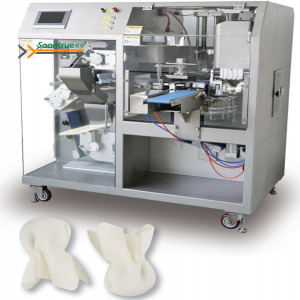
Manual production methods inherently cap a business's growth potential. A skilled team can only produce a few hundred wontons per hour, creating a significant bottleneck as demand increases. An automated system shatters these limitations, enabling businesses to scale production exponentially and meet market opportunities head-on.
Automate High-Volume Wrapper Production
A Wonton Wrapper Machine automates the entire wrapper-making process. This shift from manual labor to mechanization delivers a monumental leap in output. Instead of measuring production in hundreds of units per hour, businesses can measure it in thousands. This capability allows manufacturers to fulfill large orders, expand into new markets, and maintain a competitive edge.
The production capacity varies by model, but even semi-automatic machines offer a significant upgrade over manual methods. Fully automated systems can achieve even higher throughputs.
| Machine Type | Production Capacity (wrappers/hour) |
|---|---|
| Semi-automatic | 800–1,200 |
| Commercial | 1,500–5,000 |
| Fully automated | >4,000 |
For example, some advanced machines can produce between 3,500 and 4,200 wontons per hour, demonstrating the immense volume potential of automation.
Ensure Continuous, Uninterrupted Operation
High production speed is only valuable when it is consistent. Modern wrapper machines are engineered for reliability and continuous operation, minimizing costly downtime. They incorporate robust mechanical features designed for the rigors of a demanding production environment. Key components that ensure stable, uninterrupted performance include:
- Synchronized Power Systems: Variable frequency motors and photoelectric switches work together. They maintain a consistent transfer speed for the dough belt, ensuring uniform thickness and preventing tears or jams.
- Durable Components: High-quality parts, such as imported NSK rollers from Japan, are used for continuous rolling without degradation in performance.
- Hygienic and Sturdy Construction: Stainless steel covers and frames provide durability, resist corrosion, and simplify sanitation, contributing to longer operational life.
These design elements create a stable and safe production line that operates with minimal interruption.
Streamline Production with User-Friendly Controls
Advanced technology does not need to be complicated. Modern machines feature intuitive interfaces that simplify operations and reduce the need for extensive operator training. The SOONTRUE XYT10A, for instance, uses a simple four-button control panel, making it accessible to operators of all skill levels.
These systems often use Programmable Logic Controllers (PLCs) and touchscreens to manage production parameters. Operators can easily select recipes, adjust settings, and monitor the production process in real-time. This level of control also dramatically reduces changeover times between different products.
Automated controls with pre-programmed recipes and quick-release mechanisms are core design features. They enable a trained operator to complete a product changeover in just 15-25 minutes, boosting operational agility and minimizing production delays.
By storing ideal settings for each product, a machine can switch from one wonton type to another with minimal manual adjustments. This efficiency allows businesses to respond quickly to changing customer orders and produce a wider variety of products without sacrificing productivity.
How a Wonton Wrapper Machine Fixes Inconsistency
Manual production inevitably leads to variations in product quality. Even the most experienced chefs cannot guarantee that every wonton will be identical. A Wonton Wrapper Machine eliminates this guesswork, delivering exceptional consistency that enhances brand reputation and customer satisfaction.
Achieve Uniform Wrapper Thickness and Size
Inconsistent wrapper thickness affects both texture and cooking time, while uneven sizes look unprofessional. Automated systems solve this with precision engineering. Advanced machines use a multi-stage pressing structure to roll the dough into a perfectly uniform sheet. An automatic cutting device then precisely positions and cuts each wrapper. This process ensures every single wrapper meets exact specifications for thickness, shape, and size, resulting in a standardized and high-quality final product.
Guarantee Precise and Consistent Filling
Getting the filling-to-wrapper ratio just right is crucial for taste and texture. Machines achieve this with remarkable accuracy. A specialized filling dispenser uses mechanisms like pistons or augers to deposit a precise, pre-set amount of filling onto each wrapper. This eliminates the overfilling and underfilling common in manual work.
The SOONTRUE XYT10A, for example, integrates advanced motor control to perfect this process. This technology ensures each wonton is uniform in shape and weight.
- Full Servo Motor Control: The machine uses servo motors for precise control over the entire forming process.
- Smart and Accurate Operation: This integration leads to exact movements, contributing to a uniformly shaped and filled final product.
Mimic Perfect Manual Wrapping with Automation
A perfectly sealed wonton is a mark of quality. It holds its shape during cooking and prevents the filling from leaking. Modern machines are designed to replicate the gentle yet firm technique of a skilled artisan. A servo motor-driven wrapping mechanism mimics the motions of manual wrapping. It applies adjustable force to create a tight seal without damaging the delicate wrapper. This automated process guarantees that every wonton is not only aesthetically pleasing but also structurally sound, ready for boiling, steaming, or frying.
Solve Labor Shortages and High Training Costs
Finding and retaining skilled labor is one of the biggest hurdles in the food industry. A wonton wrapper machine directly addresses this challenge by automating key processes, reducing the need for specialized staff and simplifying operational workflows from training to cleanup.
Reduce Dependence on Skilled Manual Labor
Manual wonton production relies heavily on artisans with years of practice. Automation eliminates this dependency. A machine handles the repetitive, labor-intensive tasks of forming, filling, and sealing wrappers. This shift allows manufacturers to tackle labor shortages effectively. Human workers can then concentrate on more complex, value-added roles. Instead of manual wrapping, employees can focus on strategic areas like quality control and food safety, creating a productive partnership between human oversight and machine precision.
Simplify Operations and Minimize Training Time
Modern wonton machines are engineered for simplicity, significantly cutting down training time. The SOONTRUE XYT10A, for example, features a user-friendly design with just four operating buttons. This intuitive interface is crucial for reducing human operator error and boosting staff productivity.
Digital controls enforce correct procedures and prevent mistakes. Systems can use input constraints to stop invalid entries or offer role-based instructions, giving a new trainee more detailed guidance than a senior operator. This ensures consistency regardless of experience level.
By simplifying complex processes, businesses can onboard new staff quickly and maintain high operational standards with minimal training investment.
Make Cleanup Fast and Effortless
Strict hygiene standards are non-negotiable, but daily cleanup can be a major time sink. Wonton wrapper machines are built with sanitation in mind. Key components are constructed from high-quality, food-grade materials like stainless steel and polymers. These non-porous surfaces resist corrosion and are easy to clean thoroughly.
The SOONTRUE XYT10A exemplifies this efficient design with its quick-release stuffing system. This feature allows operators to disassemble and clean the entire system in just 30 minutes, maximizing uptime and ensuring your production line meets food safety regulations without sacrificing efficiency.
Cut Operational Costs and Material Waste
A wonton wrapper machine is an investment that delivers a strong return by directly targeting major operational expenses. It optimizes the use of labor, materials, and time. This efficiency translates into significant cost savings and a healthier bottom line for any food production business.
Lower Per-Unit Production Costs
Every wonton produced has an associated cost. Automation drastically reduces this per-unit cost by tackling inefficiencies at their source. A machine's high-speed output means more products are made in less time, spreading fixed overheads like rent and utilities across a much larger volume.
Key Drivers of Cost Reduction:
- Labor Efficiency: Fewer staff are needed to produce thousands of units, lowering payroll expenses per wonton.
- Increased Throughput: Higher production volumes dilute fixed operational costs.
- Energy Savings: Modern machines are designed for energy efficiency, consuming less power per unit produced compared to running multiple smaller, less-optimized stations.
This combination of factors makes automated production far more economical than manual methods, especially as a business scales. The savings compound over time, directly boosting profitability.
Minimize Dough Waste with a Recycling System
In traditional wrapper production, the process of cutting round or square shapes from a sheet of dough inevitably leaves behind scraps. These scraps represent wasted material and lost profit. Modern wonton machines solve this problem with an integrated dough recycling system.
This innovative feature is a hallmark of advanced equipment. Machines like the SOONTRUE XYT10A incorporate a recycling function directly into the production line. Leftover dough from the cutting stage is automatically collected, often through an entrance in the center of a turntable. The system then feeds this scrap dough back into the dough bucket or hopper for reuse. This closed-loop process ensures nearly all raw dough is converted into final product. This design, also found in other leading machines, effectively utilizes materials and significantly reduces production expenses.
Improve Yield with Efficient Material Use
Beyond recycling waste, a wonton wrapper machine maximizes yield through precision engineering. It ensures every gram of dough and filling is used to its fullest potential. This efficiency starts with the dough sheet itself.
The SOONTRUE XYT10A uses a sophisticated 3-stage dumpling skin pressing structure. This system rolls the dough to a precise, uniform thickness, allowing for the maximum number of wrappers to be cut from a single sheet. There are no thick or thin spots that might lead to rejected products.
This same precision applies to the filling process.
- Piston-Type Servo Motor: This technology dispenses an exact, pre-programmed amount of filling for every wonton.
- Inner Cylinder with Cutting Knife: This mechanism cleanly portions the filling and prevents spillage between deposits.
This level of control eliminates costly overfilling and ensures product consistency. By optimizing the use of both dough and filling, the machine produces a higher yield of perfect, sellable wontons from the same amount of raw ingredients.
A Wonton Wrapper Machine is the direct solution to production bottlenecks. It boosts speed, ensures consistent quality, and cuts operational costs. Automating production eliminates inefficiencies and allows a food business to scale effectively. One Canadian manufacturer successfully expanded its operations across multiple locations after adopting automation.
Implementing an advanced solution like the SOONTRUE XYT10A provides a clear path to transform a production line, reduce labor dependence, and drive significant growth in a competitive market.
FAQ
Can one machine produce different types of dumplings?
Yes. Versatile machines like the SOONTRUE XYT10A use interchangeable molds. This feature allows businesses to produce various products, including traditional wontons, lace gyoza, and siomai. Operators can quickly switch molds to meet diverse production demands and expand their product offerings.
How long does daily cleaning take?
Modern machines prioritize efficient sanitation. The SOONTRUE XYT10A features a quick-release stuffing system. This design allows operators to complete a full disassembly and cleaning in just 30 minutes, ensuring compliance with food safety standards without significant downtime.
What is the learning curve for new operators?
The learning curve is minimal. Machines are designed for user-friendly operation. For example, the SOONTRUE XYT10A uses a simple four-button control panel. This intuitive interface reduces training time and empowers staff to manage production with confidence and minimal supervision.
How does the machine handle different filling types?
Advanced machines accommodate various fillings, from meat to vegetable mixtures. A piston-type servo motor ensures precise portioning. An inner cylinder with a cutting knife cleanly dispenses the filling, preventing spillage and guaranteeing consistency across all products.
Post time: Jan-08-2026