
An automatic sponge packaging system operates by conveying sponges to a wrapping station, where a roll of film forms a tube around each one. The machine then seals the film lengthwise and crosswise to create an individual bag. Finally, the system cuts the bag and discharges the finished, packaged sponge as a retail-ready product. This automated process is crucial for manufacturers meeting growing consumer demand.
The global sponge market is expanding steadily. Projections show significant growth in the coming years, highlighting the need for efficient production methods.
| Metric | Value |
|---|---|
| Market Size (2026) | US$ 8.1 Billion |
| Projected Market Size (2035) | US$ 12.55 Billion |
| Compound Annual Growth Rate | 5% |
| Forecast Period | 2026-2035 |
A modern sponge packing machine streamlines the entire packaging sequence. It transforms loose sponges into market-ready products with precision and speed. The system sequentially moves each sponge, wraps it in film, seals the package, and cuts it free for distribution. This integration of tasks ensures a consistent and high-quality output.
How Are Sponges Fed and Positioned?
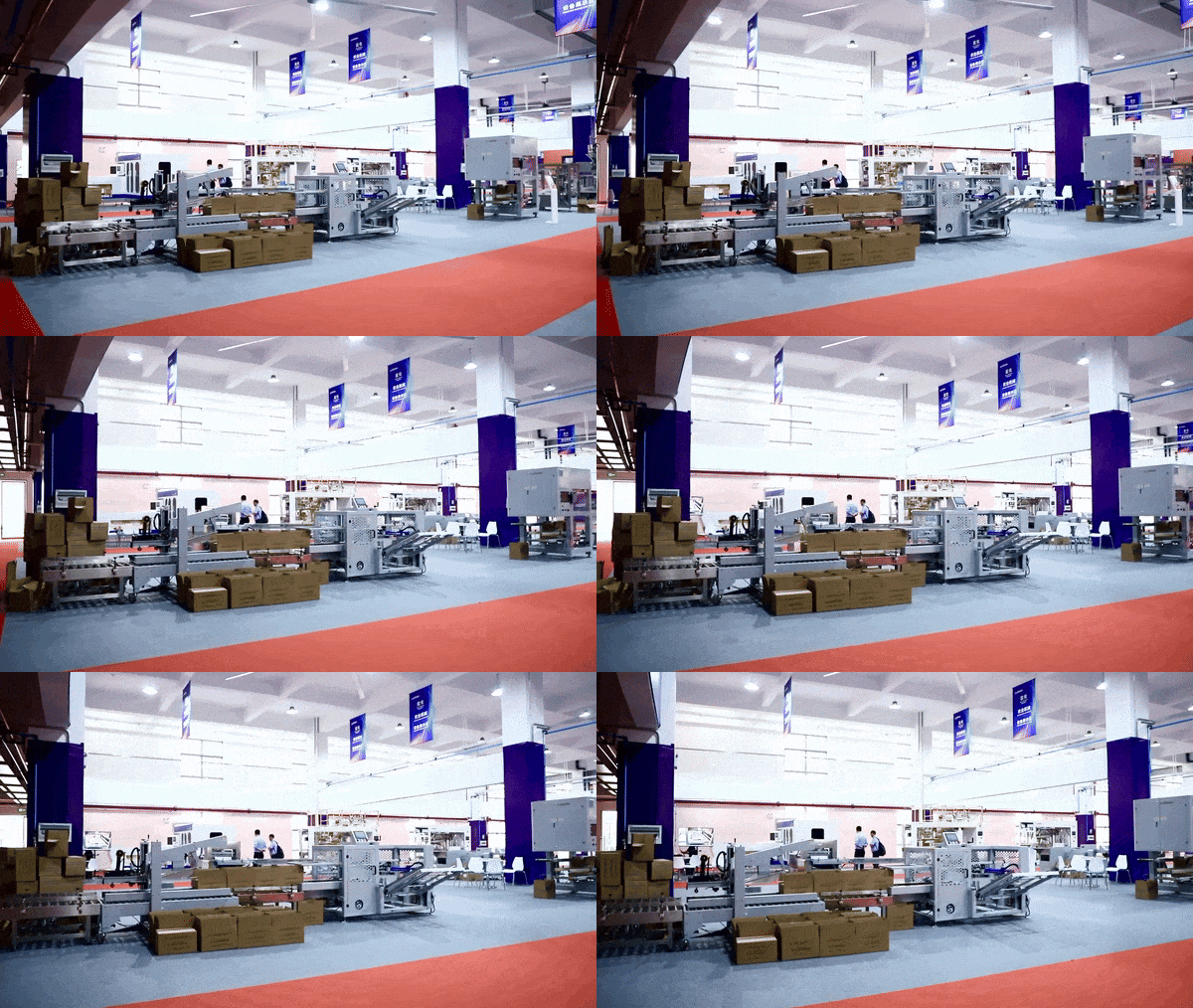
The packaging process begins with the precise feeding and positioning of each sponge. This initial stage is fundamental to the system's overall efficiency and accuracy. It ensures that every sponge enters the wrapping station correctly for a flawless final product.
The Infeed Conveyor Mechanism
The infeed conveyor is the system's entry point. It transports sponges from a loading area to the main packaging unit. The design of the conveyor belt itself is critical for handling different sponge materials effectively.
- Flat Belt Conveyors are ideal for moving small, soft, or irregularly shaped sponges without causing damage.
- Modular Belt Conveyors use hardened plastic, making them better suited for rough or abrasive sponge materials.
- Cleated Belt Conveyors provide extra support and are excellent for handling delicate items that need to be kept separate.
To accommodate various product dimensions, the conveyor uses adjustable guide rails. These rails line the sides of the conveyor and keep the sponges centered. Modern systems feature tool-less or quick-adjust rails, enabling operators to change production from one sponge size to another with minimal downtime.
Sponge Detection and Synchronization
As sponges travel along the infeed conveyor, the sponge packing machine must detect their exact location. This task is handled by high-accuracy sensor technology, typically a photoelectric eye. The sensor sends a signal to the control system the moment it detects a sponge.
Note: This detection signal is the key to synchronization. The system uses this information to perfectly time the film feed and the sealing jaws.
This synchronization ensures that the packaging film advances at the same speed as the sponge. The machine perfectly aligns each sponge within the film tube before sealing. This precise coordination prevents empty bags and guarantees that every sponge is centered correctly, resulting in a uniform and professional-looking package.
How Is the Packaging Film Formed into a Bag?
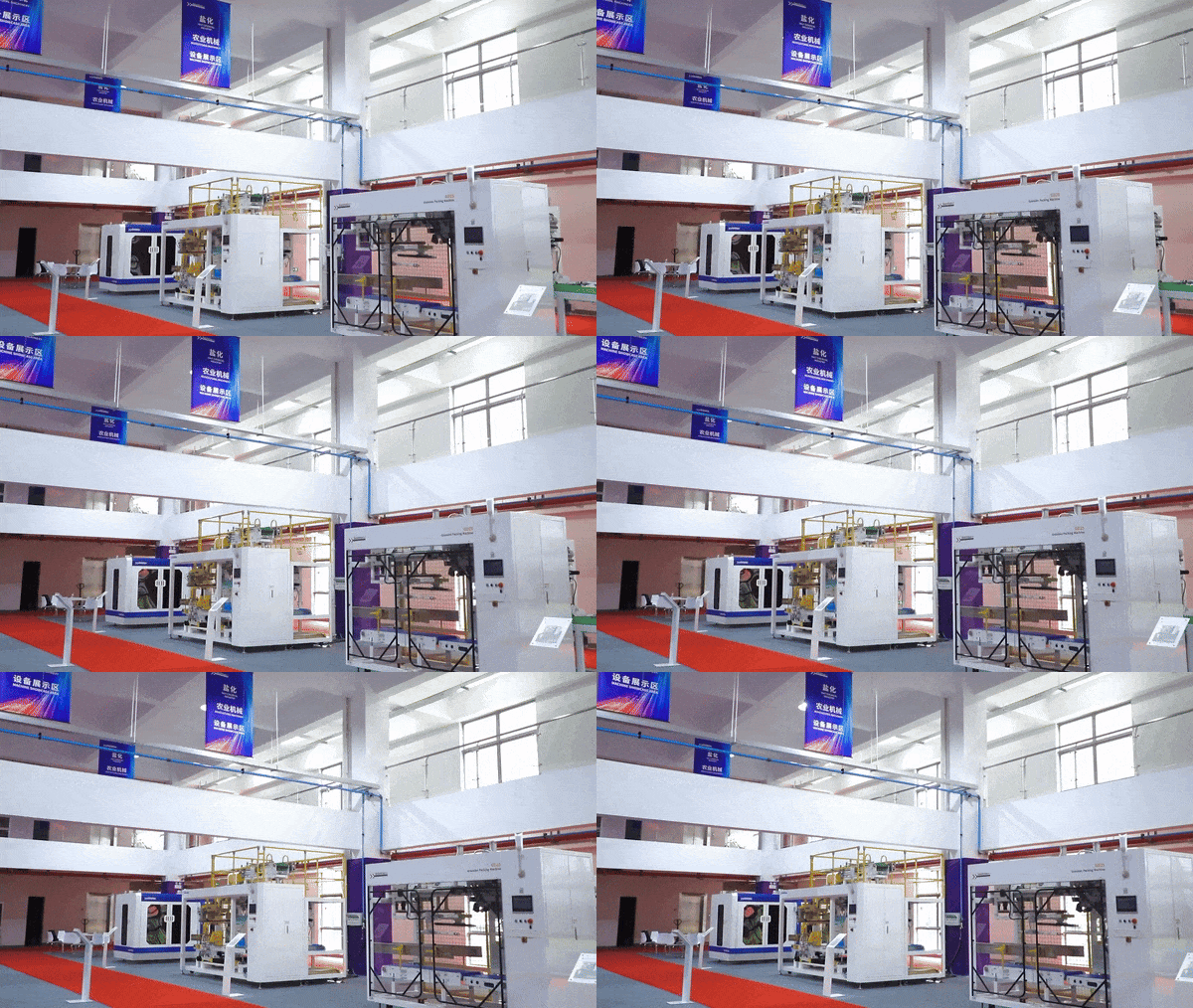
Once a sponge is correctly positioned, the system begins the crucial task of forming the packaging film around it. This stage transforms a flat roll of material into a protective tube, preparing it for sealing. The process relies on two interconnected mechanisms: the film unwinding system and the bag former.
The Film Roll Unwinding System
The process starts with the film roll unwinding system, which dispenses the packaging material. A large roll of film is mounted on a spindle. As the machine operates, it pulls the film from this roll. The choice of film material is vital for both product protection and retail appeal.
Common materials like Polyethylene (PE) and Polypropylene (PP) are popular choices.
- Polyethylene (PE) offers excellent flexibility and a strong moisture barrier, making it a cost-effective option for protective wrapping.
- Polypropylene (PP) provides greater rigidity and clarity, giving the final package a more premium look on store shelves.
Maintaining consistent film tension is critical during this step. Without it, the film can wrinkle, stretch, or tear. A sophisticated tension control system prevents these issues.
How Tension Control Works: A closed-loop control system uses sensors to monitor film tension in real-time. A controller algorithm analyzes this data and instructs actuators, like servo motors, to make micro-adjustments. This ensures the film unwinds smoothly, regardless of the machine's speed or the changing diameter of the film roll.
This system uses several key components working in unison:
- Dancer Rollers: These rollers move up and down to absorb any slack or sudden jerks in the film feed.
- Braking Systems: They apply precise resistance to the film spindle, preventing the roll from unwinding too quickly.
- Servo Motors: These motors provide highly responsive control over the unwinding speed, ensuring the film feeds at a constant rate.
The Bag Forming Process
After unwinding, the flat film travels toward the bag forming area. Here, a critical component known as a forming box or forming shoulder takes over. This specially shaped metal piece is the heart of the bag-making process.
The forming box guides the flat sheet of film, carefully folding it around itself. This action shapes the film into a continuous tube around the path of the incoming sponges. The sponge packing machine ensures each sponge enters this newly formed film tube at the perfect moment. As the film wraps around the product, its two outer edges overlap, preparing them to be sealed into a fin. This seamless transition from a flat sheet to a product-filled tube is essential for creating a uniform and secure package.
How Does the Sponge Packing Machine Seal the Package?
After the film is formed into a tube around the sponge, the system must create a durable, airtight seal. This stage is critical for product protection and presentation. The sealing process occurs in two distinct steps: creating the longitudinal seal along the package's length and then forming the transverse seals at both ends.
The Longitudinal Sealing (Fin Seal)
The first seal created is the longitudinal seal, often called a "fin seal." This is the seam that runs down the back or bottom of the finished package. It is formed by pressing together the two outer edges of the film that were overlapped during the bag forming process.
The system typically uses a set of heated rollers or bars to apply both heat and pressure to the film's overlapping edges. This melts the material, fusing the layers together to create a continuous, strong seam. The choice of sealing technology is crucial for achieving optimal speed, quality, and efficiency. The two primary methods are traditional heat sealing and advanced ultrasonic sealing.
Comparison: Heat sealing is a well-established method, while ultrasonic sealing offers significant advantages for modern, high-speed production.
The table below outlines the key differences between these two technologies.
| Feature | Heat Sealing | Ultrasonic Sealing |
|---|---|---|
| Mechanism | Uses direct heat and pressure to melt material layers. | Uses high-frequency vibrations to create friction and localized heat. |
| Speed | Generally slower due to the need for heating and cooling cycles. | Faster because the seal is created almost instantly with minimal cooling time. |
| Energy Efficiency | Less efficient due to constant heat required and heat loss. | More energy-efficient as energy is only used during the sealing moment. |
| Seal Quality | Can be inconsistent; risk of material distortion or burning. | Produces highly consistent, clean, and strong seals with minimal material stress. |
| Material Compatibility | Works well with most thermoplastics. | Excellent for heat-sensitive materials, multi-layer films, and even films with minor contaminants. |
| Maintenance | Heating elements require regular cleaning and eventual replacement. | Requires less maintenance due to solid-state components and no heating elements. |
The Transverse Sealing and Cutting (End Seal)
Once the fin seal is complete, the system creates the transverse seals, also known as the end seals. These seals close off the front of one package and the back of the next one in a single motion. This action is performed by a rotating or reciprocating jaw assembly.
This mechanism is a model of efficiency. The transverse sealing jaws perform two jobs at once: sealing the film and cutting the packages apart.
- Sealing: The jaws press together with significant force. They often feature a serration pattern that maximizes pressure on the film, ensuring the sealant layer melts and flows properly for a robust, leak-proof end seal.
- Cutting: An integrated cutting blade operates at the same time as the sealing action. The sponge packing machine synchronizes this action perfectly with the film speed. This precision ensures the cut occurs exactly in the middle of the sealed area between two sponges.
The type of blade used is selected based on the packaging material. While straight-edge knives work well for simple films, tougher materials require a different approach.
- Serrated Knives: These blades have a toothed edge that provides a saw-like cutting action. They are highly effective for cutting through thicker materials, including certain plastic films and foam products like sponges.
- Guillotine Knives: For very thick or dense materials, a heavy-duty guillotine knife may be used. Its long, straight blade applies significant force to achieve a clean, powerful cut.
This synchronized process of sealing and cutting transforms the continuous film tube into a stream of individual, fully sealed, and retail-ready products.
How Is the Finished Package Discharged?
The final stage of the automated packaging process is the discharge of the finished product. After the system seals and cuts each package, it must efficiently move the retail-ready sponges away from the main unit. This step ensures a continuous workflow and prevents a bottleneck at the machine's exit point. The outfeed conveyor system handles this crucial task with speed and precision.
The Outfeed Conveyor System
The outfeed conveyor system takes control the moment a packaged sponge is cut free. It catches the individual product and transports it to a designated collection area, such as a rotary accumulation table or a manual packing station. The design of this conveyor is optimized for handling lightweight, finished goods without causing damage. A modern sponge packing machine often features a highly configurable outfeed system.
Key characteristics of an effective outfeed conveyor include:
- Speed Control: The belt speed is adjustable, typically from +/- 8 m/min up to +/- 22 m/min, to match the main machine's production rate.
- Conveyor Belt Material: A blue, food-grade belt material is common, sometimes equipped with dividers to keep packages separated.
- Construction Material: The frame is built from durable stainless steel (AISI 304) for hygiene and longevity.
- Side Guidance Options: Adjustable side guides, made from plain wood or food-approved polycarbonate glass, keep packages aligned during transport.
Beyond simple transport, the outfeed system can also incorporate advanced quality control functions. This allows for a final check before the products are boxed for shipment.
An in-house controls department can integrate custom conveyors and reject systems. This collaboration with leading suppliers allows for the seamless addition of modules that automatically identify and remove defective packages from the production line.
This capability ensures that only perfectly packaged sponges proceed to the final cartoning and distribution stages, completing the automated journey from loose product to shelf-ready item.
What Core Technologies Drive the System?
A sponge packaging system's speed, accuracy, and reliability depend on a set of core technologies working in harmony. These advanced components act as the brain, nerves, and senses of the machine, ensuring every stage of the operation runs flawlessly. Optimized component design, driven by these technologies, results in a fast and stable packing speed.
The Servo Control System
The servo control system is the heart of the machine's mechanical motion. It provides the power and precision needed for high-speed packaging. Unlike traditional motors, servo motors offer superior performance.
- Enhanced Torque: They deliver high torque even at low speeds, which is ideal for powerful and controlled movements.
- Precision Control: Servos respond instantly to command signals, allowing for exact positioning of the film and cutting blades. This reduces material waste and ensures consistent package sizing.
- Higher Speed: They operate at very high speeds with greater energy efficiency, boosting overall productivity.
A Programmable Logic Controller (PLC) acts as the brain of this system. It processes sensor data and sends precise instructions to each servo motor, coordinating their movements to ensure perfect synchronization between product feeding, film pulling, and sealing.
The Human-Machine Interface (HMI)
The Human-Machine Interface (HMI) is the central command center for the entire system. It is typically a user-friendly touchscreen that allows an operator to monitor and control all machine functions. An operator can use the HMI to manage a wide range of parameters.
Key HMI Functions:
- Set operational parameters like bag length and packing speed.
- Monitor real-time production data and track KPIs.
- Receive and reset alarm or fault notifications.
- Access stored recipes for different products, thanks to a built-in memory function.
This interface simplifies operation and allows for quick changeovers between different sponge sizes, enhancing operational flexibility.
High-Accuracy Sensor Technology
High-accuracy sensors are the eyes and ears of the packaging system, providing critical data for control and safety.
- Print Mark Sensors: These specialized photoelectric sensors detect registration marks on pre-printed film. This function ensures the machine aligns graphics perfectly, synchronizing cutting and sealing actions for a professional-looking package.
- Safety Sensors: Components like light curtains and door interlocks protect operators. A light curtain creates an invisible infrared barrier around hazardous areas. If an operator breaks the beam, the sensor instantly sends a stop signal to the machine, preventing accidents.
A sponge packaging system seamlessly integrates four key stages: feeding, forming, sealing, and discharging. The machine sequentially moves each sponge, wraps it in a film tube, seals all sides, and cuts the package free. This automated process, driven by servo controls and high-accuracy sensors, efficiently transforms loose sponges into retail-ready products. The resulting gains in efficiency and labor savings often deliver a return on investment in under two years. Looking ahead, the industry is advancing with AI-driven quality control and robotics, promising even greater precision and productivity.
FAQ
How fast can the machine package sponges?
The system achieves fast and stable packing speeds. An optimized component design and a high-accuracy servo control system enable this rapid performance. The specific rate depends on the sponge size and film material, but the machine is engineered for high-volume production environments.
What materials compose the machine's frame?
Manufacturers construct the machine frame from durable materials for longevity and a professional appearance. Customers can typically choose between a robust carbon steel frame or a hygienic stainless steel option. This choice allows the machine to fit different production standards and environments.
Can the system handle different sponge sizes?
Yes, the system offers excellent operational flexibility. Its servo control system and adjustable components allow for quick changeovers between various sponge dimensions. Different optional configurations are available to meet specific product requirements, minimizing downtime when switching production runs.
How does the machine ensure package graphics are aligned?
The machine uses a high-accuracy color mark tracking function. A specialized sensor detects registration marks printed on the film. This technology synchronizes the cutting and sealing actions with the printed design, ensuring every package has perfectly centered and professional-looking graphics.
Is the machine difficult to operate?
No, the system is designed for ease of use. It features a user-friendly Human-Machine Interface (HMI) with a memory function. Operators can quickly set parameters like bag length and packing speed. The HMI also stores product recipes for fast and simple changeovers.
Post time: Nov-25-2025