
Two primary forces define the frozen food packaging landscape in 2026. A push for practical, recyclable materials drives sustainability efforts. The integration of smart technology simultaneously enhances product safety. These innovations propel an industry poised for significant expansion.
The global frozen food packaging market is projected to reach USD 62.12 Billion by 2033, reflecting a compound annual growth rate of 5.5%.
Advancements in automation support these shifts, with the modern frozen food packing machine improving efficiency. Rigorous testing protocols also validate new packaging solutions. These trends collectively address consumer demand for transparency and ensure operational excellence.
Practical Sustainability: Moving Beyond Aspiration to Application
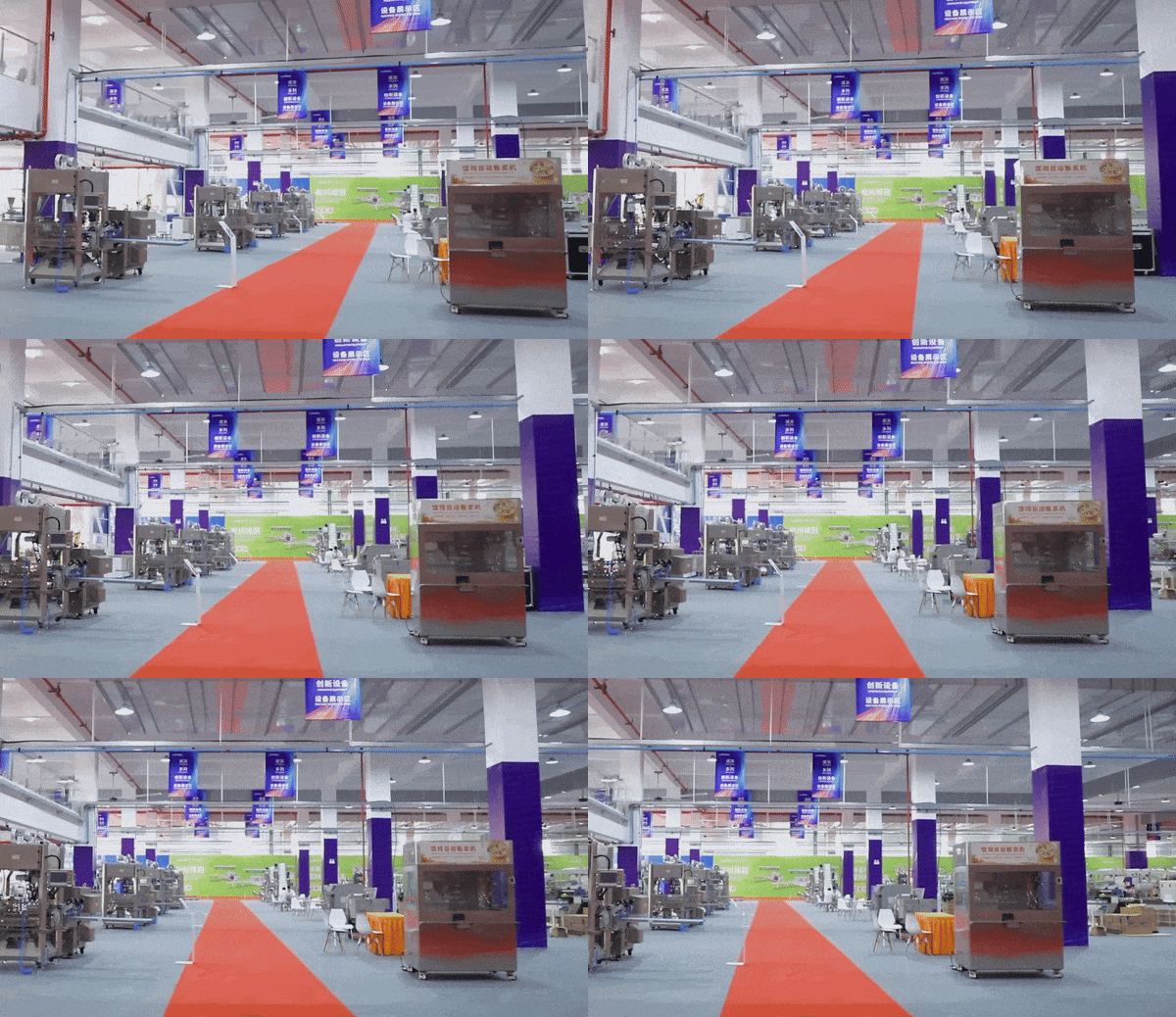
In 2026, sustainable packaging is no longer a distant goal; it is a practical requirement. The industry is actively shifting from aspirational concepts to tangible, scalable solutions. This transition is driven by a combination of regulatory mandates, consumer expectations, and the pursuit of operational efficiency. Key factors accelerating this change include:
·Governmental and Regulatory Pressure: Stricter rules on packaging waste are compelling brands to adopt recyclable materials.
·Evolving Consumer Preferences: Shoppers increasingly choose brands that demonstrate environmental responsibility through their packaging.
·Market Growth Driver: The demand for eco-friendly materials is now a primary force propelling the frozen food packaging market.
Why Pulp and Paper Are Gaining Traction
Pulp and paper-based materials are gaining significant momentum as viable alternatives to traditional plastics. Innovations now allow these materials to meet the demanding conditions of the frozen food environment. For instance, some companies offer food-grade paperboard made from 100% virgin pulp that provides excellent moisture resistance and stiffness, even in humid freezer conditions. Other advancements include paper bottles with over 95% wood-based fiber, eliminating the need for a separate plastic liner. These materials are not only recyclable but also feature smooth surfaces ideal for high-quality printing, reinforcing brand messaging.
Overcoming the Barrier Layer Challenge in Recyclable Packaging
A critical hurdle for recyclable packaging has always been the barrier layer, which protects frozen food from moisture, oxygen, and grease. Historically, these barriers were made from non-recyclable laminates. Today, new technologies provide effective protection while maintaining recyclability. Companies like Impermea Materials are pioneering PFAS-free, plastic-free coatings that are repulpable and compostable.
| Barrier Technology | Key Features | Benefit for Frozen Foods |
|---|---|---|
| Water-Based Coatings | Replaces PE laminates and waxes | Recyclable, repulpable, and compostable |
| Bio-Based Barriers | Made from renewable materials | Reduces dependence on petroleum-based plastics |
| PE Green | Plant-based raw material | Creates 100% renewable and recyclable packaging |
These solutions enable brands to deliver safe, high-quality products without compromising their sustainability commitments.
The Role of Lighter-Weight and Mono-Material Plastics
The plastics industry is also innovating to improve its environmental footprint. Two key trends are leading the way: mono-materials and lightweighting. Mono-material packaging, like the Bornewables™ polypropylene (PP) tubs used for Aino ice cream, consists of a single type of plastic, making it 100% recyclable.
Lightweighting offers both economic and ecological advantages. Lighter packages reduce material consumption, lower shipping costs, and decrease the overall carbon footprint by allowing more units per load.
This strategy optimizes freight, reduces fuel consumption, and enhances profitability. By using thinner films and more efficient designs, companies can achieve sustainability goals while improving their bottom line.
Smart Packaging: Building Trust Through Transparency
Smart packaging is transforming the relationship between frozen food brands and consumers. It provides verifiable proof of product quality and authenticity, fostering stronger brand loyalty. By integrating intelligent features directly into packaging, companies offer a new level of transparency that builds unshakable trust. This technology is no longer a novelty; it is a core component of modern food safety and brand responsibility.
How Smart Labels Monitor the Cold Chain
Maintaining the cold chain is critical for frozen food safety. Smart labels offer a simple, visual way for everyone, from logistics partners to end consumers, to confirm product integrity. For instance, a seafood package might include a color-changing strip that indicates if it was ever exposed to temperatures outside safe limits.
Smart labels allow customers to visually confirm if food maintained safe temperatures throughout its journey. A white indicator signifies proper conditions, while a color change signals a breach. This monitoring extends post-purchase, showing if items thawed during a power outage.
Several types of indicators help verify shipment integrity:
- Temperature-sensitive, color-changing labels that provide an immediate visual cue of temperature abuse.
- Adhesive labels that permanently change color when exposed to an unfavorable temperature threshold.
- Low-cost electronic time-temperature indicators that can be programmed for specific product requirements.
Using QR Codes to Enhance Product Traceability
QR codes are powerful tools for delivering detailed product information directly to a consumer's smartphone. A quick scan can unlock a wealth of data, enhancing transparency and consumer engagement. Brands use QR codes to share:
- Cooking instructions and nutritional details
- Allergen updates and ingredient disclosures
- Sustainability information
- Origin, batch, and traceability data
Beyond providing information, these codes create a two-way communication channel. Manufacturers can integrate QR codes that link to feedback forms, allowing them to measure customer satisfaction and gather insights to improve product quality.
Meeting FSMA 204 Requirements with Intelligent Packaging
Regulatory compliance is a major driver of smart packaging adoption. The FDA's Food Safety Modernization Act (FSMA) Section 204 mandates enhanced traceability for certain high-risk foods. Smart QR codes are instrumental in helping companies meet these track-and-trace requirements efficiently. This technology is essential for demonstrating compliance and ensuring rapid response during a recall. Driven by consumer demand for proof of safety and strict regulations, smart labels focused on food safety are expected to dominate packaging trends through 2026 and beyond.
The Frozen Food Packing Machine: Automating for a New Era
Automation is no longer an optional upgrade; it is the engine driving efficiency and safety in frozen food production. The modern frozen food packing machine integrates robotics, data analytics, and hygienic design to create a more resilient and reliable packaging line. These advancements empower companies to meet rising demand while upholding the strictest quality standards.
How Automation Reduces Labor Dependency and Error
Automation directly addresses persistent challenges like labor shortages and human error. A sophisticated frozen food packing machine uses robotic systems to handle repetitive and delicate tasks with superior precision. For example, vision-guided robots can sort products like corn on a conveyor before packaging. Other systems use robotic arms for primary packaging and end-of-line case packing, ensuring consistent placement and reducing product damage. This shift minimizes manual intervention, leading to fewer mistakes and a more dependable workflow.
Leveraging Machine Data for Process Optimization
Today’s frozen food packing machine is a rich source of actionable data. Integrated sensors collect information on everything from temperature and humidity to production efficiency metrics like Overall Equipment Effectiveness (OEE).
Predictive analytics uses this data to forecast equipment failures before they happen. By monitoring machine vibrations and performance trends, maintenance teams can schedule repairs during planned downtime, preventing costly emergency shutdowns and product loss.
This data-driven approach transforms maintenance from a reactive chore into a proactive strategy, optimizing the entire production process. A smart frozen food packing machine provides the insights needed for continuous improvement.
Achieving GMP Standards with Modern Equipment
Modern equipment is engineered to meet stringent Good Manufacturing Practice (GMP) standards. The design of a frozen food packing machine prioritizes hygiene and safety. Key features include the use of food-grade stainless steel 304 and seamless, non-absorbent food contact surfaces with rounded corners to prevent microbial contamination. This construction allows for rigorous and effective cleaning. By automating processes like filling, sealing, and labeling, the frozen food packing machine ensures accuracy and consistency, which are fundamental to GMP compliance and building consumer trust.
Rigorous Testing: The Non-Negotiable Step for Innovation
Innovation in packaging materials is meaningless without proof of performance. Rigorous testing serves as the critical bridge between a new concept and a market-ready product. It validates that new sustainable materials can withstand the harsh realities of the frozen food supply chain, ensuring product safety, regulatory compliance, and a positive consumer experience.
Why New Materials Demand New Testing Protocols
The shift to pulp, paper, and mono-material plastics requires a complete overhaul of testing procedures. Protocols designed for traditional multi-layer plastics are insufficient for these new substrates. Manufacturers must now validate performance against a complex web of international standards to ensure food safety and market access.
Global regulations define the scope of this testing. Key standards include:
- FDA 21 CFR in the United States, which governs all food contact materials.
- EU No 10/2011, setting migration limits for plastics in the European Union.
- MERCOSUR GMC n 3/92, which outlines approved materials for South American markets.
These regulations ensure that packaging does not alter food properties or introduce harmful substances.
| Standard/Regulation | Jurisdiction | Key Focus |
|---|---|---|
| FDA 21 CFR | United States | Governs food contact materials, including plastics, paper, and adhesives. |
| EU No 10/2011 | European Union | Establishes safety standards and migration limits for plastic packaging. |
| MERCOSUR GMC n 3/92 | MERCOSUR | Defines approved materials and testing protocols for member countries. |
| Brazil RDC n 91/2001 | Brazil | Sets specific migration limits and compliance rules for food contact substances. |
Preventing Costly Failures in the Supply Chain
Thorough testing is the best defense against catastrophic supply chain failures. Common issues like interrupted temperature control and damaged packaging can lead to spoilage, contamination, and significant financial loss.
In the frozen food industry, packaging failures can cause retail rejection rates as high as 15-20%. These rejections trigger chargebacks and damage crucial relationships with retailers.
Testing simulates real-world conditions, identifying weak points before a product ships. This proactive approach prevents costly disruptions. Unplanned downtime, often stemming from packaging issues, costs manufacturers an estimated $50 billion annually. By validating package integrity early, companies protect their revenue and reputation.
Validating the Consumer Unboxing Experience
The final test of any package happens in the consumer’s home. Testing must therefore extend beyond technical performance to evaluate the user experience. A package that is difficult to open, reseal, or dispose of can frustrate customers and damage brand perception. Usability tests confirm that perforations tear cleanly, seals open without extreme force, and the package functions as intended. This final validation ensures that innovative packaging delivers on its promise of convenience and quality from the production line to the kitchen counter.
Success in the 2026 frozen food packaging landscape demands a unified strategy. Brands must integrate recyclable materials, smart labels, and automation to thrive.
Rigorous testing is the critical link that validates these innovations, ensuring they deliver on promises of safety, quality, and sustainability.
Adopting these trends builds essential consumer confidence. This forward-thinking approach also ensures regulatory compliance and creates a resilient, future-proof operation for any company in the sector.
FAQ
What are the main benefits of a modern frozen food packing machine?
A modern frozen food packing machine boosts operational efficiency and product safety. It utilizes double servo motors for accurate positioning and speed. The equipment supports various packing formats and its hygienic design, using food-grade stainless steel 304, conforms to GMP standards.
Why are pulp and paper becoming popular for frozen food packaging?
Pulp and paper offer a recyclable alternative to traditional plastics. Innovations in barrier coatings now provide the moisture resistance needed for freezer environments. This shift helps brands meet both consumer demand for sustainability and stricter governmental regulations on packaging waste.
How does smart packaging help meet FSMA 204 rules?
Smart packaging provides the enhanced traceability data required by FSMA 204. QR codes and intelligent labels create a digital record of a product's journey. This technology allows companies to demonstrate compliance and manage recalls efficiently.
Post time: Nov-25-2025