
Understanding the Chips Packing Machine Price Tiers

The chips packing machine price is not a single figure but a range spread across distinct tiers. Each tier corresponds to a different level of automation, speed, and production capacity. A business can identify the right equipment for its needs by understanding the capabilities offered at each price point. This knowledge helps align the investment with both current production demands and future growth plans.
Entry-Level Machines: $15,000 - $40,000
Entry-level machines are the gateway for startups and small-scale producers. These systems are typically semi-automatic. They require significant operator involvement for tasks like feeding product and moving filled bags. Their primary advantage is a low initial investment, making them accessible for businesses with limited capital.
Note: While affordable, these machines have lower output speeds, generally producing 15-30 bags per minute. Accuracy can also be a concern, as most use volumetric cup fillers instead of more precise weighing systems.
Key characteristics of an entry-level machine include:
·Operation: Semi-automatic vertical form fill seal (VFFS) functionality.
·Weighing System: Often uses a volumetric cup filler, which measures product by volume, not weight.
·Speed: Lower output, suitable for small batches.
·Labor: Requires one or more operators for continuous operation.
·Ideal User: Businesses testing a new product, selling at farmers' markets, or managing low-volume orders.
Mid-Range Automated Systems: $40,000 - $90,000
Mid-range systems represent a significant step up in automation and efficiency. These machines are ideal for growing businesses that need to increase output and improve packaging consistency. The higher chips packing machine price in this tier is justified by features that reduce labor costs and product giveaway.
A key upgrade in this category is the integration of a multihead weigher. This system uses multiple weighing buckets to combine portions, achieving a highly accurate target weight for each bag. This precision minimizes overweight bags, saving money on product costs over time. Many systems in this range also include:
·Date Coders: Automatically print expiration dates or lot codes on each bag.
·Gas Flushing Systems: Introduce nitrogen into the bag to extend shelf life.
·Automated Film Tracking: Ensures the packaging film runs straight, reducing waste.
These machines can typically operate at speeds of 40-70 bags per minute, bridging the gap between manual processes and full-scale industrial production.
High-Speed Integrated Lines: $90,000 - $200,000+
High-speed integrated lines are complete, end-to-end packaging solutions designed for large-scale manufacturing. The investment is substantial, but these systems deliver maximum throughput, accuracy, and automation. A business operating at this level requires minimal human intervention during the packaging process. The elevated chips packing machine price reflects a system that combines multiple pieces of equipment into one seamless operation.
A typical integrated line includes:
1.Infeed Conveyor: Automatically transports chips to the weigher.
2.Multihead Weigher: A high-speed, high-accuracy weigher (often with 14 or more heads).
3.VFFS Machine: A robust bagger capable of speeds exceeding 100 bags per minute.
4.Take-Away Conveyor: Moves filled bags to the next station.
5.Check Weigher & Metal Detector: Ensures final bag weight is correct and free of contaminants.
6.Case Packer: Automatically packs bags into boxes for shipping.
The table below summarizes the core differences between the tiers.
| Feature | Entry-Level | Mid-Range | High-Speed |
|---|---|---|---|
| Price Range | $15k - $40k | $40k - $90k | $90k - $200k+ |
| Speed (Bags/Min) | 15 - 30 | 40 - 70 | 80 - 120+ |
| Weighing System | Volumetric Cup | Multihead Weigher | High-Speed Multihead |
| Automation Level | Low (Semi-Auto) | Medium (Automated) | High (Integrated Line) |
| Labor Needs | High | Moderate | Low |
Choosing the right tier depends entirely on a company's production volume, budget, and long-term strategic goals.
Key Factors That Drive Up the Initial Cost
The price tiers provide a general budget framework. However, the final cost of a machine within any tier is determined by specific configuration choices. A company's operational needs directly influence the hardware and software required. Understanding these key cost drivers is essential for specifying a machine that meets performance goals without overspending.
Speed and Output Requirements
The most significant factor influencing a chips packing machine price is its speed, measured in bags per minute (BPM). Higher output speeds demand more robust engineering, advanced servo motors, and sophisticated control systems. A machine built to run at 120 BPM is fundamentally different from one designed for 30 BPM.
A business must calculate its required speed based on production targets. A simple calculation can provide a baseline:
Formula for Required Speed:(Total Bags Needed per Shift) / (Total Operating Minutes per Shift) = Required BPM
For example, a company needing to produce 24,000 bags in an 8-hour (480-minute) shift requires a machine capable of at least 50 BPM. Businesses should also factor in future growth. Selecting a machine that can exceed current needs provides scalability, preventing the need for a costly replacement in the near future. Faster machines cost more upfront but deliver a lower cost-per-bag over their lifetime through increased throughput.
Weighing and Dosing Systems
The system that weighs the chips before they enter the bag is a critical component with a major impact on both cost and profitability. Inaccuracy in weighing leads to "product giveaway"—packing more chips in a bag than stated on the label. Over time, this giveaway represents a significant financial loss.
There are three primary types of weighing systems:
1.Volumetric Cup Filler: This is the most basic and least expensive option. It doses product by volume, not weight. While fast and simple, it is highly inaccurate for irregularly shaped items like potato chips.
2.Linear Weigher: A linear weigher uses vibrating pans to feed product into a weigh bucket. It is more accurate than a volumetric filler but slower than a multihead weigher. It represents a good middle ground for small to medium-sized operations.
3.Multihead Weigher: This is the industry standard for packaging chips. It uses multiple weigh buckets (e.g., 10, 14, or 20 heads) to create precise weight combinations. A computer selects the combination of buckets that comes closest to the target weight, resulting in minimal product giveaway.
The table below compares these systems.
| Weigher Type | Initial Cost | Accuracy | Speed |
|---|---|---|---|
| Volumetric Cup | Low | Low | High |
| Linear Weigher | Medium | Medium | Medium |
| Multihead Weigher | High | Very High | High |
The investment in a multihead weigher provides a clear return on investment (ROI) by saving money on product giveaway, making it a necessary expense for most serious chip producers.
Automation and Custom Features
Beyond speed and weighing, various add-ons and custom features increase a machine's functionality and price. Each feature solves a specific problem, from extending shelf life to reducing labor. A business must evaluate the necessity of each option against its cost.
Common features that increase the initial investment include:
·Date/Lot Coder: An integrated printer that automatically applies expiration dates and batch codes for traceability. Options range from basic hot-stamp coders to high-resolution thermal transfer overprinters (TTO).
·Gas Flushing System (MAP): This system injects nitrogen gas into the bag before sealing. It displaces oxygen, which prevents the chips from becoming stale and extends shelf life. This is a standard feature for most chip packaging applications.
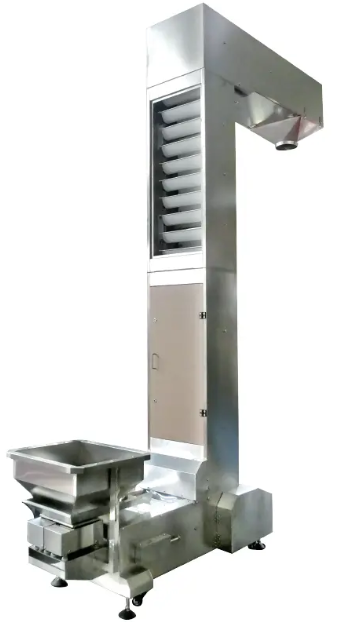
·Infeed and Outfeed Conveyors: Automated conveyors transport raw product to the weigher and carry finished bags away for case packing. This reduces the need for manual labor and creates a continuous production flow.
·Specialized Bag Formers: Creating different bag styles, such as gusseted bags or block-bottom bags, requires additional forming assemblies. Each former is custom-made for a specific bag size and style, adding to the cost.
·Quality Control Modules: Integrating a check weigher to verify final bag weight or a metal detector to ensure product safety adds significant cost but is often required for retail compliance.
Each of these upgrades contributes to the total chips packing machine price. A thorough analysis of which features are "must-haves" versus "nice-to-haves" is a critical step in the budgeting process.
Machine Size and Construction
The physical characteristics of a chips packing machine, including its dimensions and the materials used in its construction, are fundamental cost drivers. A larger, more robustly built machine requires more raw materials and engineering, which naturally increases its price. Businesses must carefully evaluate their facility space and product requirements to select a machine with the right physical specifications.
A machine's footprint, or the amount of floor space it occupies, is a primary consideration. Larger, higher-speed systems require a more extensive footprint to house their powerful motors, larger frames, and integrated components like conveyors. The vertical height is equally important. A complete packaging line with a multihead weigher positioned above the VFFS bagger can easily demand significant ceiling clearance.
Pro Tip:
Post time: Oct-24-2025