
What to Look For in a Budget Chips Packer
Selecting the right equipment requires careful evaluation of several key factors. A budget-friendly chips packing machine must align with your production goals, available space, and packaging design. Analyzing these aspects ensures you invest in a machine that supports your business's growth from day one.
Packing Speed (Bags Per Minute)
Packing speed, measured in Bags Per Minute (BPM), directly impacts your production capacity. Budget models typically operate between 15 and 60 BPM. A higher speed is not always necessary for a small-scale operation. Businesses should calculate their actual need based on daily or weekly output targets.
Target: 5,000 bags per week
Operating Hours: 20 hours per week (1,200 minutes)
Required Speed: 5,000 bags / 1,200 minutes = ~4.2 BPM
In this scenario, even a machine with a modest speed of 15-20 BPM provides ample capacity for growth.
Machine Footprint and Space
Floor space is a premium asset in any small facility. Vertical Form Fill Seal (VFFS) machines are popular for their smaller footprint compared to horizontal models. Operators must measure their available area carefully before purchase.
Pro Tip: Always account for more than just the machine's base dimensions. You need extra space around the unit for loading materials, routine maintenance, and safe operator movement. A clearance of at least three feet on all sides is a good rule of thumb.
Bag Type and Size Compatibility
The machine you choose must be compatible with your desired bag style and size. This factor is crucial for product branding and shelf appeal. Common bag types for chips include pillow bags and gusseted bags. Check the manufacturer's specifications for the supported range of bag dimensions.
| Specification | Description | Importance |
|---|---|---|
| Bag Width | The maximum and minimum width of the bag the machine can create. | Determines product volume and front-facing branding area. |
| Bag Length | The maximum and minimum length of the bag the machine can seal. | Affects fill capacity and overall package appearance. |
A versatile machine that handles various sizes offers greater flexibility for future product line extensions.
Ease of Operation and Maintenance
A machine's complexity directly affects labor costs and production uptime. Small businesses benefit greatly from equipment that is simple to operate and straightforward to maintain. An intuitive chips packing machine reduces the need for specialized technicians and minimizes costly downtime.
Operators should look for machines with user-friendly interfaces. Modern systems often feature touchscreen panels with clear menus and simple controls. Key features that enhance ease of use include:
Intuitive Controls: Simple adjustments for temperature, speed, and bag length.
Quick Changeovers: The ability to switch between different film rolls or bag sizes with minimal effort.
Error Diagnostics: On-screen alerts that help operators quickly identify and resolve issues.
Note: Always request a demonstration or training videos from the manufacturer. This provides a clear picture of the day-to-day operational workflow before making a purchase.
Regular maintenance is essential for extending the life of your equipment and ensuring consistent performance. A well-designed machine provides easy access to key components for cleaning and parts replacement.
Here is a sample maintenance schedule to consider:
| Frequency | Task Example | Purpose |
|---|---|---|
| Daily | Clean sealing jaws and product contact surfaces. | Ensures food safety and proper seal integrity. |
| Weekly | Inspect and lubricate moving parts like chains and bearings. | Prevents wear and tear, ensuring smooth operation. |
| Monthly | Check for wear on blades and heating elements. | Allows for proactive replacement of consumable parts. |
Choosing a machine with clear documentation and accessible support ensures that your team can handle routine upkeep confidently. This proactive approach keeps your production line running efficiently.
The 2025 Ranking: Top 10 Chips Packing Machines
After extensive market analysis, this ranking identifies the top machines that offer the best value for small-scale snack producers in 2025. Each model is evaluated on its performance, features, and overall cost-effectiveness.
1. VEVOR VFFS-420A (Best Overall)
The VEVOR VFFS-420A earns its top spot by delivering an exceptional combination of features at an entry-level price point. This vertical form fill seal (VFFS) system is a complete packaging solution. It forms bags from a roll of film, fills them with product, and seals them in one continuous process. Its design makes it the ideal chips packing machine for businesses looking to automate their packaging line without a massive capital outlay.
Operators appreciate the machine's PLC control system. The touchscreen interface simplifies adjustments for bag length, packing speed, and sealing temperature. This user-friendly design reduces training time and helps maintain consistent production quality.
| Specification | Value |
|---|---|
| Packing Speed | 15-50 BPM |
| Bag Width | 80-200 mm |
| Bag Length | 80-300 mm |
| Power | 220V / 2.2 kW |
Pro Tip: Pair the VEVOR VFFS-420A with a multi-head weigher for optimal accuracy. This integration minimizes product giveaway and ensures each bag meets its target weight, maximizing profitability.
2. LandPack LDBZ-150 (Best for Pouch Versatility)
The LandPack LDBZ-150 excels in its ability to handle a wide variety of premade pouches. This machine is perfect for brands that prioritize unique packaging to stand out on retail shelves. Unlike VFFS machines that create simple pillow bags, the LDBZ-150 works with pouches that are already formed.
This versatility allows small businesses to use premium packaging formats typically associated with larger brands. The machine can accommodate several popular pouch types:
- Stand-up pouches (Doypacks)
- Zipper pouches for reusability
- 3-side seal flat pouches
- Gusseted bags
Note: While offering superior branding flexibility, premade pouch machines often have a slower maximum speed than VFFS counterparts in the same price range. Businesses must weigh the value of package appearance against the need for higher production volume.
3. Spack Machine SP-280 (Most Compact)
Space is the ultimate constraint for many startups. The Spack Machine SP-280 directly addresses this challenge with its remarkably small footprint. It is one of the most compact fully automatic VFFS machines on the market. This model is an excellent choice for businesses operating out of small commercial kitchens, garages, or shared facilities.
Despite its size, the SP-280 provides reliable performance for basic packaging needs. It automates the core tasks of forming, filling, and sealing pillow bags, freeing up valuable labor for other parts of the business. Its straightforward mechanical design also simplifies maintenance and troubleshooting.
| Specification | Value |
|---|---|
| Machine Dimensions | 750 x 850 x 1750 mm |
| Packing Speed | 20-60 BPM |
| Bag Width | 50-130 mm |
| Bag Length | 50-180 mm |
The SP-280 proves that limited space does not have to limit automation. It empowers micro-enterprises to achieve professional packaging efficiency within a confined operational area.
4. Audion VMS 43 (Best for Entry-Level Vacuum Sealing)
The Audion VMS 43 provides an accessible entry point into vacuum packaging. This method significantly extends the shelf life of snack products by removing oxygen from the bag. Reduced oxygen levels help preserve the chips' flavor and crispness while preventing spoilage. This machine is a chamber vacuum sealer, a semi-automatic solution ideal for artisanal producers.
Operators place a filled bag inside the chamber, close the lid, and initiate the cycle. The machine evacuates the air and creates a secure seal. While this process is slower than a VFFS system, it offers superior product protection.
Key benefits of this approach include:
- Enhanced Freshness: Locks in flavor and texture for a longer period.
- Product Protection: The vacuum process can cushion fragile chips, reducing breakage during shipping.
- Professional Appearance: A tight, professional seal enhances consumer trust.
The VMS 43 features a durable stainless steel body and a simple digital control panel. It empowers small businesses to compete on quality by delivering a fresher product to the customer.
5. PouchPro Mini 200 (Top Tabletop Model)
The PouchPro Mini 200 is the leading solution for businesses with severe space limitations. Its compact, tabletop design allows it to fit into almost any production environment. This machine works with premade pouches, offering excellent branding flexibility without the footprint of a larger automated system.
It operates as a semi-automatic filler and sealer. An operator places an empty pouch under the filling nozzle. The machine then dispenses a set volume of product and heat-seals the bag. This simple automation increases consistency and speed compared to purely manual methods. It is a perfect intermediate step for growing businesses.
| Feature | Description |
|---|---|
| Operation | Semi-automatic filling and sealing |
| Footprint | Tabletop |
| Pouch Type | Premade flat or stand-up pouches |
| Best For | Startups, test kitchens, farmers' market vendors |
The PouchPro Mini 200 bridges the gap between manual labor and full automation. It provides a crucial boost in efficiency for entrepreneurs who need to maximize output in a minimal space.
6. Kenwei JW-A10 (Best Integrated Weigher)
Accuracy in filling is critical for profitability. The Kenwei JW-A10 is a 10-head combination weigher that excels at precise weight control. While not a complete packer itself, it integrates seamlessly with a VFFS-style chips packing machine to create a highly efficient system. Its primary function is to eliminate product giveaway.
The weigher works by dropping small amounts of product into ten separate weigh buckets. A central computer then calculates the best combination of buckets to achieve the exact target weight before dispensing the product into the packer. This precision ensures every bag is compliant and profitable.
Financial Impact: For a small business producing 10,000 bags per week, saving just 2 grams of product per bag adds up to over 1,000 kg of saved product per year. The Kenwei JW-A10 pays for itself by minimizing this waste.
This system is an investment in efficiency. It is the best choice for small operations planning to scale and seeking to optimize their material costs from the outset.
7. All-Fill B-350 (Highest Speed in Budget Class)
The All-Fill B-350 targets businesses prioritizing production volume. It stands out by offering the highest packaging speeds available in the budget-friendly category. This machine is a vertical form fill seal (VFFS) system. It is engineered for efficiency. The B-350 allows small operations to meet demanding production schedules and scale their output rapidly.
Its performance comes from a robust build and a finely tuned auger filling system. The auger filler provides consistent and fast product dispensing. This feature is essential for maintaining high speeds without sacrificing fill accuracy. Operators can manage the entire process through a straightforward control panel. This interface allows for quick adjustments to speed and bag parameters.
| Specification | Value |
|---|---|
| Packing Speed | 30-80 BPM |
| Drive System | Servo-driven |
| Filler Type | Auger Filler |
| Best For | Operations with high initial demand |
For businesses that have already secured large orders or anticipate fast growth, the B-350 minimizes the risk of production bottlenecks. Its speed justifies a slightly higher price point within the budget class.
8. Matrix Mercury HS (Best for Future Growth)
The Matrix Mercury HS offers a strategic advantage for growing businesses. It is a high-speed chips packing machine designed with scalability in mind. While it performs exceptionally as an entry-level packer, its true value lies in its capacity for future upgrades. This "future-proofing" makes it an intelligent long-term investment.
The machine's open architecture allows for easy integration of additional components over time. A business can start with the basic VFFS unit and later add advanced features as revenue and production needs grow.
Possible upgrades include:
- Multi-head combination weighers for superior accuracy.
- Date code printers for lot tracking and compliance.
- Gas flush systems for extending shelf life.
- Gusset attachments for creating stand-up style bags.
Strategic Insight: Investing in a machine with a clear upgrade path prevents the need for a complete replacement as production demands increase. The Mercury HS grows with your business, protecting your initial capital investment.
9. Hualian BSF-5545 (Best Semi-Automatic Value)
The Hualian BSF-5545 provides exceptional value as a semi-automatic system. It is not a fully integrated VFFS machine. Instead, it is a combination of an L-bar sealer and a shrink tunnel. This two-step process offers a very low-cost entry into automated packaging. It is perfect for startups and small producers with limited capital.
An operator first places a filled bag into the L-bar sealer, which creates a seal around the product. The package then moves through the shrink tunnel. The heat inside the tunnel shrinks the film tightly around the bag. This process creates a clean, tamper-evident package.
This system delivers several key benefits for new businesses:
- Low Initial Cost: It is one of the most affordable ways to move beyond manual sealing.
- Operational Simplicity: The mechanics are straightforward, reducing training time and maintenance complexity.
- Versatility: It can wrap various products, not just chips, adding flexibility to the operation.
The Hualian BSF-5545 is the ideal choice for businesses taking their first step into packaging automation. It improves consistency and appearance without the financial commitment of a fully automatic system.
10. SaintyCo ZP-9 (Most Affordable Rotary Filler)
The SaintyCo ZP-9 secures its place on the list by offering the lowest-cost entry into rotary filling technology. This machine is not an all-in-one chips packing machine. Instead, it is a specialized rotary filler designed for businesses on the tightest of budgets. It automates the single, repetitive task of dispensing product into premade pouches.
The machine operates on a simple principle. An operator places an open pouch into one of the stations on the rotating turret. The turret then turns, positioning the pouch under the filling head where it receives a measured volume of chips. The operator then removes the filled pouch for sealing on a separate device. This semi-automatic workflow provides a significant speed and consistency boost over manual scooping.
Important Note: The ZP-9 is a filler only. Businesses must pair it with a separate heat sealer to complete the packaging process. This modular approach allows for an extremely low initial investment.
Its primary advantage is its unparalleled affordability. It makes automated filling accessible to micro-enterprises, test kitchens, and market vendors. The compact design also requires minimal counter space, making it suitable for very small operational areas.
| Feature | Description |
|---|---|
| Machine Type | Semi-automatic rotary filler |
| Pouch Type | Premade flat or stand-up pouches |
| Primary Benefit | Lowest cost for automated filling |
| Best For | Startups with minimal capital |
The SaintyCo ZP-9 is the ultimate choice for entrepreneurs who need to move past hand-filling but cannot yet afford a fully integrated system. It represents the first, most crucial step on the automation ladder.
Choosing Your First Chips Packing Machine
Selecting the right chips packing machine involves understanding the core technology options. A business must evaluate its priorities, from packaging style to production volume, to make an informed decision. This choice fundamentally shapes operational efficiency and product presentation.
Vertical Form Fill Seal (VFFS) Machines
Vertical Form Fill Seal (VFFS) machines offer a highly efficient, all-in-one solution. The system forms bags from a flat roll of film, fills them with product, and seals them in a single vertical motion. This process is ideal for high-volume production of standard pillow bags.
Key advantages of VFFS systems include:
- High Speed: They are generally faster than machines using premade pouches.
- Low Material Cost: Rollstock film is less expensive per unit than premade bags.
- Automation: The integrated process reduces labor requirements.
Premade Pouch Packing Machines
Premade pouch packing machines work with bags that are already manufactured. Operators load these finished pouches into the machine, which then fills and seals them. This approach provides superior branding flexibility.
Businesses can use premium packaging like stand-up pouches with zippers. This enhances shelf appeal and consumer convenience, setting a product apart from competitors.
While offering great marketing potential, these machines often operate at slower speeds. The cost per bag is also higher compared to the rollstock film used by VFFS systems.
Semi-Automatic vs. Fully Automatic
The level of automation is a critical factor tied directly to budget and labor. Each type serves a different stage of business growth. A clear understanding of their differences helps align the investment with operational needs.
| Feature | Semi-Automatic | Fully Automatic |
|---|---|---|
| Initial Cost | Low | High |
| Speed | Slower | Faster |
| Labor Needs | High (Operator per cycle) | Low (Supervisory) |
Semi-automatic machines require an operator for each packaging cycle. They are an excellent low-cost entry point. Fully automatic systems run continuously, maximizing output and minimizing labor costs per bag.
At-a-Glance: Comparing the Top Packers
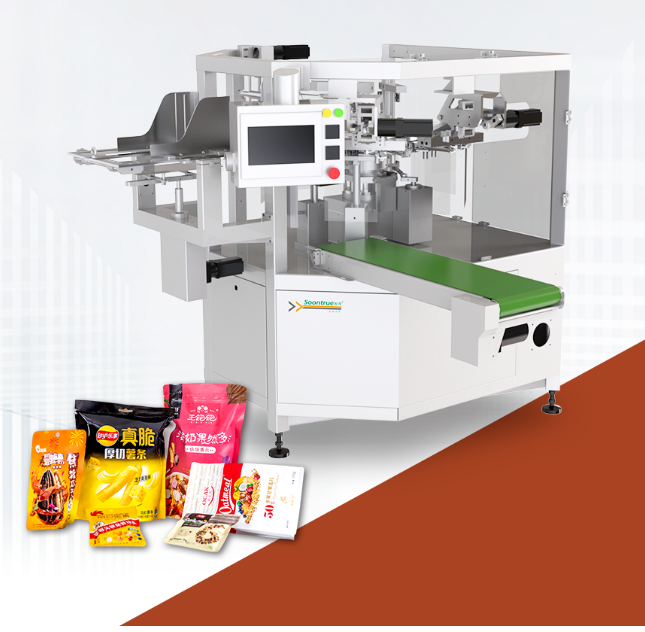
This section provides a direct comparison of the top machines across key decision-making factors. Use these charts to quickly evaluate which models best align with your budget, production speed, and space constraints.
Price and Value Comparison
Budget is often the primary driver for small businesses. The value of a machine, however, extends beyond its initial price tag. This table categorizes the top contenders based on their primary financial advantage.
| Value Proposition | Representative Models | Best For |
|---|---|---|
| Lowest Initial Cost | SaintyCo ZP-9, Hualian BSF-5545 | Startups with minimal capital. |
| Best Overall Value | VEVOR VFFS-420A | A balanced investment in features and price. |
| Best Long-Term ROI | Matrix Mercury HS, Kenwei JW-A10 | Businesses planning for future growth and efficiency. |
Speed and Efficiency Breakdown
Production speed, measured in Bags Per Minute (BPM), directly impacts your output capacity. A faster chips packing machine allows a business to meet higher demand. This comparison highlights the performance range of leading models.
| Model | Speed (BPM) | Efficiency Focus |
|---|---|---|
| Audion VMS 43 | 2-4 | Maximum product preservation. |
| VEVOR VFFS-420A | 15-50 | Balanced, all-around performance. |
| All-Fill B-350 | 30-80 | High-volume production needs. |
Choosing a machine with adjustable speed offers flexibility. Operators can run it slower for new products or faster to meet large orders.
Footprint and Size Chart
Available floor space is a critical limitation for most small-scale operations. The physical size of a machine determines its suitability for your facility.
| Model | Footprint Type | Ideal Environment |
|---|---|---|
| PouchPro Mini 200 | Tabletop | Test kitchens, market stalls. |
| Spack Machine SP-280 | Compact VFFS | Small commercial kitchens, garages. |
| Matrix Mercury HS | Standard VFFS | Dedicated production areas with room for growth. |
Pro Tip: Always verify the machine's total operational footprint. This includes space for the operator, maintenance access, and material staging.
Selecting the right chips packing machine is a critical investment for any small operation. Businesses find different models excel based on specific priorities. For the absolute lowest startup cost, the SaintyCo ZP-9 offers an accessible entry point. If speed is the top priority within a budget, the All-Fill B-350 is the best bet.
The VEVOR VFFS-420A remains the top choice for its superior blend of price, performance, and features. Operators should assess their daily production goals and available floor space to make the right investment for business growth.
FAQ
What is nitrogen flushing and is it necessary?
Nitrogen flushing replaces oxygen inside the bag with nitrogen gas before sealing. This process extends shelf life and protects fragile chips from breaking. While not essential for all startups, it greatly improves product quality and is a feature on many VFFS machines.
Can one machine pack different chip flavors?
Yes, a single machine can pack various flavors. Operators must thoroughly clean all product contact parts between production runs. This cleaning prevents flavor cross-contamination and ensures product integrity. Proper sanitation is crucial for maintaining quality control across different product lines.
What type of film do VFFS machines use?
VFFS machines use rollstock film. The specific material depends on the product's needs. Common options for chips include:
- Laminated films for barrier properties
- Polypropylene (PP)
- Polyethylene (PE)
Businesses should consult their film supplier to find the best material for their product and machine.
How difficult is daily maintenance?
Daily maintenance is straightforward. It typically involves cleaning product contact surfaces, checking sealing jaws, and ensuring the film path is clear. Most manufacturers provide a simple checklist. Consistent daily care prevents downtime and extends the life of the chips packing machine.
Post time: Oct-17-2025