
Automating biscuit packing often brings clear benefits and some challenges. Many bakeries see increased efficiency, better product quality, and lower labor costs. However, some face high initial investments and the need for technical skills. The table below shows key points from industry surveys:
| Advantages | Disadvantages |
|---|---|
| Increased Production | High Initial Investment |
| Improved Product Quality | Maintenance Costs |
| Enhanced Efficiency | Technical Expertise |
| Reduced Labor Costs | Dependency on Technology |
| Improved Safety |
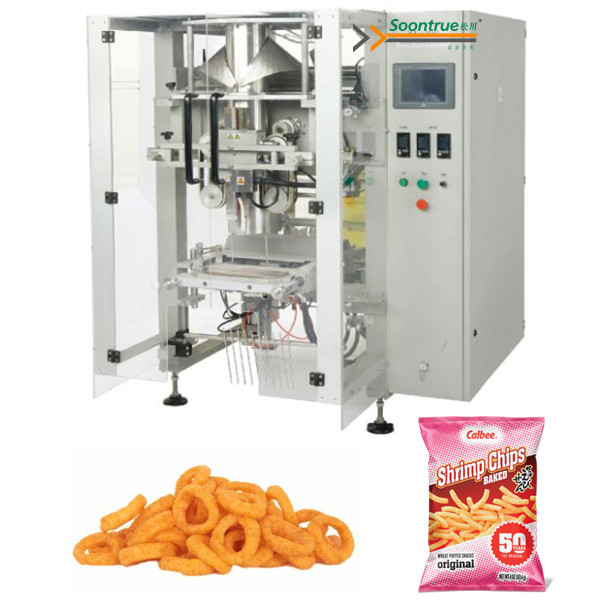
Every business must weigh these advantages and disadvantages based on its goals. Modern solutions like the Soontrue Snack Packing Machine help companies achieve higher output and consistency. Each company should match its choice of biscuit packing machine to its production needs and future plans.
Benefits of Automation
Higher Efficiency and Speed
Automated packaging machine technology transforms biscuit packing by increasing throughput and reducing downtime. These machines operate continuously, unlike manual labor, which is subject to fatigue and slower speeds. Companies experience higher output and improved labor efficiency. Automated packaging machine models, such as the Soontrue Snack Packing Machine, complete production volumes at a faster rate and ensure timely packaging. The following table compares automated and manual packing:
| Aspect | Automated Packing | Manual Packing |
|---|---|---|
| Production Speed | Higher output, operates continuously | Slower, subject to fatigue |
| Labor Efficiency | Reduces labor costs | Higher labor costs |
| Quality Consistency | Consistent quality | Variable quality |
Automated packaging machine solutions save labor costs, enhance efficiency, and maintain the quality and safety of biscuits. Automatic systems deliver maximum production every day, especially during peak demand periods.
Consistent Quality and Fewer Errors
Automated packaging machine systems deliver consistent performance regardless of external factors. They eliminate human variability, which leads to improved package quality and fewer mistakes. The error rate in manual packaging is much higher, often resulting in costly rework and process shutdowns. Automated packaging machine designs incorporate integrated sensors and weighing systems for precise measurements. These features ensure uniform package sizes and accurate weight control for each package.
| System Type | Error Rate Description |
|---|---|
| Manual Packaging | Prone to human errors leading to costly mistakes and potential process shutdowns. |
| Automated Systems | Consistent performance with significantly lower error rates, reducing rework costs and customer complaints. |
Automation helps maintain consistency in packaging quality, addressing production challenges across various industries. State-of-the-art equipment enhances efficiency without compromising product quality.
Cost Savings Over Time
Automated packaging machine investments yield significant long-term savings. Companies report up to a 95% reduction in labor costs and a 99.8% improvement in product consistency. Production capacity increases by 300%, allowing for greater revenue potential. The following table illustrates the cost comparison over five years:
| Cost Factor | Manual Production (5Y) | Automatic Production (5Y) |
|---|---|---|
| Labor Costs | €1,440,000 | €75,000 |
| Product Waste | €250,000 | €25,000 |
| Total 5-Year Cost | €1,690,000 | €272,500 |
| Net Savings with Automation | €1,417,500 |

Automated packaging machine solutions also offer a shorter payback period, typically around three years, due to annual savings from reduced labor costs and improved efficiency.
Flexibility in Packaging Formats
Automated packaging machine models, such as the Soontrue Snack Packing Machine, handle a wide variety of packaging formats. These machines adapt to different biscuit shapes, sizes, and weights. Adjustable bag formers and flexible packaging parameters allow companies to meet diverse product requirements. The table below highlights the types of packaging formats available:
| Machine Type | Description |
|---|---|
| Multi-Lane Stick Pack Machines | Designed for packaging powders, granules, and liquids in stick packs. |
| Horizontal Flow Wrappers | Packages products in flexible pouches, ideal for snacks and baked goods. |
| Vertical Form Fill Seal (VFFS) Machines | Forms bags from film, versatile for powders, granules, liquids, and solids. |
| Multi-Head Weigher Packaging Machines | Uses multiple weighing heads for accurate product dispensing, crucial for consistency. |
| Rotary Premade Bag Packing Machines | Automates filling and sealing of premade bags, flexible for various product types. |
| Case Packers | Packs products into cases, handling a wide range of sizes and materials. |
| Modular Packaging Systems | Offers customizable and scalable packaging solutions for diverse business needs. |
Automated packaging machine systems provide flexibility and customization, allowing manufacturers to switch between different bag types and product forms with ease.
Enhanced Food Safety
Automated packaging machine technology enhances food safety by minimizing human intervention. Machines are designed to meet strict hygiene standards and certifications, such as GMP, HACCP, and ISO 22000. These standards ensure proper design and maintenance, reducing contamination risks. Automated packaging machine systems feature easy-to-clean surfaces and quick sanitization processes. This design prevents bacteria and cross-contamination, which is crucial in the food industry.
| Certification/Standard | Description |
|---|---|
| HACCP | Focuses on preventive measures to control potential hazards in food production, crucial for minimizing contamination risks in packaging machines. |
| ISO 22000 | Combines HACCP principles with a management system structure, ensuring machines are designed to prevent food safety hazards. |
| Good Manufacturing Practices (GMP) | Emphasizes proper design and maintenance of equipment to prevent contamination, ensuring hygienic features. |
| 3-A Sanitary Standards | Provides guidelines for sanitary design, ensuring equipment can be easily cleaned and meets high sanitation levels. |
Automated packaging machine solutions reduce contamination risks and maintain high hygiene standards. The design allows for quick cleaning and ensures that equipment is ready for different products, supporting food safety and product quality.
Challenges of Automation
Initial Investment and Costs
Automated biscuit packing machines require a significant upfront investment. Companies must budget for the purchase price, installation, and initial setup. The cost varies depending on the level of automation and machine type. The following table outlines typical price ranges for commercial packing equipment:
| Machine Type | Typical Price Range (USD) |
|---|---|
| Basic Semi-Automatic Machines | $5,000 – $20,000 |
| Mid-Range Automatic Machines | $20,000 – $50,000 |
| High-Capacity Fully Automated Machines | $50,000 – $200,000+ |
| Vertical Form-Fill-Seal (VFFS) | $30,000 – $120,000+ |
| Horizontal Form-Fill-Seal (HFFS) | $80,000 – $250,000+ |
Many manufacturers explore financing options to manage these costs. Financing can ease the initial investment burden and improve cash flow. Companies often choose between third-party vendor financing and in-house financing from equipment suppliers. However, they must consider origination fees and interest costs when evaluating loans. While the upfront investment is higher than manual labor, automated systems typically offer a lower total cost of ownership and a quicker return on investment over time.
Maintenance and Technical Complexity
Automated packing machines introduce new maintenance challenges. These systems require regular servicing by trained professionals. Maintenance tasks include checking gaskets and seals, ensuring proper hygiene, and monitoring machine performance. Operators must address issues such as electrical faults, packaging leaks, and excess film waste. Incorrect settings or insufficient maintenance can lead to performance failures or product damage.
Regular maintenance schedules help prevent unexpected downtime and extend equipment lifespan.
The following table compares maintenance needs for automated and manual systems:
| System Type | Maintenance Frequency | Technical Expertise Required |
|---|---|---|
| Automated Packing | More regular maintenance by trained pros | High |
| Manual Packing | Simpler maintenance, minimal expertise | Low |
Companies must invest in technical training for staff to handle these complex systems. Proper training ensures safe operation and reduces the risk of costly errors.
Workforce Impact
Automation changes the nature of work in biscuit manufacturing. Machines take over repetitive and physically demanding tasks. This shift allows employees to focus on more complex and strategic roles. Automation does not necessarily reduce employment levels. Instead, it transforms job roles and creates demand for new skills.
- Labor shortages in food manufacturing often affect repetitive task roles.
- Automation helps companies maintain production levels.
- New, higher-skilled positions emerge as technology advances.
Manufacturers support their workforce by offering retraining programs. These programs include ERP and MES training, reskilling for technology-driven roles, and instruction on leveraging automation and AI tools. Employees gain opportunities to develop new skills and advance their careers.
Integration with Existing Systems
Integrating automated packing machines with current production lines presents technical barriers. Compatibility issues may arise due to differences in equipment manufacturers or technology generations. Maintenance teams face increased demands as they adapt to more complex machinery and software. Automated systems may also require upgrades to accommodate changing packaging requirements.
| Barrier Type | Description |
|---|---|
| System Integration Complexities | Compatibility issues with existing equipment and processes due to different manufacturers and tech generations. |
| Maintenance and Upkeep Concerns | Increased demands on maintenance teams due to complex machinery and software, leading to potential downtime. |
| Flexibility and Scalability Limitations | Automated systems may struggle to adapt to changing packaging requirements, necessitating costly upgrades. |
Manufacturers overcome these challenges by conducting comprehensive assessments and planning before implementation. They collaborate with experienced automation vendors to ensure smooth integration and ongoing support. Continuous training and skill development for staff further support successful adoption of new technology.
Choosing a Biscuit Packing Machine
Assessing Production Needs
Manufacturers must evaluate their production volume and product variety before selecting a biscuit packing machine. Companies with diverse biscuit types and packaging requirements need equipment that adapts quickly. Flexible machines, such as case packers, handle different bag sizes and types. This flexibility allows manufacturers to respond to changing consumer preferences and shorter product runs. The right biscuit packing machine supports efficient management of varied packaging needs and ensures consistent output.
Evaluating Return on Investment
Decision-makers analyze several metrics when considering a biscuit packing machine. They review internal rate of return, payback period, and total cost of ownership. Key factors include labor savings, increased output speeds, reduced error rates, and improved overall equipment efficiency. Common formulas help calculate ROI and payback period:
- ROI (%) = [(Annual Benefits - Annual Costs) ÷ Total Investment] x 100
- Payback Period (Years) = Total Investment ÷ Annual Net Savings
A break-even analysis helps determine when the investment starts generating profit.
| Cost Type | Description |
|---|---|
| Fixed Costs | Costs that remain constant, such as personnel and equipment. |
| Variable Costs | Costs that change with production volume, including labor and materials. |
| Break-even Analysis | Method to find the sales volume needed to cover costs and begin making profit. |
Customization and Scalability
Modern biscuit packing machine models offer customization for different biscuit types, sizes, shapes, and packaging materials. Businesses can tailor machines to handle soft, chewy, crisp, or crunchy biscuits. Equipment adapts to plastic, film, or eco-friendly packaging. The ability to adjust to evolving requirements supports business growth.
| Customization Aspect | Description |
|---|---|
| Biscuit Types | Handles various biscuit types |
| Biscuit Sizes | Adjustable for different sizes |
| Biscuit Shapes | Adaptable to various shapes |
| Packaging Materials | Compatible with multiple packaging materials |
Scalable solutions allow companies to upgrade equipment and optimize processes as production expands. Automation streamlines workflows and minimizes downtime, supporting higher output. The global biscuit market continues to grow, making scalability essential for manufacturers.
Soontrue Snack Packing Machine Features
The Soontrue Snack Packing Machine stands out for its turnkey packaging solutions and industry-specific expertise. It delivers reliable output for snacks, baked goods, and more. The machine offers customized equipment for specific products, packaging formats, and layouts. A global service network ensures quick technical support and spare parts availability. The machine meets CE and ISO standards for durability and long-term use.
| Feature | Description |
|---|---|
| Turnkey packaging solutions | Covers primary and secondary packaging needs |
| Industry-specific expertise | Specializes in snacks, baked goods, frozen food, sauces |
| Customized equipment | Tailored for products and packaging formats |
| Global service network | Fast support and spare parts |
| Reliable performance | CE/ISO certified for durability |
Soontrue’s biscuit packing machine features stainless steel construction, CIP-compatible design, and tool-less sealing jaw removal. Servo drives reduce mechanical stress and enhance reliability. These features ensure compliance with international food industry standards and support a hygienic packaging process.
Integrating Automated Biscuit Making
Streamlining Production Lines
Manufacturers achieve maximum efficiency by integrating automated biscuit making with advanced packaging systems. Fully automatic lines operate without interruption, processing dough, shaping biscuits, baking, and cooling in a continuous cycle. This seamless flow increases production rates and reduces idle time. Many bakeries report significant gains after adopting integrated solutions. For example, a major European bakery increased output by 40% after upgrading to an integrated system. Companies focused on high-volume production have seen throughput rise by up to 30%.
| Benefit | Description |
|---|---|
| Reduced Downtime | Automated systems use self-diagnostics, resulting in less maintenance and fewer stoppages. |
| Process Reliability | Machines deliver predictable results in forming, baking, and weighing biscuits. |
| Data-Driven Flow Production | Real-time data enables instant adjustments through integrated controls. |
Automated biscuit making ensures each stage of production connects smoothly, from mixing ingredients to final packaging. This approach minimizes manual handling and maximizes consistency.
Ensuring Smooth Transition
A smooth transition to automated biscuit making requires careful planning. Manufacturers must assess current workflows and identify areas for improvement. They often start with a needs analysis and solution design, where experts evaluate production requirements and propose optimal systems. Equipment selection follows, with components chosen to match specific product needs. Installation and debugging are managed by experienced technicians, who ensure all machines operate correctly from the start.
Tip: Early involvement of technical teams helps address integration challenges and reduces the risk of delays.
Manufacturers benefit from real-time monitoring and data collection, which allow them to fine-tune processes and maintain high output levels during the transition.
Training and Support
Ongoing training and support play a critical role in the success of automated biscuit making. Soontrue offers a comprehensive service package to guide manufacturers through every stage:
1.Needs analysis and solution design by industry experts.
2.Equipment selection and procurement from a wide product range.
3.System integration and installation with professional oversight.
4.Operator training and technical support for daily operations.
5.After-sales service and maintenance programs for long-term reliability.
These services ensure staff can operate new systems confidently and resolve issues quickly. Continuous support helps maintain peak performance and extends equipment lifespan. Manufacturers who invest in training and support see greater returns from their automated biscuit making investments.
Automated biscuit packing offers clear advantages and notable challenges. Companies gain efficiency, consistent quality, and long-term savings. They must also consider initial investment and integration complexity.
- Efficiency and flexibility drive growth.
- Investment and technical demands require careful planning.
For tailored solutions, businesses should consult Soontrue’s experts. Take the next step toward automation and elevate biscuit production.
FAQ
What are the main benefits of using automated biscuit packing machines?
Automated machines increase biscuit production speed and consistency. They reduce errors and improve food safety. Many companies see cost savings over time. Biscuit making technology helps maintain high standards for every biscuit. Operators find it easier to meet demand with advanced biscuit making technology.
How does biscuit making technology improve product quality?
Biscuit making technology ensures each biscuit meets strict quality standards. Sensors and controls monitor every stage. This technology reduces human error. Consistent biscuit size, shape, and weight result from precise biscuit making technology. Companies rely on these systems to deliver reliable biscuit quality.
Can automated systems handle different biscuit types and packaging formats?
Yes, automated systems adapt to various biscuit shapes, sizes, and packaging needs. Biscuit making technology allows quick changes between products. Operators select settings for each biscuit type. Machines support flexible packaging, making biscuit production efficient. This versatility benefits companies with diverse biscuit lines.
What training do staff need for modern biscuit making technology?
Staff learn to operate, maintain, and troubleshoot biscuit making technology. Training covers machine controls, safety, and cleaning. Operators gain skills in monitoring biscuit quality. Companies provide ongoing education. This approach ensures staff use biscuit making technology effectively for every biscuit batch.
How does biscuit making technology support food safety in biscuit production?
Biscuit making technology reduces contamination risks. Machines use hygienic materials and easy-to-clean designs. Automated systems limit human contact with each biscuit. Sensors detect issues early. Companies trust biscuit making technology to keep every biscuit safe for consumers.
Post time: Nov-27-2025