
An investment in a rice packing machine is a significant capital expenditure for any food processing business. Understanding the cost spectrum is the first step toward making an informed decision. The rice packing machine price varies widely based on its operational complexity and output capabilities. The market for these machines is expanding, with some segments like automatic vacuum packers projected to grow at a 7% CAGR over the next five years.
Quick Price Overview:
·Semi-Automatic: $15,000 – $40,000
·Automated VFFS: $50,000 – $150,000
·High-Speed Rotary: $400,000+
This guide provides a detailed breakdown of costs and features.
Rice Packing Machine Price Ranges by Type
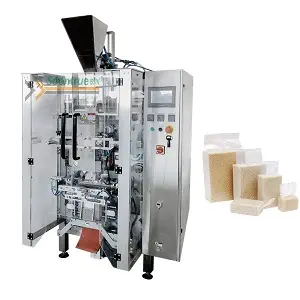
The type of machine a business selects is the single most significant factor determining its final cost. The overall rice packing machine price is directly tied to its core functionality, level of automation, and production capacity. Machines engineered in North America or Europe often carry a higher price tag due to stringent quality standards and local support, whereas models from other markets may offer a lower initial investment.
Beyond the base model, customization and add-ons introduce further cost variables. Integrating specialized components enhances functionality but also increases the total price.
Note on Customization: Standard machines have a base price. Adding features like date coders or gas flush systems will increase the final investment.
Here is a look at common add-ons and their typical impact on cost:
| Common Add-On | Function | Impact on Price |
|---|---|---|
| Date Coder | Prints expiration dates or lot codes. | Moderate |
| Gas Flush System | Extends product shelf life with modified atmosphere. | Significant |
| Check Weigher | Ensures each package meets weight requirements. | Significant |
| Metal Detector | Scans for contaminants before sealing. | High |
Semi-Automatic Machines: $15,000 – $40,000
Semi-automatic machines represent the entry point for automated packaging. These systems require an operator to perform key steps, such as placing a pre-made bag for filling or initiating the sealing process. Their lower price point makes them an excellent choice for small businesses, startups, or operations with moderate production needs.
These machines offer great flexibility and are not limited to just rice. Their applications often include:
·Grocery Items: Lentils, peanuts, sugar, nuts, and dry fruits.
·Snacks: Chips, popcorn, and various fried snacks.
·Frozen Foods: Green peas, chopped carrots, and prawns.
Businesses choose these models for their cost-effectiveness and high return on investment, which is supported by low power consumption and simpler maintenance requirements.
VFFS Machines: $50,000 – $150,000
Vertical Form Fill Seal (VFFS) machines are the definitive choice for businesses scaling up to high-volume, automated production. A VFFS machine creates the bag, fills it with rice, and seals it in one continuous vertical motion. This integrated process delivers remarkable speed and efficiency.
Key advantages of VFFS technology include:
·High-Volume Production: They automate the entire bagging process, enabling high throughput.·
·Increased Speed and Precision: Automation boosts processing speed and ensures accurate portioning.
·Reduced Product Wastage: Precision weighing systems minimize product giveaway, improving yield.
·Smaller Footprint: Their vertical operation is extremely space-efficient, optimizing floor layout.
·Easy Integration: They connect seamlessly with weighers, metal detectors, and labelers to create a fully automated line.
The wide range in the rice packing machine price for VFFS systems reflects major differences in performance. A machine at the lower end of the spectrum may produce around 60 bags per minute, while a high-end model can exceed 150 bags per minute, justifying the higher investment through sheer output.
High-Volume Rotary Systems: $150,000 – $400,000+
High-volume rotary systems sit at the premium end of the packaging spectrum. Unlike VFFS machines that create bags from a roll of film, rotary systems are designed to fill and seal pre-made pouches. These machines are built for large-scale producers who require both high speed and premium bag presentation.
Rotary packers are the go-to solution for established brands with demanding production schedules. Some models can process between 35 and 60 large, pre-made bags per minute, making them ideal for packaging large quantities of rice quickly. Their robust construction and advanced automation capabilities are engineered to meet the needs of the largest producers in the market, ensuring consistent throughput and reliability for 24/7 operations. Understanding these machine types is the first step to forecasting your final investment.
Key Features That Influence the Rice Packing Machine Price
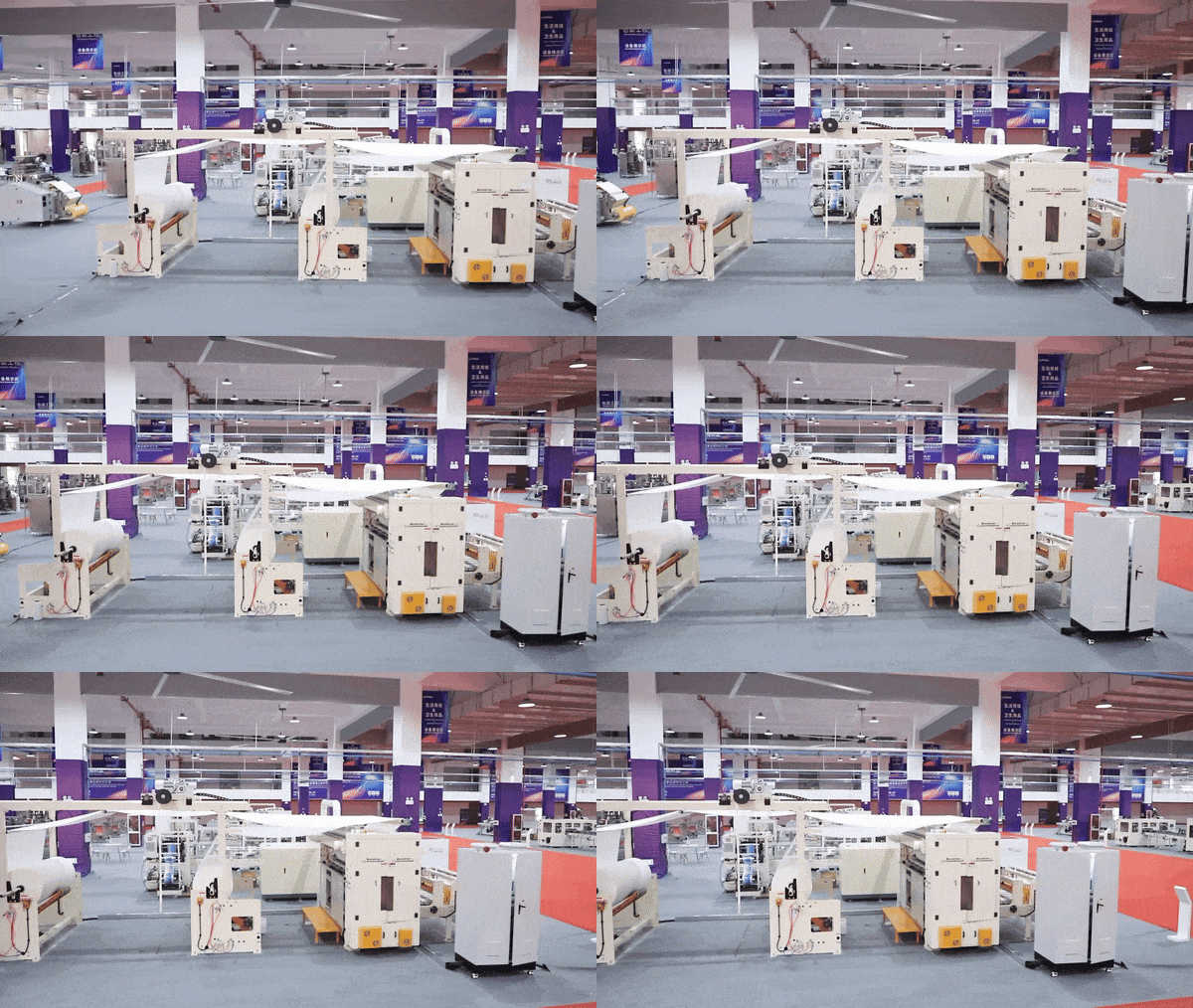
Beyond the machine type, several key features directly impact the final investment. These components determine the machine's performance, efficiency, and suitability for specific products. A business must evaluate these features carefully to align the equipment's capabilities with its production goals and budget. Understanding these variables is essential for forecasting the total rice packing machine price.
Weighing System Accuracy
The weighing system is the heart of any packing machine. Its primary job is to portion the rice accurately before it enters the bag. The technology used for weighing significantly influences both the machine's cost and its long-term profitability. Inaccurate weighing leads to product giveaway, where each bag contains slightly more rice than stated. Over time, this small overage adds up to substantial financial loss.
High-end machines offer exceptional precision. They often achieve an accuracy range of ±0.2% to 0.5%. For smaller consumer packs between 0.25kg and 5kg, the best systems can maintain a tolerance of just ±2g. These machines also feature out-of-tolerance alerts and automatic adjustments, ensuring every bag meets weight requirements and preventing costly overfills.
The two most common weigher types are linear weighers and multi-head weighers. Their designs offer different levels of speed and precision, which directly affects their cost.
| Feature | Linear Weigher | Multi-head Weigher |
|---|---|---|
| Cost | Lower initial investment; ideal for limited budgets. | Higher initial investment for greater output. |
| Speed | Suited for medium-speed, single-line operations. | Delivers high-speed performance for demanding lines. |
| Accuracy | Good accuracy, best for free-flowing products like rice. | Superior accuracy through combinatorial weighing. |
| Complexity | Simple design makes it easier to clean and maintain. | More complex but offers greater flexibility for varied products. |
Level of Automation
The level of automation dictates the amount of manual labor required to operate the packaging line. This is a primary cost driver. A semi-automatic system requires operators for tasks like placing bags and initiating fills, while a fully automated system handles the entire process from start to finish.
Automation Insight: A higher upfront investment in automation often generates a faster ROI through reduced labor costs, minimized human error, and increased throughput.
The difference in operational tasks is stark. A fully automated system integrates seamlessly with other equipment, creating a cohesive and efficient production line.
| Task | Semi-Automatic System | Fully Automated System |
|---|---|---|
| Product Dispensing | Operator often initiates the fill. | Automated with precise volume control. |
| Weighing & Filling | May require manual intervention or oversight. | Fully automated and integrated. |
| Bag Sealing | Operator moves the bag to a sealer. | Automated as part of the machine cycle. |
| Labeling/Coding | Often a separate, manual step. | Integrated into the packaging process. |
| Labor Requirement | Needs multiple operators to run efficiently. | Minimizes the need for manual labor. |
| Consistency | Varies depending on the operator. | Delivers highly consistent and uniform results. |
Bag Type and Sealing Technology
The type of bag a machine can handle and the technology it uses to seal it are major factors in its price. Machines designed for simple pillow bags are generally less expensive than those engineered to run complex stand-up pouches (SUP) or gusseted bags, which require more intricate mechanics.
Sealing technology is another critical cost point. Most machines use standard heat sealing, which applies heated jaws to melt and fuse the packaging film. This method is reliable, cost-effective, and suitable for most applications. Replacement heat-sealing jaws typically cost around $1,500 to $2,000.
For premium applications, some businesses opt for ultrasonic sealing. This technology uses high-frequency vibrations to create a molecular bond in the film. It produces stronger, more aesthetically pleasing seals and can seal through product contamination (like rice dust) in the seal area. However, this advanced capability comes at a steep cost.
An ultrasonic sealing system can add in excess of $50,000 to the machine's initial price. The long-term costs are also higher, as a replacement sonotrode (the vibrating component) can cost three to five times more than a new set of heat-sealing jaws.
Choosing the right sealing technology involves balancing the need for a perfect seal with the realities of the budget.
Production Speed and Capacity
Production speed, measured in Bags Per Minute (BPM), is a fundamental performance metric that directly correlates with a machine's cost. A machine's ability to package more products in less time requires more advanced engineering, robust components, and sophisticated control systems. Consequently, higher BPM capabilities significantly increase the equipment's price tag.
The maximum achievable speed depends on several interconnected factors:
·Product Characteristics: Rice is a free-flowing granular product, which allows for faster weighing and filling compared to sticky or bulky items.
·Bag Size: Larger bags require more time to fill and seal, naturally lowering the overall BPM. A machine that produces 100 BPM for 1kg bags might only achieve 40 BPM for 5kg bags.
·Weighing System: As discussed, a multi-head weigher can process portions much faster than a linear weigher, enabling higher overall machine speeds.
·Film and Sealing: The time required to form a strong, reliable seal (the "dwell time") can limit speed, especially with thicker or specialized packaging films.
Speed vs. ThroughputWhile BPM measures speed, throughput measures total output over a shift or day. High-speed machines often deliver better throughput by minimizing downtime and maintaining consistent performance, justifying their higher initial cost.
The market offers machines across a wide spectrum of speed capabilities, each designed for a different scale of operation. The final Rice Packing Machine Price is heavily influenced by where a machine falls within these tiers.
| Speed Tier | Bags Per Minute (BPM) | Typical Machine Type | Ideal For |
|---|---|---|---|
| Low Speed | 10 – 30 BPM | Semi-Automatic | Startups, small businesses, or niche product lines. |
| Medium Speed | 30 – 80 BPM | Standard VFFS | Growing businesses scaling up from manual or semi-auto processes. |
| High Speed | 80 – 150+ BPM | High-Performance VFFS | Large-scale producers with high-volume distribution demands. |
| Premium Speed | 35 – 60 BPM (Large Bags) | Rotary Pouch Fillers | Major brands requiring high throughput for pre-made, retail-ready bags. |
Ultimately, a business must balance its desire for speed with its actual production requirements. Investing in a 120 BPM machine is an inefficient use of capital if the rest of the production line can only supply enough rice for 60 BPM. A careful analysis of current and future output needs is essential to select a machine with the right capacity for a strong return on investment.
How to Define Your Production Needs
Selecting the right rice packing machine requires a thorough analysis of a company's specific operational requirements. A clear definition of production needs ensures the chosen equipment provides a strong return on investment. Businesses must evaluate their output targets, growth projections, and material choices to make an informed decision.
Calculate Required Bags Per Minute
The first step is to quantify the required production speed. This calculation helps determine the necessary Bags Per Minute (BPM) a machine must achieve to meet demand. Businesses can use a standard formula to establish a baseline for their required machine speed.
A common formula for calculating required speed (S_req) is:S_req (bags/minute) = Q_daily demand / (60 × H_daily working hours × U × Y)
·Q_daily demand: The total number of bags needed per day.
·H_daily working hours: The number of operational hours in a shift.
·U: The machine's utilization rate.
·Y: The overall production efficiency rate.
A margin is often added to this result to account for unexpected downtime or future growth.
Consider Current vs. Future Output
Purchasing a machine based solely on current order volumes can create future bottlenecks. As demand grows, a low-capacity machine may struggle with higher order volumes and more frequent product changeovers. A forward-looking approach is essential.
Businesses should forecast their production needs over a three-to-five-year period. Key strategies for future-proofing an investment include:
1.Analyzing long-term market trends to anticipate demand.
2.Choosing modular machines that allow for future upgrades.
3.Prioritizing automation with servo and PLC controls to manage growth.
4.Investing in digital systems for real-time monitoring of throughput.
Investing in an adaptable system with features like quick-change systems and servo memory prevents costly replacements later.
Assess Your Packaging Material
The packaging material directly influences machine compatibility. Rice requires films that offer excellent moisture and puncture resistance. Laminated films, which combine layers of materials like plastic and foil, provide superior protection against light and oxygen to extend shelf life.
Different film structures are engineered for specific products and machine types. VFFS and rotary pouch machines are designed to work with a variety of flexible films.
| Material Structure | Key Properties | Common Application |
|---|---|---|
| NY/LDPE | Moisture-proof, Puncture resistant | Rice, Grains |
| BOPP/CPP | Good transparency and stiffness | Pasta, Flour |
| PET/VMPET/PE | Excellent light and oxygen barrier | All types of food |
The machine's sealing system must be compatible with the chosen film to ensure strong, consistent seals. This alignment is critical for product integrity and shelf appeal.
Budgeting for Total Cost of Ownership
The initial purchase price of a rice packing machine is only one part of the total financial commitment. A smart investment requires budgeting for the Total Cost of Ownership (TCO), which includes all expenses incurred throughout the machine's operational life. Factoring in these additional costs provides a realistic financial picture and prevents unexpected expenses down the line. A comprehensive budget ensures the machine remains a profitable asset for years to come.
Ancillary Equipment Costs
A rice packing machine rarely operates alone. It functions as the centerpiece of a larger, integrated packaging line. Businesses must budget for the ancillary equipment needed to transport, inspect, and prepare products for shipment. Omitting these components can create significant production bottlenecks. Leading suppliers like BW Packaging offer complete solutions that cover the entire line.
A complete rice packaging line often requires:
·Scales and check weighers for weight verification
·Metal detectors for quality control
·Bag conveying systems to move packages
·Pallet dispensers, wrappers, and strappers for end-of-line automation
Installation and Training Fees
Proper installation and training are critical one-time costs that protect the long-term value of the investment. Professional installation by certified technicians ensures the machine is set up correctly, calibrated for performance, and compliant with safety standards. This initial setup fee typically ranges from 3% to 5% of the machine's purchase price.
Equally important is operator training. A well-trained team can run the machine efficiently, perform routine changeovers quickly, and identify minor issues before they become major problems. This investment minimizes downtime and reduces the risk of operator error, leading to higher overall productivity.
Long-Term Maintenance and Parts
Ongoing maintenance and spare parts are recurring expenses that every business must anticipate. A proactive maintenance plan extends the machine's lifespan and maintains its performance. For example, critical components like weigher load cells require monthly calibration to ensure consistent accuracy and prevent product giveaway.
Wear-and-tear parts will also need periodic replacement. Sealing jaws on a VFFS machine, for instance, typically require replacement every 50,000 cycles to maintain seal integrity. Budgeting for a spare parts inventory and scheduled service helps avoid costly emergency repairs and ensures the production line keeps running smoothly.
Calculating Your Return on Investment (ROI)
An investment in a new rice packing machine is justified by its ability to generate a positive return. Calculating the Return on Investment (ROI) helps businesses quantify the financial benefits of the upgrade. A comprehensive ROI analysis looks beyond the initial purchase price to evaluate savings and revenue gains over the machine's lifespan. This calculation provides a clear financial roadmap for the investment.
Factor in Labor Cost Savings
Automation directly reduces the reliance on manual labor, which is often a company's largest operational expense. A new machine can reallocate employees to higher-value tasks, significantly cutting labor costs. For example, one food producer achieved a 65% reduction in labor costs by automating its bagging process. Similarly, a USA-based rice producer implemented an automated system to combat time-consuming and error-prone manual bagging, leading to major time and cost savings.
Labor Savings Calculation:(Number of Reallocated Employees) x (Average Annual Salary + Benefits) = Annual Labor Savings
Quantify Reduced Product Giveaway
Precision weighing systems minimize product giveaway, which is the excess product included in each bag. While a few extra grams of rice per bag seem minor, the cumulative loss over millions of packages is substantial. High-accuracy weighers ensure each bag is filled to the target weight, protecting profit margins.
A simple calculation reveals the impact:
·Giveaway per bag: 2 grams
·Bags per day: 50,000
·Total daily giveaway: 100 kg
·Annual giveaway (250 days): 25,000 kg
This lost product translates directly into lost revenue. Reducing this giveaway adds directly to the company's bottom line.
Measure Increased Throughput
Increased throughput—the total number of bags produced in a day—is a powerful driver of revenue. A faster, more reliable machine allows a business to fulfill more orders, enter new markets, and meet peak season demand without adding staff. This enhanced capacity can lead to dramatic financial growth. Some companies leveraging automation have reported a 30% increase in revenue in the first quarter alone. This boost in production capability can deliver a remarkable 400% return on investment within the first year, turning the machine into a significant profit center.
Selecting the ideal equipment requires a strategic balance of production goals, automation levels, and budget. The final Rice Packing Machine Price is shaped by several critical factors. A successful investment hinges on understanding the complete financial picture.
Key takeaways for your decision include:
·Core Price Drivers: The weigher's accuracy, degree of automation, and production speed are the primary cost influencers.
·Total Cost of Ownership: Businesses must budget beyond the initial purchase to include installation, training, and long-term maintenance.
For a customized quote tailored to your specific operational needs, contact our team of experts today.
FAQ
What is the most important factor affecting the price?
The machine's level of automation is the primary price driver. A fully automated system costs significantly more than a semi-automatic model. The weighing system's accuracy and the machine's production speed also heavily influence the final investment.
How long does a rice packing machine last?
A well-maintained rice packing machine has a long operational life, often exceeding 15-20 years. Consistent preventive maintenance and timely replacement of wear parts are crucial. The machine's lifespan directly impacts its long-term return on investment for the business.
Can these machines pack other products besides rice?
Yes, these machines offer great versatility. They effectively package other granular products like sugar, nuts, and beans. Many models also handle snacks, pasta, and even some frozen foods. A business should confirm product compatibility with the manufacturer before purchasing.
What is the difference between a VFFS and a rotary machine?
A VFFS machine creates bags from a roll of film, then fills and seals them. A rotary machine fills and seals pre-made pouches. VFFS systems are space-efficient, while rotary systems excel at handling premium, retail-ready bags at high speeds.
Post time: Dec-11-2025