
Selecting the right milk pouch packing machine is a critical investment for any dairy operation in 2026. The decision directly impacts efficiency and profitability.
Flexible plastic is the largest dairy packaging material, holding around 45.0% of the market. This highlights the importance of specialized pouch equipment.
Producers like those using Soonture machines must align equipment with their specific product, whether liquid or powder. A business evaluates its production volume and selects a suitable pouch style. The initial Milk Pouch Packing Machine Price is just one component of the total cost ensuring a profitable venture.
Step 1: Identify Your Milk Product Type
The journey to selecting the ideal pouch packing machine begins with the product itself. A machine designed for liquid milk cannot handle powder, and vice versa. The physical state, processing method, and hygiene requirements of your milk dictate the necessary technology, materials, and filling systems. This initial decision is the foundation for all subsequent choices.
For Liquid Milk (Pasteurized, UHT)
Liquid milk packaging machinery must accommodate the product's specific processing method, primarily distinguishing between pasteurized and Ultra-High Temperature (UHT) milk. Each requires a different approach to ensure safety, shelf life, and quality.
Pasteurized milk has a shorter shelf life and requires refrigeration. UHT milk, however, undergoes a more intense heat treatment. This process allows for several months of shelf stability at ambient temperatures, but it demands specialized aseptic packaging to prevent recontamination. The differences in machine requirements are significant.
| Feature | Pasteurized Milk | UHT Milk |
|---|---|---|
| Packaging Requirement | Standard hygienic containers | Aseptic packaging in sterile containers |
| Shelf Life (Unopened) | Several days (refrigerated) | Several months (ambient) |
| Distribution | Requires refrigerated supply chain | Can be distributed without refrigeration |
| Equipment Cost | Standard pouch filling machines | Aseptic pouch filling machines |
To achieve a long shelf life, pouch packing machines for UHT milk must integrate with an aseptic system. This ensures the sterile milk enters a pre-sterilized pouch in a sterile environment, creating a hermetic seal that protects the product until it is opened.
The choice of packaging film is equally critical. The material must provide a robust barrier against oxygen, light, and contaminants to preserve freshness and prevent spoilage.
Producers rely on specific high-barrier films to achieve this protection. Key film characteristics include:
·Multi-layer co-extruded films (LDPE/HDPE) are an economical choice for retail packs ranging from 50 ml to 1 L.
·EVOH (Ethylene Vinyl Alcohol) layers offer an exceptionally high gas barrier, making them ideal for extending the shelf life of sensitive dairy products.
·Triple-layer high-density polyethylene is often used for UHT milk pouches, providing the structural integrity and barrier properties needed for a 6-month shelf life.
For Milk Powder (Whole, Skim, Formula)
Milk powder presents a unique set of packaging challenges compared to its liquid counterpart. Powders are sensitive to moisture, prone to clumping, and can generate dust during the packaging process. A suitable machine must address these issues to maintain product integrity and operational efficiency.
Modern powder packing machines from leading suppliers like Soonture are engineered to overcome these obstacles. Key challenges and solutions include:
·Accurate Dosing: Powders are difficult to measure precisely. High-precision systems, such as servo-driven auger fillers, ensure each pouch contains the correct weight, minimizing product giveaway and ensuring regulatory compliance.
·Dust Control: Product dust can cause mechanical issues and create a messy work environment. Optimized feeding systems with closed structures and integrated dust collection are essential for clean and reliable operation.
·Moisture and Clumping: Milk powder readily absorbs moisture, leading to clumping and spoilage. Machines must create airtight seals. Many are equipped with internal stirring or loosening mechanisms to keep the powder dry and free-flowing before it enters the pouch.
The requirements become even more stringent when packaging infant formula.
Infant formula demands the highest level of sanitation, often requiring systems that achieve 99.999% cleanliness. This is a non-negotiable standard to ensure the safety of the end consumer.
Due to these strict regulations, machines for infant formula have distinct features. They prioritize construction with 316-grade stainless steel for its superior corrosion resistance and cleanability. Furthermore, their filling systems must deliver exceptional accuracy, often up to 99.7%, to guarantee precise nutritional content in every serving. While a machine for whole milk powder requires high hygiene and accuracy, the standards for infant formula packaging represent the peak of food safety engineering.
Step 2: Determine Your Production Capacity
After identifying the milk product type, a business must accurately assess its production volume. Matching machine capacity to daily output is essential for operational efficiency and financial viability. A machine that is too small creates production bottlenecks and lost sales opportunities. Conversely, an oversized machine leads to unnecessary capital expenditure and higher operational costs. The right choice balances current needs with future growth ambitions.
Small-Scale and Startup Operations
Startups, local dairy farms, and small-scale producers prioritize flexibility, affordability, and a manageable footprint. Their goal is to enter the market efficiently without committing to a massive initial investment. For these operations, semi-automatic and small-scale automatic machines offer an ideal entry point. These systems require more operator involvement for tasks like feeding pouches or packing finished products, but they provide a cost-effective path to professional packaging.
Tip: When starting, calculate your target daily output in pouches. This number will directly guide your search for a machine with the appropriate speed, measured in pouches per minute (PPM).
The initial capital investment for entry-level equipment is significantly lower, making it accessible for new businesses. A dairy can begin with a foundational system and scale up as demand grows. Typical investment costs for these machines include:
·Entry-level semi-automatic machines: $3,000 to $10,000
·Small Vertical Form-Fill-Seal (VFFS) systems: $5,000 to $20,000
These machines empower small producers to compete with larger brands by delivering a professionally sealed and branded product, building customer trust from day one.
Medium to Large-Scale Production
Medium to large-scale dairy operations serve regional or national markets and handle massive product volumes. Their primary objectives are maximizing throughput, ensuring consistency, and minimizing per-unit costs. For these producers, high-speed, fully automatic packaging lines are not a luxury but a necessity. These integrated systems manage every step of the process, from pouch forming and filling to sealing and coding, with minimal human intervention.
The production scale is immense. A single line can process 96,000 containers in an 8-hour shift, equating to 187,200 kg of milk per day. To achieve this, machines must operate at very high speeds. Modern rotary and VFFS systems from expert suppliers like Soonture are engineered for this level of demand.
·Production Speeds: Can range from 3,000 to over 50,000 pouches per hour.
·Operational Model: Continuous, 24/7 operation with minimal downtime.
Investing in a fully automatic line delivers a powerful return. Automation drastically reduces labor costs by eliminating repetitive manual tasks, allowing employees to focus on quality control and system oversight. It also improves efficiency by ensuring every pouch is filled accurately and sealed perfectly, which minimizes product waste and rejects. This combination of reduced labor expenses and higher output often leads to a rapid return on investment, typically within 6 to 24 months.
The table below outlines the core characteristics of a fully automatic system.
| Feature | Fully Automatic System |
|---|---|
| Automation Level | High: All processes are automated. |
| Human Intervention | Minimal: Operators primarily monitor the machine. |
| Speed & Efficiency | Very High: Designed for continuous, high-volume production. |
| Accuracy & Consistency | Excellent: Precise control over filling, sealing, and coding. |
| Labor Costs | Low: Significantly reduces the need for manual labor. |
| Initial Investment | High: Requires a substantial upfront investment. |
| Suitable For | Large-scale production with high hygiene and consistency needs. |
Ultimately, for a large-scale dairy, a fully automatic milk pouch packing machine is a strategic asset that drives productivity, ensures quality, and secures a competitive edge in the market.
Step 3: Select the Right Pouch Style
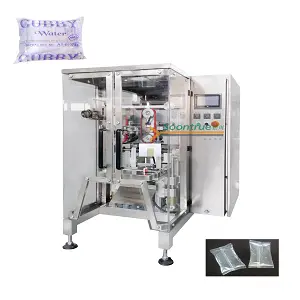
The pouch style is a crucial decision that influences consumer perception, product protection, and cost. A business must choose a format that aligns with its brand identity and the product's use case. The right pouch not only preserves freshness but also serves as a powerful marketing tool on the retail shelf.
Pillow Pouches (Center Seal)
Pillow pouches are one of the most economical and widely used packaging formats in the dairy industry. These pouches are formed from a single roll of film, sealed at the top, bottom, and down the center of the back. Their simple construction makes them a cost-effective choice for high-volume production. Dairy producers often use pillow pouches for a range of products, including liquid milk and even other items like cheese, which are commonly packaged in this format or on rewind film. Their efficiency and low material cost make them an excellent option for products focused on affordability and mass distribution.
3-Side and 4-Side Seal Sachets
Single-serving sachets, sealed on three or four sides, offer unmatched convenience and hygiene for products like milk powder and coffee creamer. This format ensures the product remains untouched and fresh until use, protecting it from dust and external factors. Sachets provide several key advantages for both consumers and producers:
- Portability: Their compact size makes them easy for consumers to carry.
- Convenience: They provide pre-portioned, single-use servings that reduce waste.
- Cost-Efficiency: Sachets help lower both production and distribution costs.
For milk powder, many machines use nitrogen flushing to extend shelf life. This process replaces oxygen, which prevents oxidation, protects against moisture, and preserves the powder's unique aroma.
Shaped and Stand-Up Pouches
For premium milk products, stand-up and shaped pouches offer superior brand visibility and consumer convenience. These pouches are designed to stand upright on shelves, creating a strong shelf presence that captures customer attention. Custom printing options allow brands to use vibrant colors and logos, turning the package into a professional marketing asset.
Stand-up pouches also enhance the user experience. Features like resealable zippers, ergonomic spouts, and easy-tear notches make the product simple to pour, store, and reuse. This focus on convenience and premium presentation helps justify a higher price point and builds brand loyalty.
Step 4: Choose the Correct Filling System
The filling system is the heart of a packing machine. It determines dosing accuracy, operational speed, and product integrity. A system designed for liquids will not work for powders, so selecting the correct filler technology is a non-negotiable step. This choice directly impacts profitability by minimizing product giveaway and ensuring consistent pouch weights.
Volumetric Fillers for Liquids
Volumetric fillers are the industry standard for packaging liquid milk. These systems dispense a precise, pre-set volume of product into each pouch, ensuring consistency across the entire production run. Modern fillers are engineered for versatility, capable of handling liquids with different flow characteristics, or viscosities. The machine's mechanism is chosen based on the product's thickness to maintain speed without sacrificing accuracy.
·Piston Fillers: These use a cylinder and piston to draw in and dispense a precise volume. They are highly accurate and ideal for medium-viscosity liquids.
·Pump Fillers: These systems use gear or centrifugal pumps to move the product. They are often paired with flow meters for precise control, making them suitable for less viscous liquids like fresh milk.
·Servo-Driven Fillers: Offering the highest level of control, these fillers use servo motors to manage speed and pressure, efficiently handling even high-viscosity dairy products.
Auger Fillers for Powders
Packaging milk powder requires a specialized approach to manage its fine, dusty nature. Auger fillers are the premier solution for this task. These systems use a rotating screw (auger) to dispense a precise amount of powder into each pouch. Leading suppliers like Soonture integrate advanced servo-driven augers for exceptional control and repeatability.
For high-value products like infant formula, accuracy is paramount. A servo-driven auger filler can achieve a fill accuracy tolerance of ≤ ±1% for weights between 100g and 500g, protecting profits and ensuring regulatory compliance.
These machines also incorporate features to minimize dust and waste. Bottom-up filling raises the pouch to the dispenser, reducing the product drop height and preventing dust clouds. Integrated dust control systems capture airborne particles, keeping the sealing area clean and ensuring a strong, reliable seal on every pouch.
Step 5: Essential Machine Features to Consider
Beyond filling and sealing, modern packing machines offer advanced features that enhance safety, efficiency, and brand protection. A business must evaluate these capabilities to ensure its investment meets the rigorous demands of the 2026 dairy market. Key features like traceability, automated cleaning, and film compatibility are no longer optional—they are essential for a competitive operation.
Data Coding and Traceability
In today's market, product traceability is a non-negotiable requirement for food safety and quality assurance. Packing machines must integrate coding systems that print clear, durable information on every pouch. Thermal Transfer Overprinters (TTO) are an excellent solution for this task. These printers integrate seamlessly with form-fill-seal machines and other equipment. They use heat to apply high-resolution text, barcodes, and 2D codes directly onto flexible packaging film.
This technology allows for real-time printing of variable data like best-by dates, batch numbers, and serial numbers at high speeds. The codes are sharp, legible, and resistant to smudging, ensuring complete traceability throughout the supply chain. This capability helps producers meet regulatory standards and protect their brand.
Clean-in-Place (CIP) Systems
Hygiene is paramount in dairy processing. Automated Clean-in-Place (CIP) systems are a critical feature for maintaining sanitary conditions and maximizing uptime. These systems clean the machine's internal components without requiring manual disassembly. Automation drastically reduces cleaning time, allowing equipment to return to production faster.
Manual cleaning can take between 4 and 16 hours, creating significant downtime. An automated CIP system can achieve superior results in as little as 30 minutes—up to 10 times faster.
A typical CIP cycle follows a precise, multi-step sequence to ensure complete sanitation:
1.Pre-rinse: Flushes out loose milk residue.
2.Caustic Wash: Uses an alkaline solution like sodium hydroxide to remove fats and proteins.
3.Intermediate Rinse: Removes the caustic solution.
4.Acid Rinse: Neutralizes any remaining residue and removes mineral deposits.
5.Sanitizing Rinse: Kills microorganisms before the next production run.
6.Post-rinse: A final flush with clean water.
Packaging Film Compatibility
A milk pouch packing machine must be compatible with the specific film a business intends to use. The film protects the product from light, oxygen, and contamination. Most modern machines are designed to work with various multi-layer co-extruded polyethylene (PE) films. These materials are engineered for performance on high-speed automatic fillers.
Common film types include:
·Simple single-layer PE film: An economical choice for basic packaging needs.
·Three-layer black and white film: A composite film made from resins like LDPE and LLDPE that offers improved strength and light protection.
·Five-layer co-extrusion film: Features a high-barrier core layer (using resins like EVOH) for maximum shelf life, ideal for UHT milk.
Choosing a machine that handles your desired film ensures reliable sealing and optimal product protection.
Step 6: Evaluate Total Cost of Ownership
A smart investment goes beyond the initial purchase. A business must evaluate the Total Cost of Ownership (TCO) to understand the long-term financial impact of a new machine. This includes the upfront Milk Pouch Packing Machine Price, ongoing operational expenses, and the eventual return on investment. A thorough analysis ensures the chosen equipment supports sustainable profitability.
Understanding the Milk Pouch Packing Machine Price
The initial Milk Pouch Packing Machine Price varies significantly based on automation level and features. Semi-automatic systems offer a lower entry cost, making them suitable for startups. Fully automatic lines require a larger upfront investment but deliver higher throughput and efficiency. The price reflects the machine's complexity, speed, and construction quality.
| Machine Type | Automation Level | Indicative Price (USD) |
|---|---|---|
| Basic System | Semi-Automatic | ~$1,000 - $3,500 |
| VFFS System | Fully Automatic | ~$23,000+ |
| Bulk Purchase | Fully Automatic | ~$22,000 per unit (for 5-8 units) |
This initial Milk Pouch Packing Machine Price is just the starting point for financial planning.
Factoring in Operational Costs
Operational costs are the recurring expenses required to run the machine. These ongoing costs directly affect the per-pouch production cost and overall profitability. Key factors to consider include:
·Maintenance: Regular servicing extends machinery life and prevents costly downtime. Proactive maintenance reduces long-term repair expenses.
·Energy Usage: Efficient consumption of electricity and compressed air is vital. Modern machines are designed to minimize energy use, lowering utility bills.
·Material Waste: Minimizing the waste of packaging film and product during filling and sealing is critical for cost management and sustainability.
Calculating Your Return on Investment (ROI)
Return on Investment (ROI) measures the profitability of the machine. It compares the net financial benefit to the total investment cost. A higher ROI indicates a more profitable investment. For example, if a new packaging system costs $200,000 and generates a net annual benefit of $150,000 from labor savings and increased output, the ROI is 75%. This calculation helps a business justify the Milk Pouch Packing Machine Price by demonstrating how quickly the equipment will pay for itself and start generating profit.
Step 7: Vet Your Supplier and After-Sales Support
A milk pouch packing machine is a long-term asset. Its performance depends heavily on the manufacturer's support. A business must therefore thoroughly vet potential suppliers. The right partner provides not just equipment but also the expertise and service needed to ensure sustained operational success. Choosing a reliable supplier like Soonture is as critical as choosing the machine itself.
Assessing Manufacturer Reputation
A manufacturer's reputation offers insight into its reliability and product quality. Businesses should investigate a supplier's track record before committing to a purchase. This due diligence protects the investment and ensures a positive long-term relationship. Key areas to assess include:
·Online Reviews: Customer feedback reveals real-world experiences. A business can learn about a supplier's customer service, staff knowledge, and the durability of their machines.
·Long-term Partnership Potential: A strong supplier acts as a partner, not just a vendor. A business should evaluate the manufacturer's financial stability, commitment to innovation, and the breadth of their product range to confirm they can support future growth.
Evaluating Technical Support and Spares
Downtime is costly in the dairy industry. Excellent after-sales support is essential for minimizing production interruptions. A top-tier supplier offers comprehensive technical assistance. This support should include prompt phone assistance and in-plant service when necessary.
Modern support systems leverage technology for efficiency. Top suppliers provide remote capabilities to access and troubleshoot most routine problems, which avoids expensive and time-consuming onsite visits.
Furthermore, a business must confirm the availability of spare parts. A reliable manufacturer maintains a ready inventory of critical components. This ensures that any necessary repairs can be completed quickly, keeping the production line running smoothly. A supplier's commitment to responsive support and parts availability is a clear indicator of their value as a long-term partner.
Selecting the right equipment is a strategic decision for any dairy business. A producer ensures a successful investment by following a clear, four-step evaluation.
1.Align the milk product with the correct filler technology.
2.Match production volume to the machine's capacity.
3.Select a pouch style that protects the product and builds the brand.
3.Analyze the total cost, not just the initial Milk Pouch Packing Machine Price.
A well-chosen machine becomes a long-term asset for efficiency and growth. For a personalized recommendation, a business should contact an expert from a trusted supplier like Soonture.
FAQ
What production speed is right for a dairy business?
Production speed should match daily output. Small operations may need 20-50 pouches per minute (PPM). Large dairies require high-speed systems (100+ PPM) to meet demand. A business must align machine capacity with its specific production goals to ensure efficiency.
Can one machine package both liquid milk and milk powder?
No. Liquid and powder require different filling systems. Liquid milk uses volumetric fillers, while milk powder needs auger fillers for accuracy and dust control. A business must select a machine designed for its product type to ensure quality and operational efficiency.
What is a typical ROI for a milk pouch packing machine?
The Return on Investment (ROI) for a fully automatic line often falls between 6 and 24 months. This rapid return is driven by reduced labor costs, minimized product waste, and higher throughput, which offsets the initial Milk Pouch Packing Machine Price.
Why is choosing a reliable supplier like Soonture important?
A reliable supplier ensures long-term success. Reputable manufacturers like Soonture provide expert technical support, remote troubleshooting, and readily available spare parts. This partnership minimizes downtime and protects the initial investment, guaranteeing sustained productivity for the dairy operation.
Post time: Dec-05-2025