
Unboxing and First Impressions
Initial examination of the viral dumpling wrap machine begins with the unboxing process. A professional evaluation of the contents and build quality provides the first clues to its potential performance and value in a kitchen setting. This first look sets the stage for more rigorous testing.
What's in the Box?
Upon opening the package, testers found a comprehensive kit designed to get a user started immediately. The machine arrives with all necessary components for assembly and initial operation. The contents provide a clear picture of the manufacturer's intent for a complete user experience.
A detailed inventory of the box includes the following items:
·The main dumpling machine unit
·One specialized dumpling mold
·A dedicated cleaning brush
·A standard power cord
·Chinese and English instruction manuals
·Two hex Allen keys for assembly and adjustments
The inclusion of dual-language manuals and specific tools for maintenance suggests a product designed for a broad, international consumer base.
Build Quality: Sturdy or Flimsy?
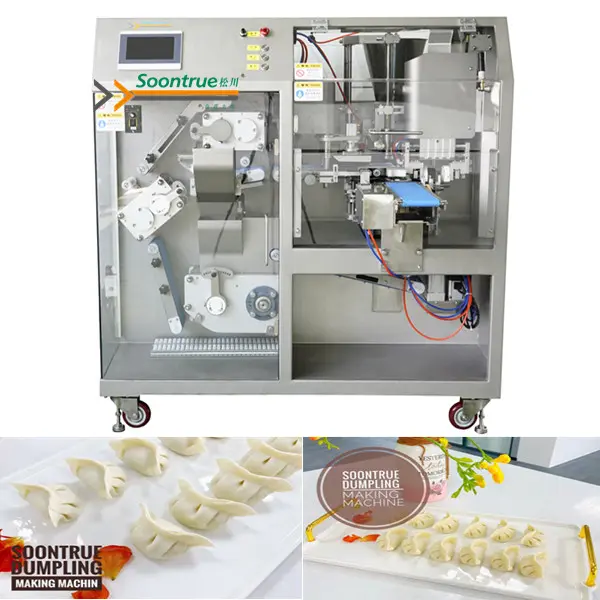
The machine’s construction immediately conveys a sense of durability. Analysis confirms the primary material is 304 food-grade stainless steel, a standard in professional kitchen equipment. This choice of material gives the unit substantial weight and a sleek, non-corrosive finish, distinguishing it from many plastic-heavy kitchen gadgets. The overall impression is one of solidity and thoughtful engineering.
The device feels less like a typical consumer gadget and more like a piece of small-scale commercial equipment, designed for repeated use.
The control interface is minimalist, featuring four simple operating buttons. This humanization in design aims for straightforward use with minimal training. This robust construction suggests the machine is built for longevity rather than being a single-use novelty item.
Putting the Dumpling Wrap Machine to the Test
Transitioning from initial impressions to practical application, testers conducted a thorough evaluation of the machine's performance. This phase focused on real-world use, from initial setup to the final cooked product. The analysis measured the machine's operational ease, its handling of different fillings, and the quality of the dumplings it produced.
The Learning Curve
The machine's design prioritizes user-friendly operation. Testers found the learning process to be remarkably straightforward. The interface, featuring just four intuitive buttons, lowers the barrier for new operators. This humanization of the design means minimal training is necessary to achieve proficiency.
The patent-pending design for skin forming and filling simplifies the entire process. Operators can quickly master the machine's functions, leading to high efficiency from the start.
This ease of use is a significant factor in the machine's overall effectiveness. It allows users to focus on production rather than complex operational procedures.
Getting the Filling Right
Achieving perfect dumplings requires attention to the filling. The dumpling wrap machine handles various ingredients well, but optimal results depend on proper preparation and calibration. Testers identified several key factors for consistent output:
·Filling Consistency: The filling's texture is crucial. A mixture that is too thick or thin may not dispense evenly. Users should aim for a balanced consistency for uniform results.
·Dough and Filling Ratio: An ideal balance between the dough and filling is necessary. The machine's settings allow for precise adjustments, preventing bursting from overfilling or flatness from underfilling.
·Correct Filling Settings: Calibrating the machine to the specific filling type ensures accurate and consistent dispensing, which is vital for creating well-formed dumplings.
These considerations are standard in any automated food production. The machine provides the necessary controls to manage them effectively.
The Final Dumplings: A Side-by-Side Comparison
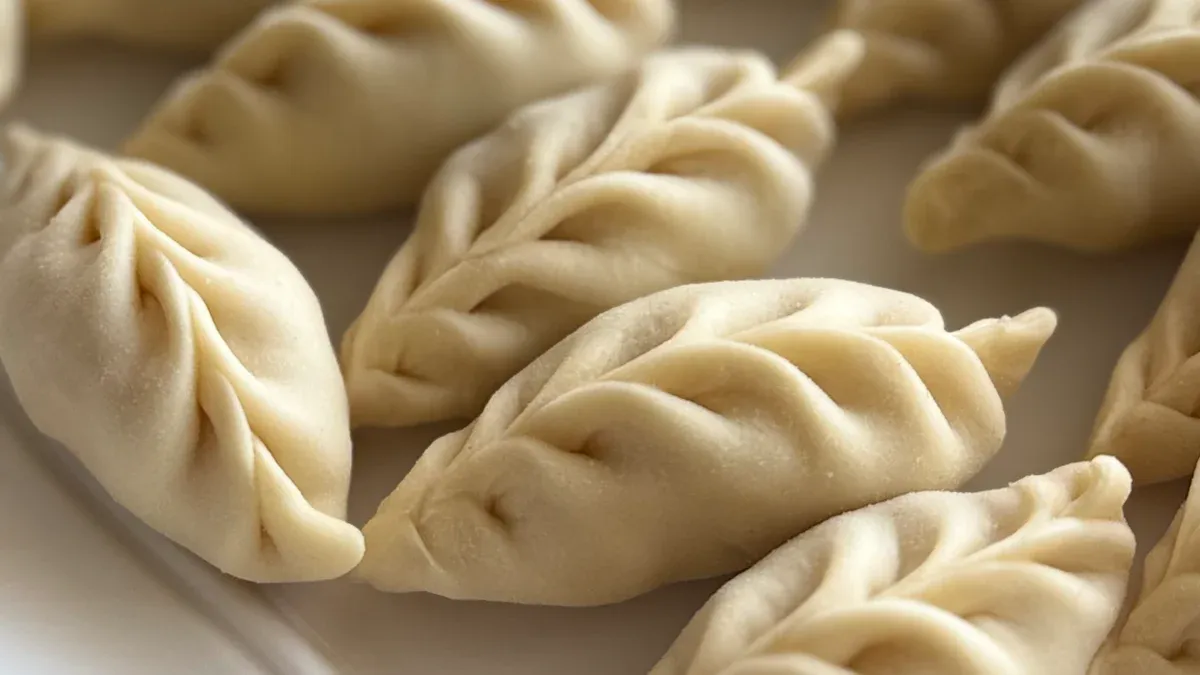
The ultimate test is the quality of the final product. When comparing machine-made dumplings to hand-folded ones, the results were definitive. The dumpling wrap machine produced dumplings with a professional and uniform appearance.
During the cooking process, the advantages became even more apparent.
·Machine-sealed dumplings demonstrated superior seal integrity. This consistency prevented fillings from bursting or leaking during boiling or pan-frying.
·The secure seal effectively locked in juices and flavors. This resulted in a more succulent and flavorful final product compared to their hand-folded counterparts.
·Hand-sealed dumplings, with their potential for uneven edges, showed a higher likelihood of bursting, leading to a loss of flavor and a less appealing texture.
The machine consistently delivered a superior product that cooked reliably and presented beautifully, showcasing its efficiency and precision.
Does It Actually Save You Time?
A primary selling point for any kitchen gadget is the promise of saving time. The viral dumpling maker is no exception, marketed as a highly efficient alternative to traditional methods. An objective analysis, however, must look beyond the production speed. It must account for the total time investment from setup to cleanup. This evaluation measures the machine's true efficiency against the familiar rhythm of hand-folding.
Time Trial: Machine vs. Hand-Folding
Testers conducted a controlled time trial to compare the machine's output against a moderately skilled home cook. The goal was to produce 50 dumplings. The analysis broke down the total time into distinct phases for a clearer comparison.
| Task Phase | Machine Method | Hand-Folding Method | Analysis |
|---|---|---|---|
| Setup | 12 minutes | 2 minutes | The machine required unboxing, assembly, power connection, and initial calibration of the filling dispenser. Hand-folding only required retrieving a bowl, spoon, and small water dish. |
| Production | 8 minutes | 25 minutes | Once running, the machine's patented design produced dumplings at a rapid, consistent pace. Hand-folding was methodical but significantly slower per piece. |
| Total Time | 20 minutes | 27 minutes | For a batch of 50, the machine shows a time savings of 7 minutes. However, testers noted this advantage diminishes with smaller batches and increases with larger, commercial-style quantities. |
The results indicate that for a standard family-sized batch, the time saved during production is nearly offset by the initial setup period. The machine's efficiency becomes more pronounced only when producing a very large number of dumplings, a scenario less common for the average home cook.
The Hidden Time Cost: Cleanup
The time trial does not end when the last dumpling is formed. A complete assessment must include the cleanup process, which proved to be the machine's most significant drawback. While the manufacturer promotes a "quick release design" for easy cleaning, user experience tells a different story.
Testers found the cleanup process to be the most frustrating part of the entire operation, negating much of the time saved during production.
An evaluation of the cleaning process revealed several design-related challenges. These issues transform what should be a simple task into a laborious one.
·Many users describe the process as a "huge hassle" and a "total pain."
·The plastic screws and augers, while part of the efficient filling system, are difficult to clean thoroughly.
·The dough-extrusion mechanism is a three-piece assembly. This design creates seams and discontinuities where dough and filling become trapped.
·Instruction manuals explicitly warn against submerging the entire dumpling wrap machine. This prevents damage to metal and electronic components but requires a more careful, manual cleaning process instead of a simple soak.
In contrast, cleaning up after hand-folding involves washing a bowl, a spoon, and a cutting board. This task is typically completed in under five minutes. The machine's complex, multi-part cleaning routine easily consumes 15-20 minutes, completely erasing any time saved during the production phase for small-to-medium batches.
Who Should Buy This (and Who Shouldn't)
Determining the ideal user for this machine requires a look beyond its viral appeal. A professional assessment reveals its value is highly specific. The device's strengths align with certain production needs while its drawbacks make it impractical for others. This analysis clarifies which consumers will benefit from the purchase and which should avoid it.
Who It's Actually For
This machine is best suited for a niche group of users who prioritize high-volume production over casual convenience. Its design offers clear advantages for specific scenarios. The marketing highlights its key features accurately for this target audience.
·Small Business Owners: Caterers or food stall operators can leverage the machine's high efficiency. Its automatic operation produces a large, consistent batch of dumplings quickly.
·Community Event Organizers: Individuals preparing food for large gatherings like fundraisers or family reunions will find its speed beneficial. The easy operation allows multiple users to produce dumplings with minimal training.
·Dedicated Hobbyists: Cooks who frequently make hundreds of dumplings for freezing will appreciate the time savings on large-scale projects.
For these users, the initial setup time and complex cleanup are a reasonable trade-off for the machine's impressive output speed and uniform product quality. The competitive edge it provides in a semi-commercial setting is its primary benefit.
Who Should Definitely Skip It
Most home cooks should reconsider purchasing this gadget. The practical realities of its operation often outweigh its benefits for typical household use. The promise of perfectly formed dumplings does not compensate for the significant operational hurdles.
Testers concluded that the average family or individual cook will find the machine more trouble than it is worth. The lengthy setup and frustrating cleanup process nullify any time saved on small or medium-sized batches. The learning curve, while manageable, still presents an initial barrier. Hand-folding remains a faster, simpler, and more enjoyable method for preparing a family meal. The dumpling wrap machine, in this context, is a novelty item that fails to deliver practical value.
A final professional verdict advises consumers to skip this gadget. The dumpling wrap machine creates more trouble than it is worth. The promise of uniform dumplings does not outweigh the inconsistent seals, difficult learning curve, and time-consuming cleanup. This gadget’s viral fame stems from novelty, not practical kitchen performance. Its online popularity is driven by user engagement around its operational challenges.
·Widespread user questions about how to operate the device fueled its discovery.
·Videos showing user struggles generated significant online interaction.
·Response videos demonstrating proper use further amplified its presence.
FAQ
How difficult is the machine to operate?
The machine features a humanized design with only four operating buttons. This simple interface lowers the requirements for operators. Users can achieve proficiency with minimal training, ensuring a straightforward operational experience from the start.
What is the cleaning process like?
The machine incorporates a quick-release design for its stuffing system. This feature simplifies maintenance significantly.
A complete cleaning of the entire machine can be finished in approximately 30 minutes, making the process efficient and manageable for operators.
Does the machine improve production efficiency?
Yes, the machine offers high efficiency. Its patented dumpling skin and forming design streamlines production. This innovation leads to a higher output rate for both the dumpling skins and the final filled products, boosting overall productivity.
Post time: Nov-12-2025