
A person decides to buy a dumpling wrapping machine when they value speed and uniformity. This choice is ideal for frequent, large-batch dumpling production. The market reflects this growing interest. Projections show the dumpling machine market will grow at a compound annual rate between 9.4% and 10.4% through 2032.
However, the high initial cost and cleaning effort may not be worthwhile for everyone. Someone who makes dumplings only occasionally or enjoys the craft of hand-folding might find the investment impractical. The decision ultimately balances convenience against cost and tradition.
The Pros: Why a Dumpling Machine Is a Game-Changer
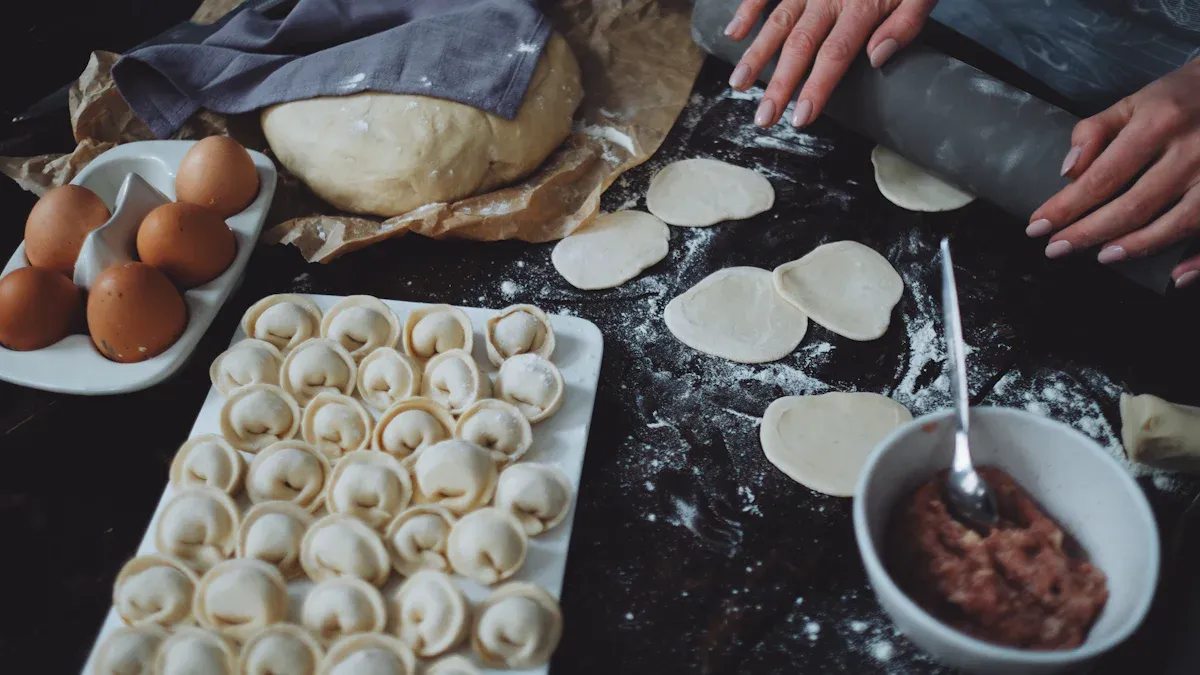
A dumpling machine transforms the labor-intensive process of making dumplings into a streamlined, efficient operation. For enthusiasts and small-scale producers, this appliance offers significant advantages that justify the investment. It addresses the most challenging aspects of dumpling making: time, consistency, and skill.
Save a Ton of Time on Big Batches
The most compelling reason to acquire a dumpling machine is its incredible speed. Hand-folding dozens or hundreds of dumplings is a social and meditative activity, but it demands hours of focused effort. A machine automates this repetitive task, drastically reducing production time. This efficiency is not just a minor convenience; it is a complete operational upgrade. For instance, some commercial-grade models designed for small businesses can produce an impressive 4,800 dumplings per hour. This level of output is unattainable by hand.
This boost in productivity allows home cooks to prepare for large gatherings without stress and enables food entrepreneurs to scale their operations effectively. Real-world examples highlight this impact:
·A central kitchen in Singapore utilized automated equipment to enhance dumpling quality and achieve greater production consistency across its batches.
·A food company in Fiji dramatically increased its production capacity and standardized its products after integrating a dumpling machine into its workflow.
Get Perfectly Uniform Dumplings Every Time
Achieving uniformity is a hallmark of a skilled dumpling maker, but it requires years of practice. A dumpling wrapping machine delivers this perfection from the very first batch. Every dumpling emerges with the same size, shape, and weight, eliminating the inconsistencies of handmade products. This consistency is more than just aesthetically pleasing; it ensures even cooking, predictable portion sizes, and a professional presentation.
This precision is highly customizable. Users can easily change the forming mold set to produce different dumpling shapes. They can also adjust the wrapper thickness by simply tightening or loosening a nut, giving them complete control over the final product's texture.
A machine can be calibrated to produce dumplings with exact specifications. For example, an operator could set the machine to create a standard 18-gram dumpling, composed of a delicate 7-8 gram skin and a generous 10-11 gram filling. This level of control is nearly impossible to replicate by hand, especially across large quantities.
Surprisingly Easy to Use After the First Run
The idea of operating a new piece of kitchen machinery can seem daunting. However, manufacturers design modern dumpling machines with the user in mind. While there is a brief learning curve associated with the initial setup and first few uses, the process quickly becomes intuitive. Most machines feature straightforward controls for adjusting dough thickness, filling volume, and production speed.
To flatten this learning curve, a wealth of support materials is available. Beginners can find numerous online resources, including detailed video tutorials, that guide them through every step of the process. These guides help first-time users get up to speed quickly, covering everything from assembly and dough preparation to operation and cleaning. After one or two sessions, most operators find the workflow becomes second nature, allowing them to produce perfect dumplings with minimal effort.
The Cons: Potential Downsides to Consider
While a dumpling machine offers impressive speed and consistency, it is not without its drawbacks. Potential buyers must weigh the benefits against some significant practical challenges. These considerations involve the initial financial outlay, the ongoing effort of maintenance, and certain operational limitations that can affect the final product.
The High Initial Cost
The most immediate barrier for many is the price. A quality dumpling wrapping machine represents a significant financial commitment, far exceeding the cost of simple kitchen tools. The market often blurs the line between consumer and light commercial models. For example, machines suitable for home use or new small businesses can range from approximately $300 to over $1,000. This price point requires a serious cost-benefit analysis. A person must consider if their dumpling-making frequency justifies such an expense. For someone who only prepares dumplings a few times a year, the investment is difficult to rationalize.
The Cleanup and Storage Commitment
A machine that automates a messy task often creates a complex cleaning process of its own. Unlike a simple bowl and rolling pin, a dumpling machine contains multiple components that come into contact with dough and filling. Proper maintenance requires a dedicated effort after every use.
The typical cleaning workflow involves:
·Disassembling the primary components, such as the dough press, filling dispenser, and forming molds.
·Washing each part thoroughly to remove all food residue.
·Ensuring every piece is completely dry to prevent rust or mold.
·Reassembling the machine correctly for its next use.
Beyond cleanup, the machine demands significant physical space. These appliances are often bulky and heavy, requiring a permanent spot on the counter or dedicated storage in a large cabinet. In a small kitchen where space is at a premium, housing the unit can become a major inconvenience.
Performance Issues with Certain Fillings
A dumpling machine operates with mechanical precision, which means it works best with ingredients that meet specific criteria. The consistency of the filling is paramount. Fillings that are too wet or oily can cause the dough to become soggy, preventing the machine from creating a secure seal. This can lead to dumplings that burst open during cooking.
Furthermore, the mechanism is designed to handle finely minced or ground fillings. Recipes that call for larger, coarser ingredients, such as whole shrimp or chunky-cut vegetables, can pose a problem. These larger pieces can clog the filling dispenser, jamming the machine and halting production. A user must often adapt their trusted family recipes, processing ingredients more finely than they would for hand-folding. This limitation can restrict culinary creativity and adds an extra step to the preparation process.
Losing the Hands-On Tradition
Beyond the practical considerations of cost and cleaning, a machine introduces a more abstract, yet significant, trade-off. It can remove the rich cultural heritage and personal satisfaction tied to the art of hand-folding dumplings. For many, making dumplings is not merely a culinary task; it is a cherished ritual, a form of creative expression, and a powerful way to connect with family and friends.
The process of gathering around a table to fold dumplings is a communal activity steeped in tradition. It is a time for:
·Sharing stories and laughter between generations.
·Passing down family recipes and folding techniques from parent to child.
·Creating lasting memories through a shared, hands-on effort.
An automated process transforms this social event into a solitary, mechanical operation. The machine becomes the producer, and the cook becomes its operator. This shift fundamentally changes the experience from a collaborative art form into an efficient production line.
Furthermore, the craft of hand-folding imparts a unique quality to the final product that a machine cannot replicate. The slight variations in pressure and pleating from human hands contribute to the dumpling's final texture and character. Culinary experts often note this distinction.
There is no denying that hand-made dumplings taste different from machine-made dumplings. The pressure of the fingers creates a special texture for the gyoza skin.
This "special texture" is the hallmark of authentic, homemade food. Each handmade dumpling
Post time: Nov-12-2025